Scotland Records Wettest May on Record as Flooding Hits Highlands and Central Belt
Met Office data shows Scotland received over 180mm of rain in May 2026, more than double the average in some areas, triggering widespread disruption.
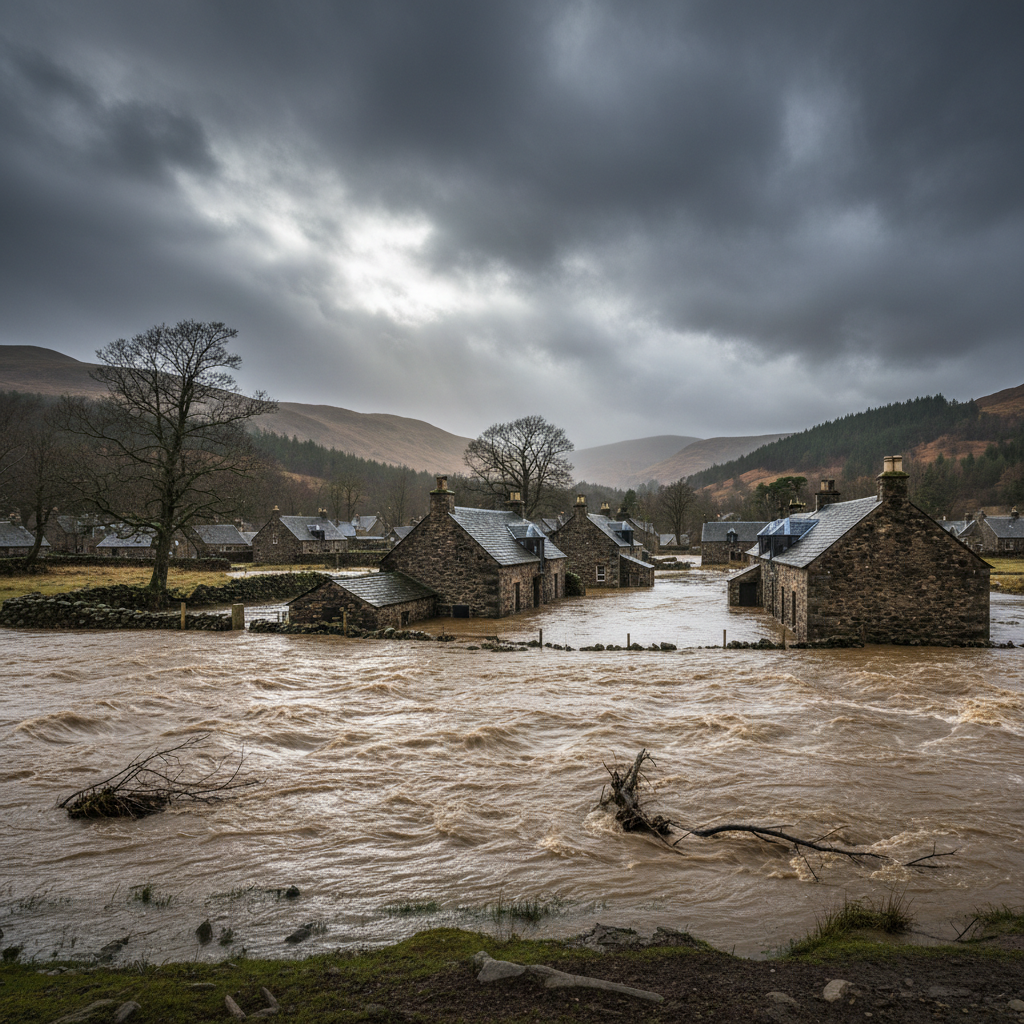
Scotland experienced its wettest May on record in 2026, with the Met Office confirming that parts of the Highlands and western coastal areas recorded more than double their long-term average rainfall. Provisional figures released on 30 May show Scotland saw an average of over 180mm of rain during the month, breaking previous records set in the late 20th century.
The extreme rainfall triggered localised flooding, road closures and rail disruption across Argyll and Bute, the central belt and into Aberdeenshire. The Scottish Environment Protection Agency (SEPA) issued multiple flood alerts and warnings through the final week of May as communities braced for rising water levels.
Emergency Response Across Multiple Regions
Emergency services reported dozens of weather-related callouts over the Bank Holiday weekend as rivers overtopped their banks and surface-water flooding affected homes and businesses in several communities. The disruption stretched from the western Highlands through Scotland's most populated areas, with transport networks bearing the brunt of the impact.
Road closures affected major routes including sections of the A83 in Argyll, whilst rail services faced significant delays and cancellations. ScotRail implemented speed restrictions on multiple lines as a precautionary measure, with some services suspended entirely during the worst of the flooding.
Local authorities across the affected regions coordinated with emergency services to provide assistance to residents in flood-prone areas. Temporary accommodation was arranged for families whose homes were inundated, whilst business owners in low-lying commercial areas worked to protect premises and stock.
Climate Scientists Link Intensity to Warming Trends
Climate scientists quoted by the Met Office and Scottish media have directly linked the intensity of May's downpours to a warming atmosphere. The scientific consensus points to increased moisture retention in warmer air masses, leading to more concentrated precipitation events when weather systems do develop.
These findings align with broader climate projections for Scotland, which predict not only higher average temperatures but also more volatile precipitation patterns. The combination creates conditions where extreme rainfall events become both more frequent and more severe, challenging existing infrastructure designed for historical weather patterns.
The record-breaking May follows a trend of increasingly unpredictable Scottish weather, with recent years seeing both severe droughts and flooding events. Meteorologists note that whilst May is traditionally a wetter month for Scotland, the 2026 figures represent a significant departure from established norms.
Infrastructure and Planning Under Pressure
The widespread flooding has renewed focus on Scotland's flood defence capabilities and urban drainage systems. Many of the affected areas rely on infrastructure designed decades ago, when such extreme weather events were considered exceptional rather than increasingly probable.
Local councils are now reviewing their flood management strategies, with particular attention to surface-water drainage in urban areas. The central belt's experience during the May flooding highlighted vulnerabilities in mixed residential and commercial zones, where rapid runoff from hard surfaces overwhelmed existing drainage capacity.
SEPA's flood warning system performed as designed, providing advance notice to communities and emergency services. However, the scale and persistence of the rainfall tested the limits of both natural and artificial flood defences across multiple catchment areas simultaneously.
Long-term Implications for Scottish Communities
Climate scientists warn that Scotland should expect more frequent episodes of heavy rain and flooding in coming decades, fundamentally altering how communities plan for weather-related risks. The May 2026 event serves as a preview of conditions that may become routine rather than exceptional.
Insurance implications are already emerging, with some providers reviewing their risk assessments for properties in previously low-risk flood zones. The widespread nature of the May flooding demonstrated that climate change impacts extend beyond traditionally vulnerable coastal and riverside locations.
Agricultural communities face particular challenges, with waterlogged fields affecting both spring planting and livestock management. The timing of the extreme rainfall, during a critical growing period, compounds the immediate disruption with longer-term productivity concerns.
According to the BBC's coverage of the Met Office announcement, the provisional nature of the May figures reflects ongoing data collection across Scotland's weather monitoring network. Final confirmation of the records is expected following comprehensive analysis of rainfall measurements from across the country's diverse topographical regions.