Sunak calls July general election as Scottish parties prepare for independence battle
Prime Minister announces 3 July polling date in surprise Downing Street statement, triggering five-week campaign focused on devolution and cost of living north of the border.
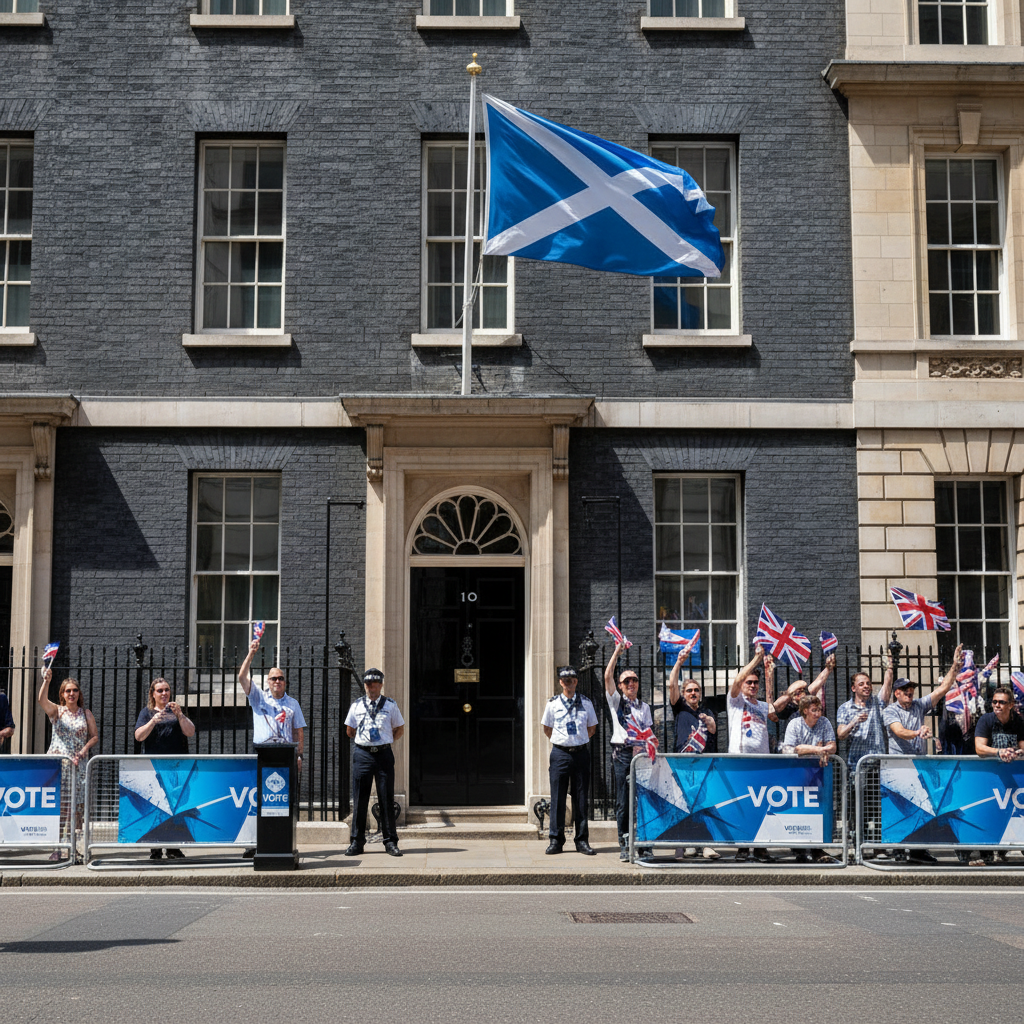
Prime Minister Rishi Sunak announced on 3 June that the UK general election will be held on 3 July, confirming he had received King Charles III's permission to dissolve Parliament on 9 June for a five-week campaign period. The earlier-than-expected timing has caught Westminster observers off guard and immediately triggered positioning from Scottish parties around independence, devolution and economic pressures facing voters across Scotland.
Speaking outside 10 Downing Street, Sunak confirmed the formal dissolution date of 9 June, setting up a summer campaign that will determine the future composition of the House of Commons. The announcement comes amid persistent polling leads for Labour under Keir Starmer and ongoing national debate over economic recovery, immigration policy, NHS pressures and the UK's post-Brexit trajectory.
Scottish parties frame independence and devolution stakes
The SNP immediately positioned the election as a crucial test for Scottish independence ambitions, with the party expected to argue that a strong showing would reinforce demands for another referendum. Scottish Labour has framed the contest around cost of living pressures and NHS funding, whilst the Scottish Conservatives are likely to campaign on preserving the Union and economic stability arguments.
The five-week campaign period will see intense competition for Scotland's 59 Westminster seats, with particular focus on marginal constituencies where small swings could determine outcomes. Scottish parties have already begun highlighting local issues including energy costs, rural connectivity and the future of devolution settlements that affect day-to-day governance north of the border.
Economic pressures dominate Scottish voter concerns
The July timing places the campaign during school holidays and traditional summer recess periods, potentially affecting voter turnout and campaign dynamics across Scottish constituencies. Economic concerns remain paramount for Scottish voters, with parties expected to focus heavily on cost of living measures, energy policy and the impact of Westminster decisions on Scottish households and businesses.
Immigration and NHS pressures, key themes in the national campaign, will likely intersect with distinctly Scottish concerns about population decline in rural areas and health service funding through the Barnett formula. The post-Brexit direction debate takes on particular significance in Scotland, where EU membership remains a contentious issue tied to independence arguments.
Campaign battlegrounds across Scotland's constituencies
The shortened timeframe intensifies competition in key Scottish battlegrounds, particularly seats where the SNP faces challenges from Labour in central belt constituencies and from Conservatives in rural areas. The campaign will test whether recent polling trends showing Labour gains translate into actual seat changes, and whether the SNP can maintain its dominance of Scottish representation at Westminster.
Scottish Liberal Democrats are expected to target specific constituencies where tactical voting could play a decisive role, whilst smaller parties face the challenge of gaining visibility in a compressed campaign schedule. The summer timing may particularly affect traditional campaigning methods in rural Scottish constituencies where voters often have different seasonal patterns.
Five weeks to reshape Scottish political landscape
The 3 July date gives Scottish parties just five weeks to articulate their vision for Scotland's future within or outside the UK framework. This compressed timeline places premium on efficient campaign organisation and clear messaging around the issues that matter most to Scottish voters, from local economic concerns to constitutional questions.
According to the BBC report on Sunak's announcement, the election will determine not just the UK government's composition but the balance of Scottish representation that could influence future devolution discussions and independence debates.
The July election represents a pivotal moment for Scottish politics, with outcomes likely to shape the constitutional debate and Scotland's relationship with Westminster for years to come. Each party now faces the challenge of mobilising supporters and persuading undecided voters during what promises to be an intense summer campaign across Scotland's diverse political landscape.