Westminster's election paralysis leaves Scotland's public services hanging in the balance
The Scottish Fiscal Commission's stark warning reveals how UK political uncertainty is creating a perfect storm for devolved services that millions depend on.
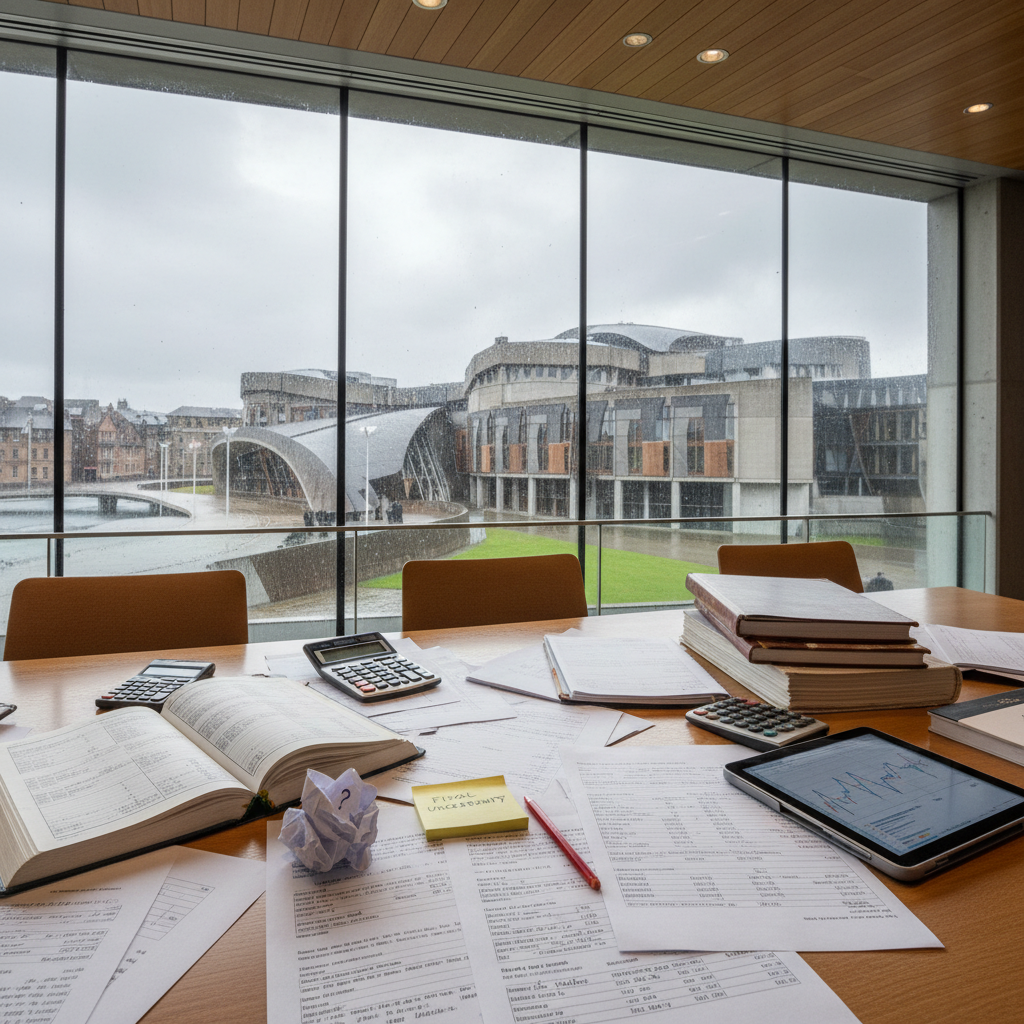
When the Scottish Fiscal Commission issued its warning on 10 June about Westminster's election campaign constraining spending decisions, it laid bare an uncomfortable truth: Scotland's public services are hostage to the UK's political calendar. The watchdog's assessment that delayed fiscal decisions could trigger further cuts to the Scottish Government's 2026-27 budget isn't just bureaucratic hand-wringing—it's a preview of the choices ordinary Scots will face in schools, hospitals, and council services.
The anatomy of a budget squeeze
The Commission's warning crystallises what happens when two political systems collide. While Westminster politicians focus on winning votes rather than making hard fiscal choices, Holyrood faces the impossible task of planning public spending without knowing how much money it will actually receive. The uncertainty over future tax and spending plans means Scottish ministers are already pencilling in savings, with the threat of further in-year cuts looming once the electoral dust settles.
This isn't theoretical economics—it's about real services that touch every Scottish household. Local government budgets, already stretched thin, face another round of potential cuts. Schools dealing with teacher shortages and crumbling infrastructure could see promised improvements delayed or scrapped entirely. The NHS in Scotland, perpetually under pressure, may find itself managing with even fewer resources just as winter pressures mount.
The Barnett formula's cruel mathematics
The particular vulnerability of devolved services stems from Scotland's dependence on the Barnett formula block grant. When Westminster delays decisions, the ripple effects hit Holyrood with mathematical precision. Every pound of uncertainty at UK level translates into difficult choices about which services to protect and which to sacrifice. The Commission's analysts have highlighted this dependency as a critical risk factor, and they're right to be concerned.
Scottish ministers have offered the familiar reassurance that they will protect frontline services, but their refusal to rule out further spending revisions tells a different story. The reality is that without knowing what a new UK government will prioritise in its first Budget, Holyrood is flying blind. Protection of frontline services sounds admirable until you realise that almost everything the Scottish Government does—from keeping libraries open to maintaining roads—affects people's daily lives.
The human cost of political uncertainty
Behind the Commission's technical language about 'reprioritisations' and 'in-year cuts' lies a starker reality. Teachers wondering if their jobs are secure. Hospital managers trying to plan rotas without knowing their staffing budgets. Council leaders forced to choose between fixing potholes and keeping youth centres open. These aren't abstract policy debates—they're the lived consequences of Westminster's electoral paralysis.
The timing makes it worse. June's warning means the uncertainty will stretch well into the autumn, precisely when public services need clarity to plan for winter pressures. Schools preparing for the new academic year, NHS trusts planning for flu season, councils budgeting for winter maintenance—all must now factor in the possibility of mid-year budget cuts.
A system designed for dysfunction
What the Scottish Fiscal Commission has exposed isn't just a temporary problem caused by one election cycle—it's a structural flaw in how devolution works. The current system leaves Scotland's public services perpetually vulnerable to the rhythms of UK politics, creating a cycle where long-term planning becomes impossible and crisis management becomes the norm.
The BBC report on the Commission's warning underscores how this uncertainty cascades through every level of Scottish public administration. When the watchdog that monitors Scotland's finances sounds the alarm about Westminster's indecision, it's time to recognise that the current arrangements serve neither good governance nor the people who depend on public services.
The real tragedy is that this was entirely predictable. Elections create uncertainty, uncertainty delays decisions, and delayed decisions force cuts to public services. Until Scotland has the fiscal powers to break this cycle, its citizens will continue paying the price for Westminster's political games. The Commission's warning should be a wake-up call, but it's likely to be just another item in a long list of problems that politicians promise to fix after the votes are counted.