Glasgow Central Station fire halts rail services as historic building suffers partial collapse
Scotland's busiest railway station evacuated after major blaze spreads to Union Street area, leaving commuters stranded and city centre businesses disrupted.
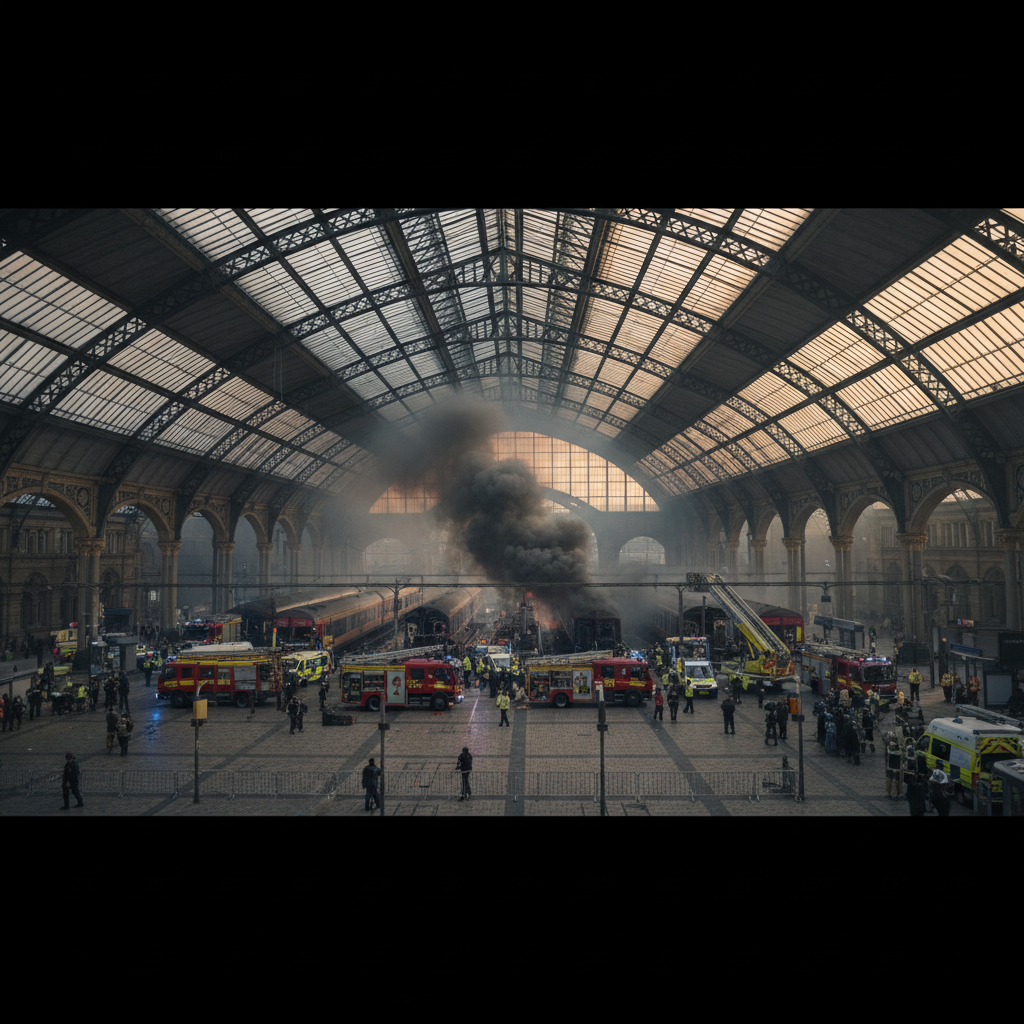
A major fire at Glasgow Central Station on 21 June forced the evacuation of Scotland's busiest railway terminus and brought all rail services to a halt, with Network Rail unable to provide a timeline for reopening. The blaze, which spread to the adjacent Union Street area, caused partial collapse of sections of the historic Victorian building, though no injuries were reported.
ScotRail confirmed that trains would not run to or from the station's high-level platforms, whilst services on the low-level line would pass through without stopping. The suspension affects tens of thousands of daily passengers who rely on Central Station for connections across Scotland and to destinations throughout Britain.
Weekend disruption hits commuters and visitors
The timing of the fire, occurring on a Saturday during Glasgow's peak summer visitor season, has created widespread disruption for both regular commuters and weekend travellers. Central Station typically handles over 38 million passengers annually, making it the busiest railway station in Scotland and the third-busiest in Britain outside London.
Passengers bound for Edinburgh, London, and destinations across the west of Scotland have been advised to seek alternative transport arrangements. The station serves as the terminus for West Highland Line services to Mallaig and Oban, popular routes for tourists heading to the Scottish Highlands and islands during the summer months.
Local bus services reported increased demand as stranded rail passengers sought alternative means of transport, with queues forming at nearby Buchanan Bus Station. Taxi operators across the city experienced unprecedented demand, with some reporting wait times exceeding two hours.
City centre businesses brace for economic impact
The closure has immediate implications for Glasgow's city centre economy, particularly businesses that rely on the constant flow of commuters and visitors through Central Station. The station sits at the heart of Glasgow's commercial district, with Union Street and surrounding areas home to shops, restaurants, and hotels that depend heavily on rail passenger footfall.
Gordon Street and Union Street, both key arteries for pedestrian traffic between the station and the city's main shopping areas, remained partially cordoned off as emergency services continued their response. Several businesses in the immediate vicinity were forced to close temporarily due to smoke and safety concerns.
The hospitality sector faces particular challenges, with many restaurants and pubs typically seeing increased trade from weekend visitors arriving by train. Hotels near the station reported a surge in cancellations as guests struggled to reach the city centre without rail connections.
Historic station's architectural significance
Glasgow Central Station, opened in 1879 and expanded in the early 20th century, represents one of Scotland's most significant examples of Victorian railway architecture. The building's distinctive glass roof and ornate stonework have made it a landmark in Glasgow's cityscape for nearly 150 years.
The partial collapse reported by emergency services raises concerns about the extent of damage to the historic structure. Previous renovations in the 1980s and 2000s had restored much of the building's original grandeur, including the famous glass roof that spans the main concourse.
Conservation experts will likely need to assess the full extent of structural damage before any reconstruction work can begin. The station's protected status as a Category A listed building means any repairs must meet strict heritage preservation standards.
According to the BBC report, emergency services worked throughout Saturday to contain the blaze and ensure the safety of surrounding buildings in the Union Street area.
Transport alternatives and recovery timeline
With no confirmed reopening date from Network Rail, transport authorities are working to establish alternative arrangements for affected routes. Queen Street Station, Glasgow's other major railway terminus, remains operational but cannot accommodate the volume of services typically handled by Central Station.
ScotRail has advised passengers to check alternative routes via Queen Street for services to Edinburgh and destinations north of Glasgow. However, the station lacks direct connections to England and many west coast destinations, leaving significant gaps in the rail network.
The Scottish Government's transport department indicated it would monitor the situation closely, though officials stopped short of announcing emergency transport measures. The disruption comes during a critical period for Scotland's tourism industry, with the summer months accounting for a significant portion of annual visitor numbers.
Network Rail's infrastructure teams will need to conduct comprehensive safety assessments before any services can resume, a process that could take several days or weeks depending on the extent of structural damage. The investigation into the fire's cause remains ongoing, with emergency services continuing to secure the scene.