Major Glasgow fire destroys Victorian building as 200 firefighters save Grand Central Hotel
Scottish Fire and Rescue Service deployed 18 appliances and specialist equipment to battle the blaze near Central station, preventing spread to adjacent heritage hotel.
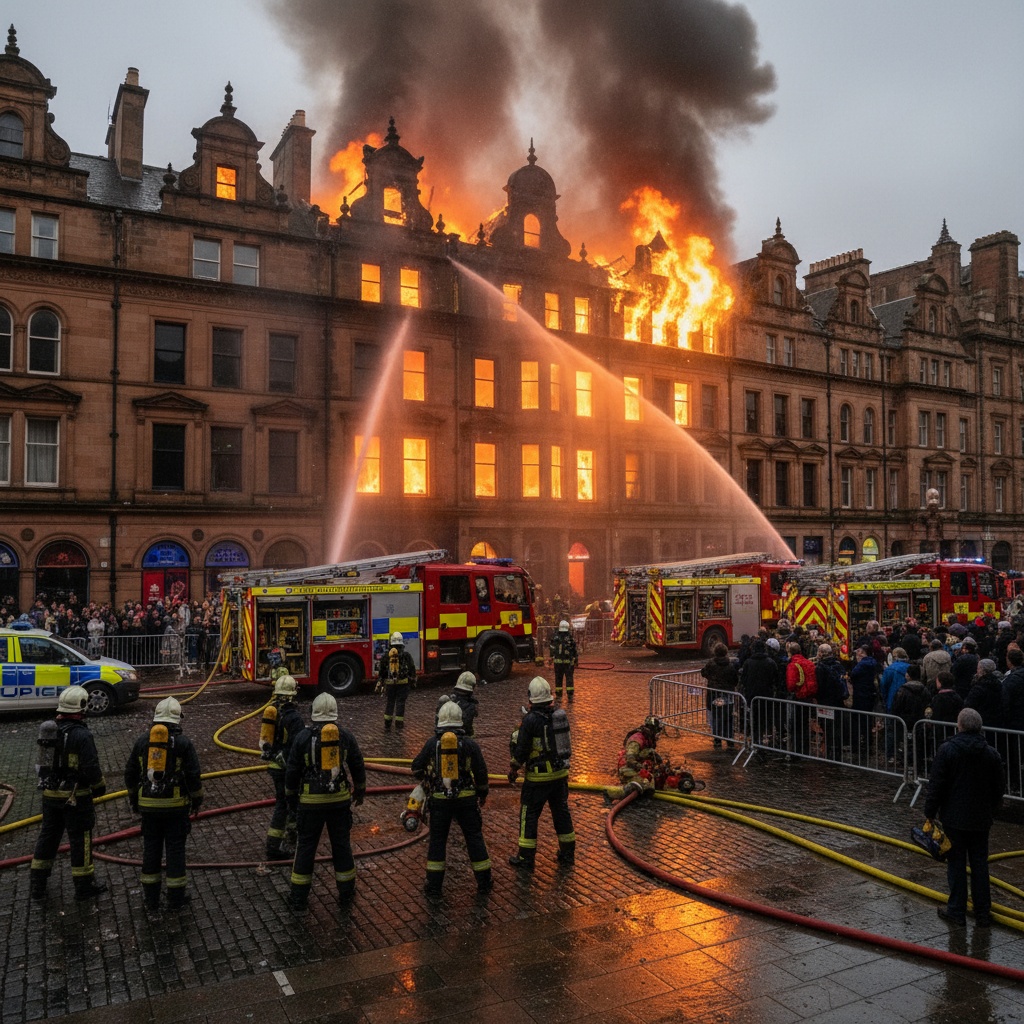
More than 200 firefighters battled a major blaze that gutted a Victorian building housing a vape shop at the corner of Union Street and Gordon Street near Glasgow Central station on Sunday afternoon, successfully preventing flames from spreading to the adjacent Grand Central Hotel.
The Scottish Fire and Rescue Service launched one of its largest recent responses after the alarm was raised at 15:46, deploying 18 appliances and specialist equipment including a high-volume pump that drew water directly from the River Clyde. The fire destroyed the interior of the B-listed structure, leaving only the exterior shell standing.
Massive Emergency Response Protects City Centre
Assistant Chief Officer David Farries praised the "huge effort" of crews who worked through the night to contain the blaze and make the area safe. The coordinated response involved specialist equipment and tactics specifically designed to protect the surrounding buildings in one of Glasgow's busiest commercial districts.
The deployment of the high-volume pump from the River Clyde demonstrated the service's preparedness for major incidents in urban areas where water supply can become a critical factor. Crews established multiple attack lines and defensive positions to create a barrier between the burning building and the Grand Central Hotel, a significant heritage structure that serves as a key accommodation hub for the city centre.
Firefighters worked in rotation throughout Sunday evening and into Monday morning, with some crews remaining on scene to monitor for hotspots and ensure structural stability. The operation required careful coordination between ground crews, aerial platform operators, and incident commanders who managed resources from multiple fire stations across Glasgow and the surrounding areas.
Transport Networks Disrupted During Operation
Roads around Central station were closed during the firefighting operation, causing significant disruption to both vehicular and pedestrian traffic in the heart of Glasgow's transport network. Rail services were also affected as crews worked to secure the area and ensure no structural damage posed risks to the busy station complex.
The location of the fire, at one of Glasgow's most important transport intersections, required careful coordination between emergency services and transport operators to maintain public safety while minimising disruption to the thousands of commuters and travellers who use Central station daily.
Police Scotland established cordons extending several blocks from the incident site, redirecting traffic through alternative routes and working with Glasgow City Council to implement temporary traffic management measures. The disruption affected multiple bus routes serving the city centre, with operators forced to terminate services early or use diversionary routes throughout Sunday evening.
Investigation Focuses on Vape Shop Origin
An investigation into the cause of the fire is under way, with early reports indicating the blaze started within the vape shop premises. However, the precise ignition source remains unknown as investigators begin their detailed examination of the scene.
The fire raises questions about safety protocols in retail premises housing electronic cigarette products and related equipment. Vape shops typically stock lithium batteries, charging equipment, and various electronic devices that can present fire risks if not properly managed or if equipment malfunctions occur.
Fire investigation specialists will examine the building's electrical systems, storage arrangements for battery-powered products, and compliance with current fire safety regulations. The B-listed status of the building means investigators must also consider how heritage building constraints might have affected modern safety installations such as sprinkler systems or fire detection equipment.
Heritage Building Concerns and Future Prevention
The destruction of the B-listed Victorian building highlights ongoing challenges in protecting Scotland's architectural heritage from fire damage. While the exterior shell survived, the complete loss of the interior represents a significant blow to the historic streetscape of this part of Glasgow city centre.
Historic Environment Scotland will likely be consulted on any reconstruction plans, as B-listed buildings require special consideration for alterations or rebuilding work. The stone facade's survival provides hope that the building's street frontage can be preserved, though structural engineers will need to assess the stability of the remaining walls before any reconstruction decisions are made.
The successful protection of the Grand Central Hotel demonstrates the effectiveness of modern firefighting techniques in dense urban environments, but the incident underscores the vulnerability of older buildings to rapid fire spread. According to the Yahoo News report, the scale of the response reflected both the serious nature of the threat and the strategic importance of preventing further spread in such a densely built area.
The Scottish Fire and Rescue Service's ability to mobilise such extensive resources quickly will likely inform future emergency planning for similar incidents in Scotland's urban centres, particularly where heritage buildings and critical infrastructure intersect. The investigation's findings may also influence safety guidance for retailers handling electronic products and battery-powered devices in historic commercial buildings, potentially leading to enhanced fire safety requirements for such premises in heritage structures.