Police Scotland enforces temporary no-fly zone over central Glasgow for weekend event
Airspace restrictions will be in place for a limited period during a major outdoor gathering, with authorities advising residents to check travel arrangements.
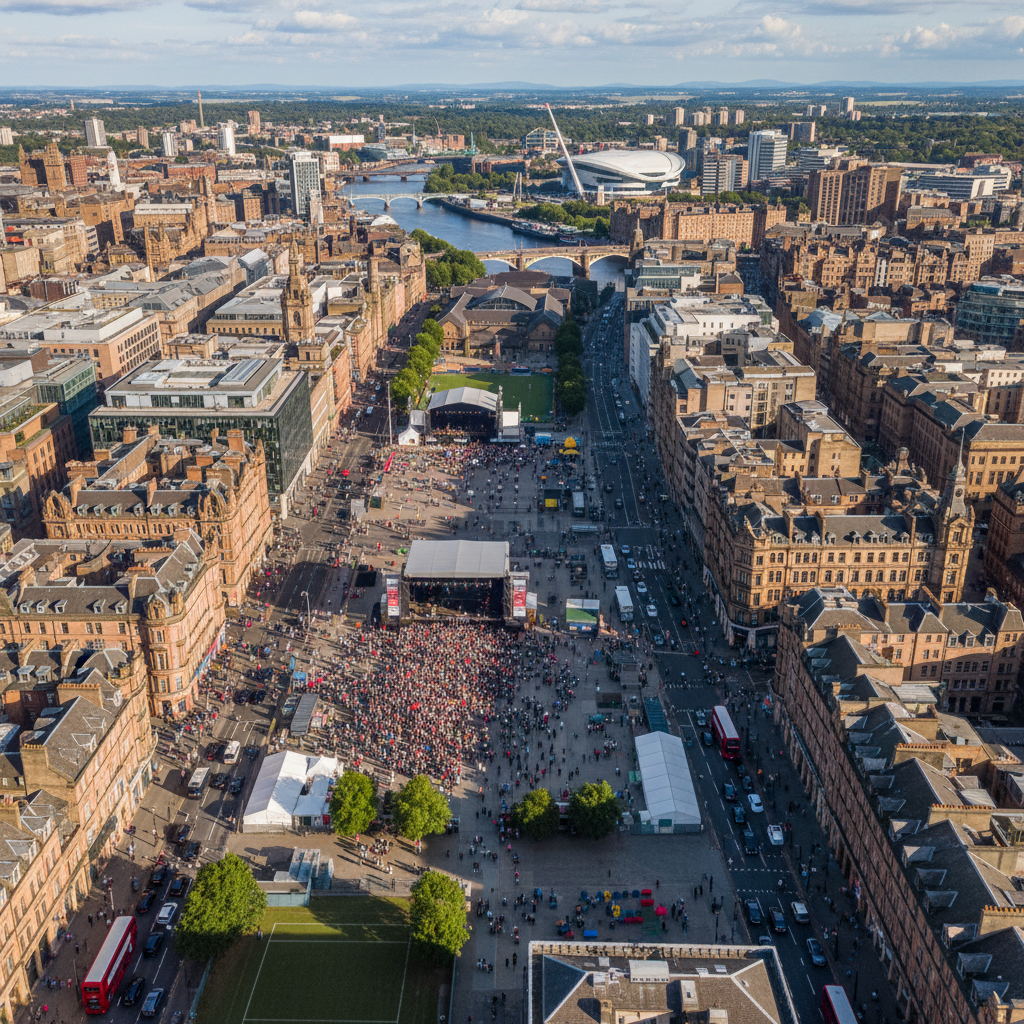
Police Scotland has implemented a temporary no-fly restriction over central Glasgow for a major outdoor event taking place this weekend, with the airspace control affecting the city centre for a limited period on the day of the gathering.
The restriction is designed to reduce the risk of disruption from drones or other unmanned aircraft during the event, which is expected to draw significant crowds to the heart of Scotland's largest city. Local authorities have issued advance warnings for residents and visitors to check travel and access arrangements before heading into the city centre.
Event day restrictions and enforcement
The no-fly zone will be enforced for the duration of the outdoor event, covering central Glasgow's busiest districts. Police Scotland has not disclosed the specific nature of the gathering but confirmed the airspace control measures are standard protocol for high-profile public events that attract large numbers of attendees.
The restriction encompasses areas typically busy with both commercial and recreational drone activity, marking a significant temporary change to normal airspace operations above the city. Enforcement will be coordinated between Police Scotland and relevant aviation authorities to ensure compliance throughout the restricted period.
Officers will monitor the airspace using specialised detection equipment, with penalties for violations including potential prosecution under aviation safety legislation. The enforcement zone extends vertically from ground level to a specified altitude above the city centre, creating a comprehensive barrier to unauthorised aircraft operations.
Travel and access implications
City centre access routes are expected to face additional pressure during the event, with local authorities recommending advance planning for anyone travelling into Glasgow. The combination of increased foot traffic and security measures could affect normal traffic patterns and public transport schedules.
Residents living within the affected area have been advised to allow extra time for journeys and to consider alternative routes where possible. The timing coincides with Glasgow's busy summer events calendar, when the city typically sees higher visitor numbers and increased activity in public spaces.
Glasgow City Council has coordinated with transport operators to maintain service levels despite the expected disruption, though some bus routes may face delays during peak event hours. Parking restrictions will also be in effect around the event perimeter, with additional traffic wardens deployed to manage congestion.
Summer events season context
The restriction has drawn particular attention because it affects one of Scotland's most densely populated urban areas during peak summer event season. Glasgow regularly hosts large-scale outdoor gatherings throughout the warmer months, but temporary airspace controls remain relatively uncommon for city centre events.
The measure reflects growing concerns about drone interference at public gatherings, with authorities increasingly implementing preventive restrictions rather than reactive responses. Similar no-fly zones have been established for major events across the UK, though their application to busy urban centres like Glasgow's city centre represents a more complex logistical challenge.
Recent incidents at outdoor events elsewhere in Scotland have highlighted the potential risks posed by unauthorised drone activity, including interference with emergency services and privacy concerns for event attendees. The Civil Aviation Authority has recorded a steady increase in reported drone incidents at public gatherings over the past two years, prompting local authorities to adopt more proactive approaches to airspace management.
Commercial drone operators who regularly work in Glasgow city centre have been notified of the restriction through official channels, with some expressing understanding of the security rationale while noting the impact on scheduled operations. Photography and surveying companies have adjusted their weekend schedules to accommodate the temporary ban.
According to the BBC report, the restriction demonstrates the evolving approach to event security in urban environments, where traditional crowd control measures are being supplemented by airspace management.
What happens next
The temporary restriction will be lifted once the outdoor event concludes, with normal airspace operations resuming immediately afterwards. Police Scotland has indicated that similar measures may be considered for future large-scale events depending on security assessments and crowd expectations.
Event organisers are working closely with authorities to ensure the gathering proceeds smoothly within the established security framework, including coordination with emergency services and transport providers. The success of crowd management and security protocols will be evaluated following the event's conclusion.
Drone operators and aviation enthusiasts are advised to monitor official channels for updates on airspace restrictions, particularly during Glasgow's continuing summer events programme. The success of this weekend's implementation is likely to influence decisions about airspace controls for subsequent major gatherings in the city centre.
Local businesses within the restricted zone have been briefed on the security measures and their potential impact on weekend trading, with many expecting increased footfall despite access challenges. The event's economic impact on the city centre will be assessed alongside the effectiveness of the security arrangements.