Scottish Government Abandons Universal Free School Meals Pledge
Ministers shift focus to means-tested expansion for Primary 6 and 7 pupils as universal coverage promise is quietly dropped.
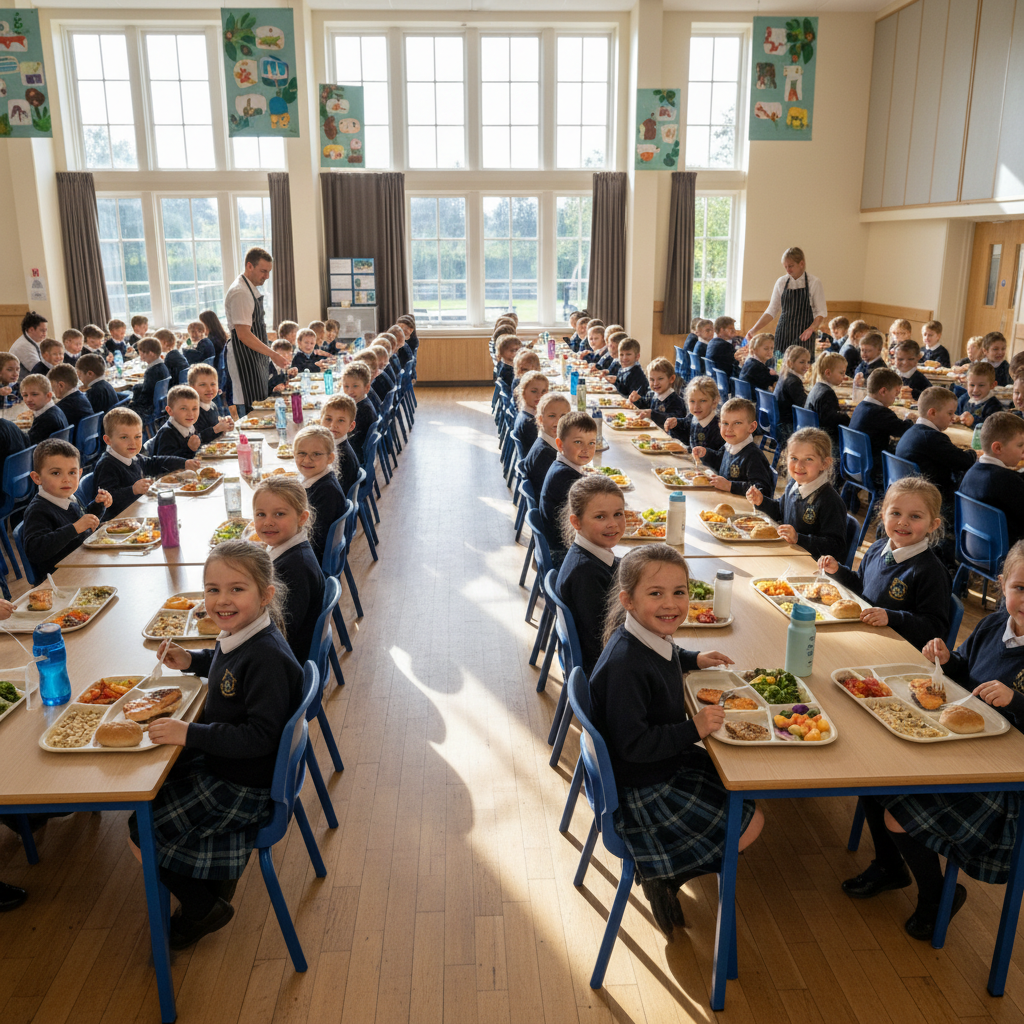
The Scottish Government has abandoned its commitment to provide universal free school meals to all primary pupils, instead opting for a more targeted approach that expands eligibility to Primary 6 and 7 children whose families receive the Scottish Child Payment.
The policy reversal marks a significant retreat from the government's long-standing pledge to extend the current free meal entitlement, which already covers Primary 1 to 5 pupils across Scotland. Ministers are now prioritising support for lower-income families rather than pursuing full universal coverage.
Targeted Support Replaces Universal Promise
Under the revised approach, the government will focus funding on expanding free school meal eligibility to Primary 6 and 7 pupils from families already receiving the Scottish Child Payment. This means-tested expansion represents a substantial scaling back from the original universal model that would have covered all primary school children regardless of family income.
The Scottish Child Payment currently provides £25 per week for each child under 16 in low-income families, serving as the eligibility criterion for the expanded free school meals programme. This targeted approach ensures resources reach families most in need of financial support, though it excludes middle-income households who would have benefited under universal provision.
The change affects approximately 140,000 Primary 6 and 7 pupils across Scotland's 32 local authorities. Under the previous universal commitment, all these children would have received free meals, but the new means-tested system will likely cover a significantly smaller proportion based on Scottish Child Payment eligibility rates.
Political Reaction and Criticism
Opposition parties have condemned the policy retreat as a betrayal of families who were counting on the universal expansion. Scottish Conservative education spokesperson Liz Smith described the decision as "another broken promise from the SNP government" that will leave working families struggling with rising costs.
Scottish Labour's education spokesman Michael Marra argued that means-testing creates unnecessary barriers and stigma for children, undermining the dignity that comes with universal provision. He warned that eligible families might not claim their entitlement due to complex application processes or lack of awareness.
Parent groups have expressed disappointment at the abandonment of universal coverage, with some arguing that middle-income families facing cost-of-living pressures will now miss out on support they desperately need. The Parent Teacher Association of Scotland noted that universal provision would have simplified administration while ensuring no child goes hungry due to bureaucratic obstacles.
Teaching unions have also raised concerns about the practical implications of implementing means-tested systems within schools, warning that staff may struggle to identify which pupils are eligible without creating awkward situations in dining halls.
Financial Pressures Drive Policy Shift
The decision reflects growing pressure on the Scottish Government's budget as ministers grapple with competing spending priorities and constrained resources. Universal free school meals would have required substantial additional funding to cover the estimated costs of feeding all Primary 6 and 7 pupils, regardless of their family's financial circumstances.
Budget documents suggest the universal expansion would have cost approximately £200 million annually, a significant commitment given the government's existing financial constraints. The targeted approach will cost substantially less, though exact figures have not been disclosed by ministers.
Education authorities across Scotland have been preparing infrastructure and staffing plans based on the previous universal commitment, raising questions about how quickly the more limited expansion can be implemented. Some councils had already invested in additional kitchen capacity and recruited staff in anticipation of serving all Primary 6 and 7 pupils.
The shift to means-tested provision may require different administrative processes and eligibility verification systems, potentially creating additional bureaucratic burden for schools and local authorities already stretched by budget pressures.
Impact on Child Poverty Strategy
The policy change comes as the Scottish Government faces scrutiny over its broader child poverty reduction targets and spending commitments. Free school meals form a key component of the government's strategy to support low-income families and improve educational outcomes for disadvantaged children.
Research consistently shows that free school meals improve attendance rates, academic performance, and health outcomes for pupils from disadvantaged backgrounds. The targeted expansion will still deliver these benefits to eligible families, though critics argue that universal provision would have maximised the positive impact across all socioeconomic groups.
Critics may argue that universal provision would have reduced stigma and administrative burden while ensuring no eligible families slip through the cracks of means-testing systems. However, supporters of the targeted approach contend that limited resources should be directed toward those with the greatest financial need.
The abandonment of universal coverage also raises questions about the government's ability to deliver on other ambitious social policy commitments in an era of tightening public finances. According to the BBC report, the decision represents a pragmatic response to budgetary constraints rather than a fundamental shift in policy philosophy.
Implementation Challenges Ahead
The Scottish Government must now implement the revised free school meals expansion for Primary 6 and 7 pupils from Scottish Child Payment families. This will require coordination with local authorities to establish eligibility verification processes and ensure adequate kitchen capacity and staffing.
Local authorities will need to develop systems to identify eligible pupils without creating stigma or administrative burden for families. This may involve linking school databases with Scottish Child Payment records, requiring careful data protection considerations and technical integration work.
Ministers will face pressure to clarify the timeline for implementation and provide assurances that the targeted expansion will reach all eligible families without creating administrative barriers. The government must also address concerns from education authorities who may have invested in infrastructure based on the previous universal commitment.
Opposition parties are likely to scrutinise the decision during upcoming parliamentary sessions, particularly regarding its impact on the government's wider child poverty reduction strategy and spending priorities. The policy reversal may also influence public perception of the government's reliability on manifesto commitments as Scotland approaches future electoral cycles.