Royal Navy declares Scottish drone boat trial a success in autonomous fleet push
Five uncrewed vessels successfully escorted warships during 72-hour operation off Scottish coast, controlled remotely from Portsmouth 500 miles away.
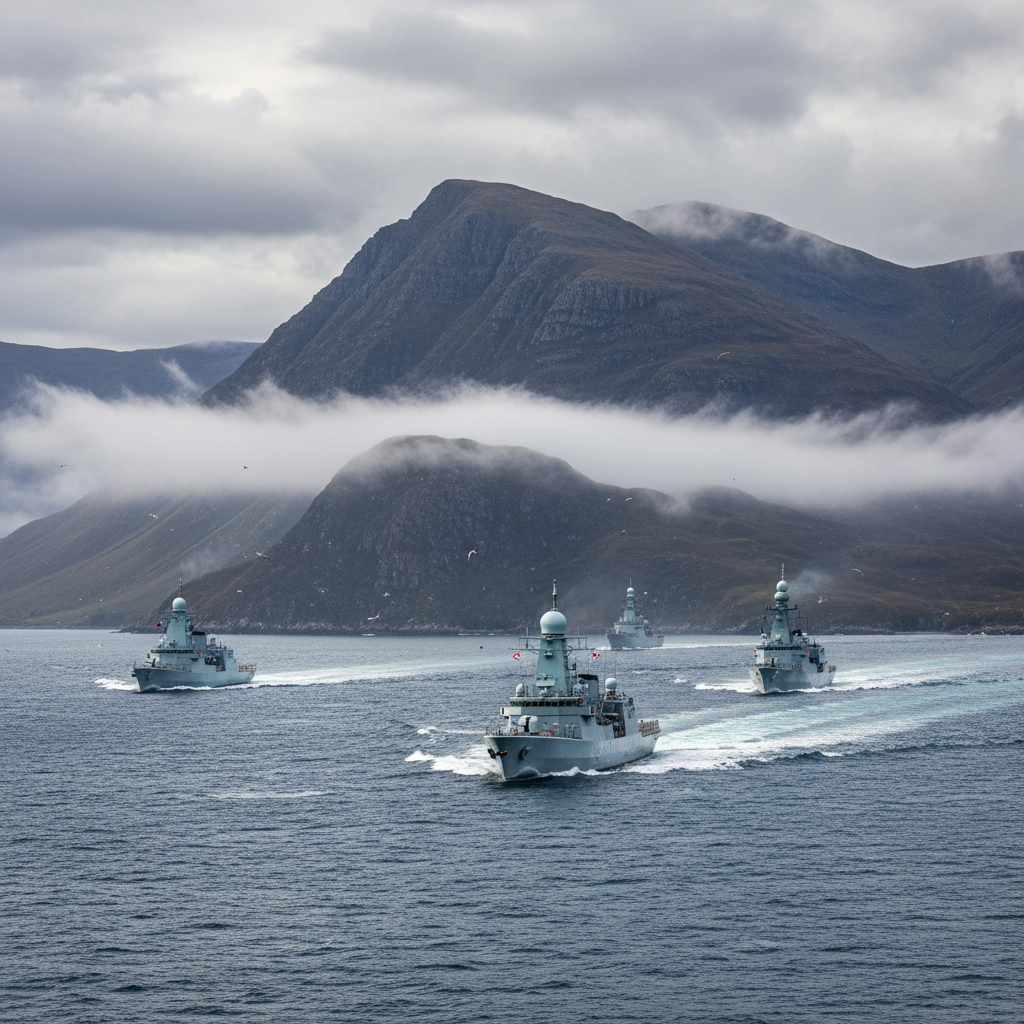
The Royal Navy has declared a trial of five uncrewed drone boats off the Scottish coast a success after the vessels successfully escorted HMS Tyne and HMS Stirling Castle during a 72-hour operation. The boats were remotely controlled from the XV Patrick Blackett, stationed 500 miles away in Portsmouth, and used cameras and sensors to relay real-time data back to operators.
The trial represents what the Navy describes as a key step in its move toward more autonomous maritime systems, with Scotland emerging as a crucial testing ground for the programme. The operation demonstrated the potential for "wolf pack" drone formations to support traditional naval vessels in future operations.
Remote Control Capabilities Tested
During the three-day exercise, operators aboard the XV Patrick Blackett in Portsmouth maintained control of all five drone boats whilst they escorted the two Royal Navy vessels through Scottish waters. The uncrewed boats relied on advanced camera systems and sensor arrays to gather intelligence and monitor the surrounding maritime environment, feeding this information back to human controllers hundreds of miles away.
The successful remote operation from such a distance marks a significant milestone in the Navy's autonomous systems development, proving that drone boats can be effectively coordinated from existing naval facilities without requiring dedicated local control centres. The trial tested various scenarios including formation flying, independent reconnaissance missions, and coordinated escort duties alongside the crewed vessels.
Naval engineers monitored communication links throughout the 72-hour period, with the drone boats maintaining consistent contact despite operating in challenging Scottish coastal conditions. The vessels demonstrated their ability to adapt to changing weather patterns and sea states whilst maintaining their assigned positions relative to the escorted ships.
Military Leadership Reaction
Senior Royal Navy officials have expressed satisfaction with the trial's outcomes, viewing the successful operation as validation of the service's investment in autonomous maritime technology. The Ministry of Defence has highlighted the trial as evidence of the UK's commitment to maintaining naval technological superiority through innovative approaches to fleet operations.
Defence analysts have noted that the Scottish trial's success could accelerate the timeline for deploying autonomous vessels in operational environments. The demonstration of reliable long-distance control capabilities has addressed previous concerns about the practical limitations of drone boat operations in real-world naval scenarios.
Military planners are particularly encouraged by the seamless integration between crewed and uncrewed vessels during the exercise, suggesting that hybrid formations could become standard practice in future naval operations. The trial has also provided valuable data on crew workload and training requirements for operators managing multiple autonomous vessels simultaneously.
Scotland's Strategic Role in Naval Innovation
The choice of Scottish waters for this trial underscores Scotland's growing importance in the UK's maritime defence strategy. The country's extensive coastline and established naval infrastructure make it an ideal testing ground for emerging technologies that could reshape naval operations.
For Scottish shipyards and maritime industries, the successful trial signals potential opportunities in the expanding autonomous naval sector. The technology demonstrated could lead to increased demand for specialised vessels and support systems, potentially creating new employment opportunities in Scotland's traditional maritime centres including the Clyde shipbuilding region.
The trial also highlights Scotland's position as a testbed for cutting-edge military technology, following previous defence innovations tested in Scottish waters and airspace. This role could strengthen Scotland's case for continued investment in naval facilities and research capabilities, particularly at established bases like Faslane and Rosyth.
Local maritime training institutions may also benefit from increased demand for personnel skilled in autonomous systems operation, as the Royal Navy expands its drone boat capabilities. The successful trial demonstrates Scotland's capacity to support complex naval operations whilst providing the geographic diversity needed for comprehensive testing programmes.
Wider UK Autonomous Naval Strategy
The Scottish trial forms part of broader UK plans to expand drone use at sea, with the Ministry of Defence investing heavily in autonomous systems across all service branches. The successful "wolf pack" operation demonstrates how uncrewed vessels could supplement traditional naval assets, potentially reducing crew requirements whilst maintaining operational effectiveness.
The technology tested off Scotland could prove particularly valuable for extended patrols, surveillance missions, and operations in contested waters where human crews face elevated risks. The ability to control multiple vessels from a single location also offers significant logistical advantages for future naval planning, reducing the need for forward-deployed personnel in dangerous areas.
Defence procurement officials are examining how the trial's lessons could inform future autonomous vessel specifications and operational doctrines. The successful demonstration of coordinated drone operations may influence decisions about fleet composition and crew training programmes across the Royal Navy.
According to the BBC's coverage, the programme positions Scotland as an important testing ground for continued development of autonomous maritime capabilities.
Next Steps for Autonomous Naval Development
Following the successful Scottish trial, the Royal Navy is expected to expand testing of autonomous systems, with further trials likely to take place in Scottish waters given the programme's success. The technology will undergo additional evaluation before potential integration into regular naval operations, with more complex scenarios planned for future exercises.
The Ministry of Defence has indicated that autonomous systems will play an increasingly important role in future naval strategy, with the Scottish trial providing crucial data for scaling up drone boat operations. Future developments may include larger autonomous vessels and more sophisticated AI-driven systems capable of independent decision-making within predefined parameters.
Naval planners are now examining how to integrate autonomous vessels into existing fleet structures, with the Scottish trial providing a blueprint for training programmes and operational procedures. The success of the remote control capabilities demonstrated off Scotland could lead to the establishment of centralised drone operation centres capable of managing autonomous assets across multiple theatres.
For Scotland's maritime sector, the success of this trial suggests continued investment in autonomous naval technology testing, potentially positioning Scottish facilities at the forefront of the UK's naval modernisation efforts. The programme's expansion could bring additional defence contracts and research opportunities to Scottish maritime companies and academic institutions.