Royal Navy drone boats successfully escort warships in Scottish waters trial
Five autonomous Rattler vessels protected HMS Tyne and HMS Stirling Castle during 72-hour exercise off Scotland's coast, operated remotely from Portsmouth base 500 miles away.
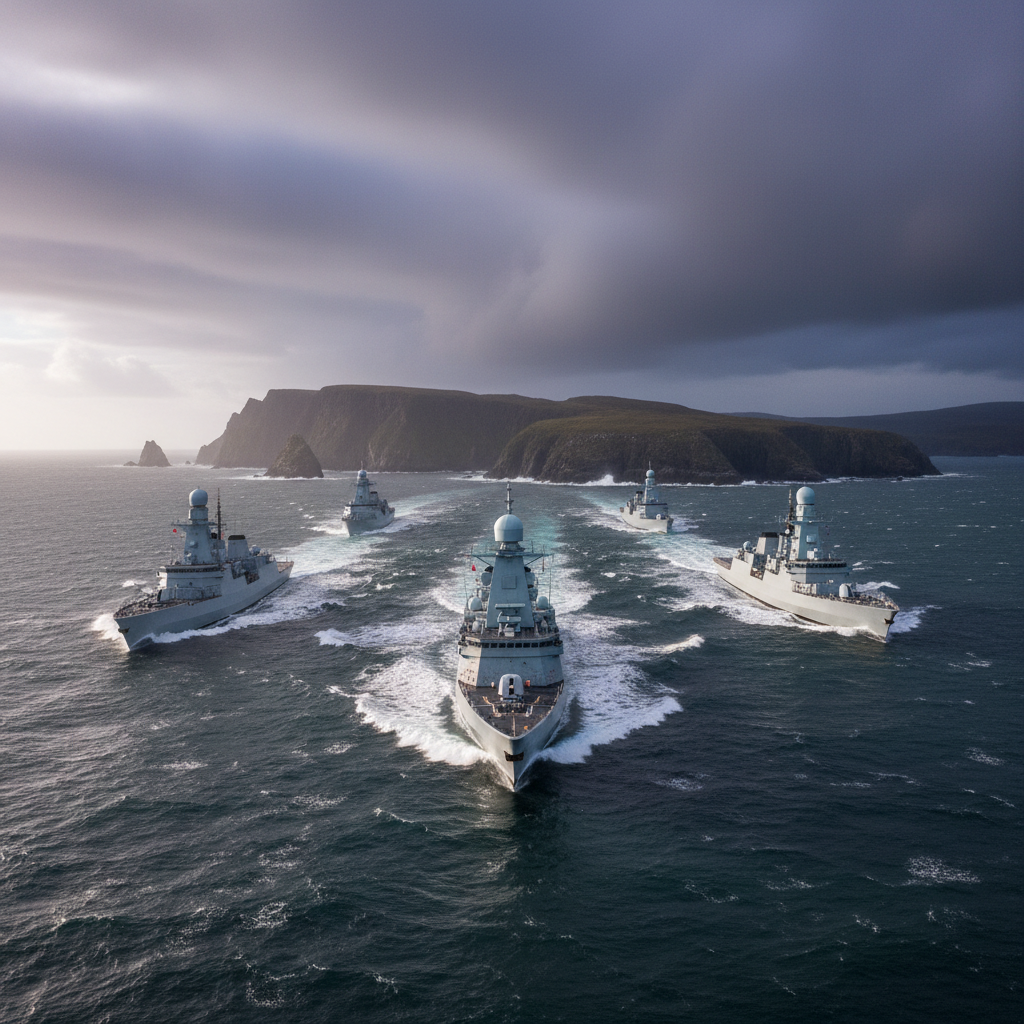
Five autonomous Royal Navy drone boats successfully escorted two warships during a 72-hour trial off the Scottish coast, marking what the service described as a breakthrough in testing uncrewed systems for naval protection operations.
The Rattler vessels protected HMS Tyne and HMS Stirling Castle whilst being remotely operated from the XV Patrick Blackett, with controllers stationed approximately 500 miles away at Portsmouth naval base. The Royal Navy said the exercise demonstrated the effectiveness of its "wolf pack" concept for autonomous vessel coordination.
Remote Operations Prove Effective
The trial showcased the capability of operators to control multiple autonomous boats simultaneously from significant distances, with the Portsmouth-based team directing all five Rattler vessels throughout the three-day exercise. The Royal Navy confirmed the remotely operated boats maintained protective formations around the two warships during various operational scenarios.
HMS Tyne, a River-class offshore patrol vessel, and HMS Stirling Castle, a Hunt-class mine countermeasures vessel, served as the protected assets during the trial. The exercise tested whether autonomous boats could effectively supplement traditional escort duties without requiring crew members aboard each protective vessel.
Each Rattler boat measures approximately 9 metres in length and can reach speeds of up to 38 knots. The vessels are equipped with surveillance cameras and sensors that relay real-time data back to the remote operators, enabling precise coordination despite the 500-mile distance. The Royal Navy noted that communication systems remained stable throughout the 72-hour period, with no significant connectivity issues affecting operational control.
Scottish Waters as Testing Ground
The choice of Scottish coastal waters for this advanced naval trial reflects the area's strategic importance for UK defence testing and development. Scotland's extensive coastline and varied maritime conditions provide ideal environments for evaluating new naval technologies before wider deployment.
The trial builds on Scotland's established role in supporting Royal Navy operations, with several Scottish ports regularly hosting naval vessels and exercises. The success of this autonomous escort trial could position Scottish waters as a continued testing ground for emerging naval technologies, potentially bringing additional defence-related activity to the region.
Scottish maritime conditions during the trial included moderate sea states and variable weather patterns, providing realistic operational challenges for the autonomous systems. The Royal Navy emphasised that testing in actual sea conditions, rather than controlled environments, was crucial for validating the technology's operational readiness.
Industry and Defence Response
Defence analysts have highlighted the trial's significance for UK naval capabilities, particularly as the Royal Navy faces ongoing recruitment challenges and budget constraints. The successful demonstration of remote-controlled escort operations could offer cost-effective alternatives to traditional crewed vessel deployments.
Maritime security experts noted that the "wolf pack" coordination demonstrated during the exercise represents a significant advancement in autonomous naval operations. The ability to deploy multiple protective vessels without requiring individual crews for each boat could substantially reduce operational costs whilst maintaining defensive effectiveness.
The trial also attracted attention from international naval observers, as several allied navies are developing similar autonomous capabilities. The Royal Navy's success in coordinating five vessels simultaneously from such distances sets a new benchmark for remote naval operations.
Implications for Naval Operations
The Royal Navy described the trial as significant for both warship protection and broader naval operations. The "wolf pack" approach allows multiple autonomous vessels to work together in coordinated defensive patterns, potentially reducing the need for crewed escort vessels in certain scenarios.
This development comes as navies worldwide explore autonomous systems to address crew shortages and enhance operational capabilities. The ability to operate drone boats from hundreds of miles away could reshape how naval forces approach protection duties and maritime security operations.
The successful trial demonstrates progress in integrating uncrewed systems with traditional naval operations, according to the BBC report covering the exercise. The Royal Navy indicated the results would inform future development of autonomous naval capabilities and potentially influence procurement decisions for additional Rattler vessels.
Future Development Prospects
The positive results from the Scottish trial are expected to accelerate further testing of autonomous naval systems. The Royal Navy has not yet announced specific timelines for operational deployment of the Rattler boats, but the successful 72-hour exercise represents a significant step towards integrating such systems into regular naval operations.
Future trials may expand the scope of autonomous vessel operations, potentially testing longer-duration missions or more complex defensive scenarios. The proven ability to coordinate multiple drone boats remotely opens possibilities for enhanced coastal patrol capabilities and fleet protection strategies that could benefit Scotland's maritime security interests.
The Royal Navy plans to analyse data collected during the 72-hour trial to refine operational procedures and identify areas for technological improvement. Officials indicated that lessons learned from the Scottish exercise would directly influence the development timeline for broader autonomous fleet integration, with potential implications for UK naval strategy over the next decade.