Labour Landslide Reshapes Scottish Political Map as SNP Loses Key Seats
The SNP suffered significant losses across Scotland as Labour secured a decisive victory, ending 14 years of Conservative government and fundamentally altering representation north of the border.
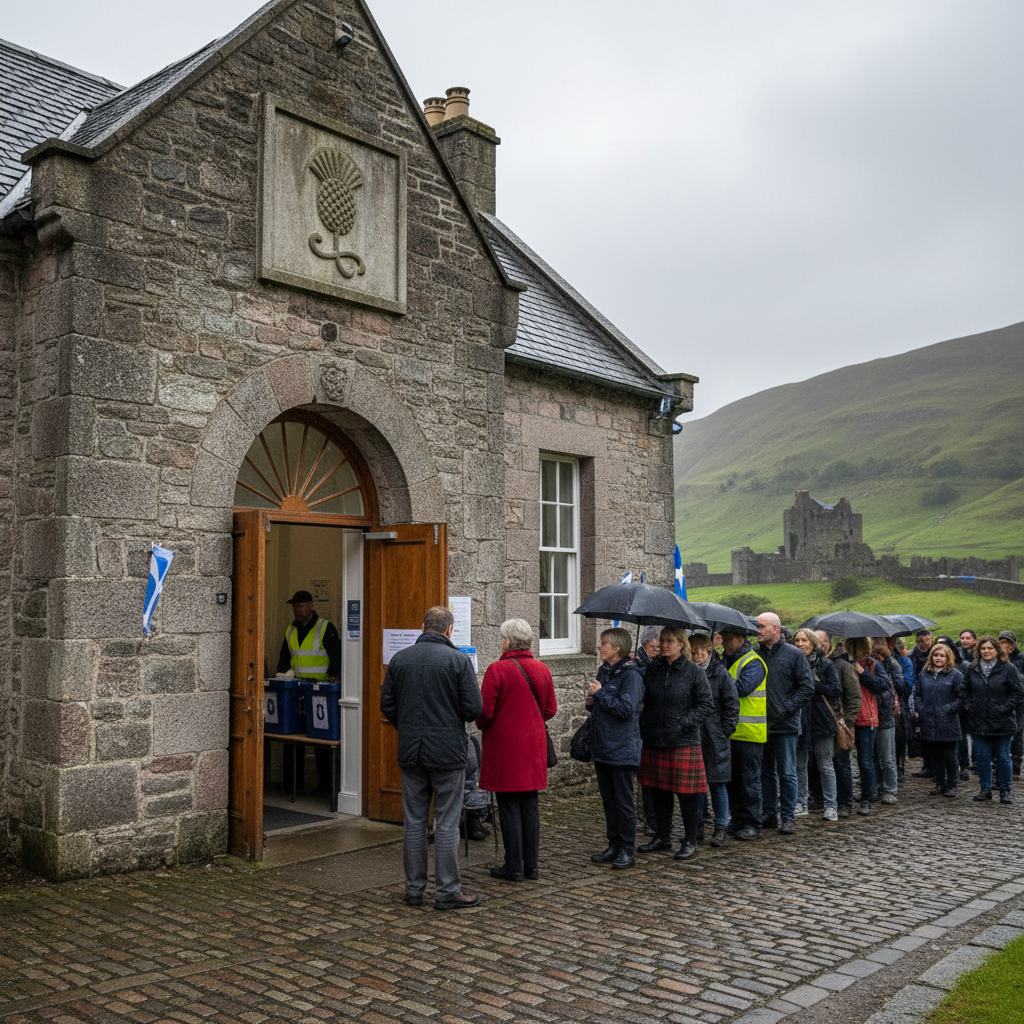
Labour secured a commanding landslide victory in the UK general election on 4 July 2026, ending 14 years of Conservative rule whilst fundamentally reshaping Scotland's political representation. The Scottish National Party suffered significant losses across Scotland, with numerous seats shifting to Labour and other parties as broadcasters called the election for Labour shortly after polls closed at 10pm.
Early results and exit polls indicated Labour had secured a large majority in the House of Commons, whilst the Conservatives recorded one of their worst performances in modern political history. The scale of Labour's victory became apparent as constituencies reported throughout the night, with turnout figures and detailed seat tallies still being finalised as results continued to emerge.
SNP Strongholds Fall to Labour Advance
The most striking development in Scotland was the SNP's retreat from constituencies previously considered safe seats. Labour's resurgence north of the border marked a significant shift from recent electoral cycles, where the independence-supporting party had dominated Scottish representation at Westminster. The losses represent a substantial blow to the SNP's influence in the House of Commons and their ability to advance the independence agenda.
In some constituencies, seats shifted not only to Labour but to other parties, indicating a more fragmented Scottish political landscape. This redistribution of seats suggests voters were willing to look beyond traditional party loyalties, potentially reflecting changing priorities around economic concerns, public services, and constitutional questions. The SNP's decline from their previous Westminster strength represents the most significant realignment of Scottish politics since the independence referendum campaign.
Key urban constituencies that had remained SNP strongholds for over a decade witnessed substantial swings to Labour, whilst rural seats showed more varied patterns of change. The shift indicates that Labour's message on economic recovery and public service investment resonated with Scottish voters who had grown weary of constitutional debates dominating political discourse.
Conservative Collapse Opens New Opportunities
The Conservative Party's historic defeat created space for smaller parties to make notable gains across Great Britain. The Liberal Democrats and Reform UK capitalised on Conservative weakness in specific regions, fundamentally altering the political map. This fragmentation suggests the traditional two-party dominance may face new challenges in the coming parliamentary term.
For Scottish constituencies, the Conservative collapse removed a significant political force that had maintained influence in certain regions, particularly in the Borders and parts of the northeast. This vacuum allowed Labour and other parties to compete more effectively for seats that had been Conservative strongholds or marginal constituencies. The Liberal Democrats regained footholds in areas where they had historically competed strongly, whilst Reform UK's performance varied significantly across different Scottish regions.
The Conservative wipeout in Scotland was particularly pronounced in constituencies where the party had rebuilt support during the 2010s, suggesting that their association with Brexit policies and economic turbulence had fundamentally damaged their Scottish appeal. This collapse opened pathways for Labour to present itself as the primary alternative to SNP representation.
Implications for Scottish Representation
The altered composition of Scottish MPs will likely shift the balance of regional priorities represented at Westminster. With Labour gaining seats previously held by the SNP, Scottish voices in the governing party's parliamentary group will carry different perspectives on devolution, public spending, and economic policy compared to independence-focused SNP representatives.
This change in representation comes at a crucial time for Scotland, as communities grapple with ongoing challenges around public services, economic development, and constitutional questions. The new Labour government will face immediate pressure to demonstrate how increased Scottish Labour representation translates into tangible benefits for Scottish constituencies, particularly around infrastructure investment and job creation programmes.
The reduced SNP presence also diminishes the independence movement's parliamentary platform, potentially shifting political discourse away from constitutional questions towards more immediate economic and social policy concerns. This could provide Labour with opportunities to demonstrate practical governance whilst the SNP reassesses its strategic approach following electoral setbacks.
Looking Ahead to Parliamentary Business
The new parliamentary arithmetic will reshape how Scottish issues are debated and prioritised in the House of Commons. Labour's large majority, combined with reduced SNP numbers, suggests a different dynamic for Scottish affairs compared to recent years when the SNP formed the third-largest party group.
The incoming Labour government has signalled intentions to reset relationships with devolved administrations, though specific policy commitments remain to be detailed. Scottish Labour MPs will likely push for increased infrastructure spending, renewable energy investment, and measures to address regional economic disparities that featured prominently in campaign messaging.
Constitutional questions around Scottish independence, whilst not disappearing entirely, may receive less parliamentary attention as Labour focuses on delivering economic recovery and public service improvements. The SNP's reduced numbers will limit their ability to force debates on independence-related matters, potentially allowing other policy priorities to take precedence.
According to the BBC's election coverage, detailed analysis of constituency results and turnout figures will provide clearer insight into voter motivations and regional variations across Scotland. The coming weeks will reveal how this electoral shift translates into policy priorities and government attention for Scottish communities.
The new Labour government faces the immediate challenge of demonstrating that its landslide victory can deliver meaningful change for voters who have experienced 14 years of Conservative policies. For Scotland, this means addressing long-standing concerns about economic development, public service delivery, and the region's voice within the Union whilst managing expectations around devolved powers and constitutional questions. The electoral realignment suggests Scottish voters prioritised economic stability and public service delivery over constitutional change, creating both opportunities and pressures for the incoming administration.