Riverside Park opens in Govan, restoring community access to the Clyde after four decades
The new waterfront space transforms derelict graving docks into public parkland, marking the first direct community access to the south bank of the River Clyde in nearly 40 years.
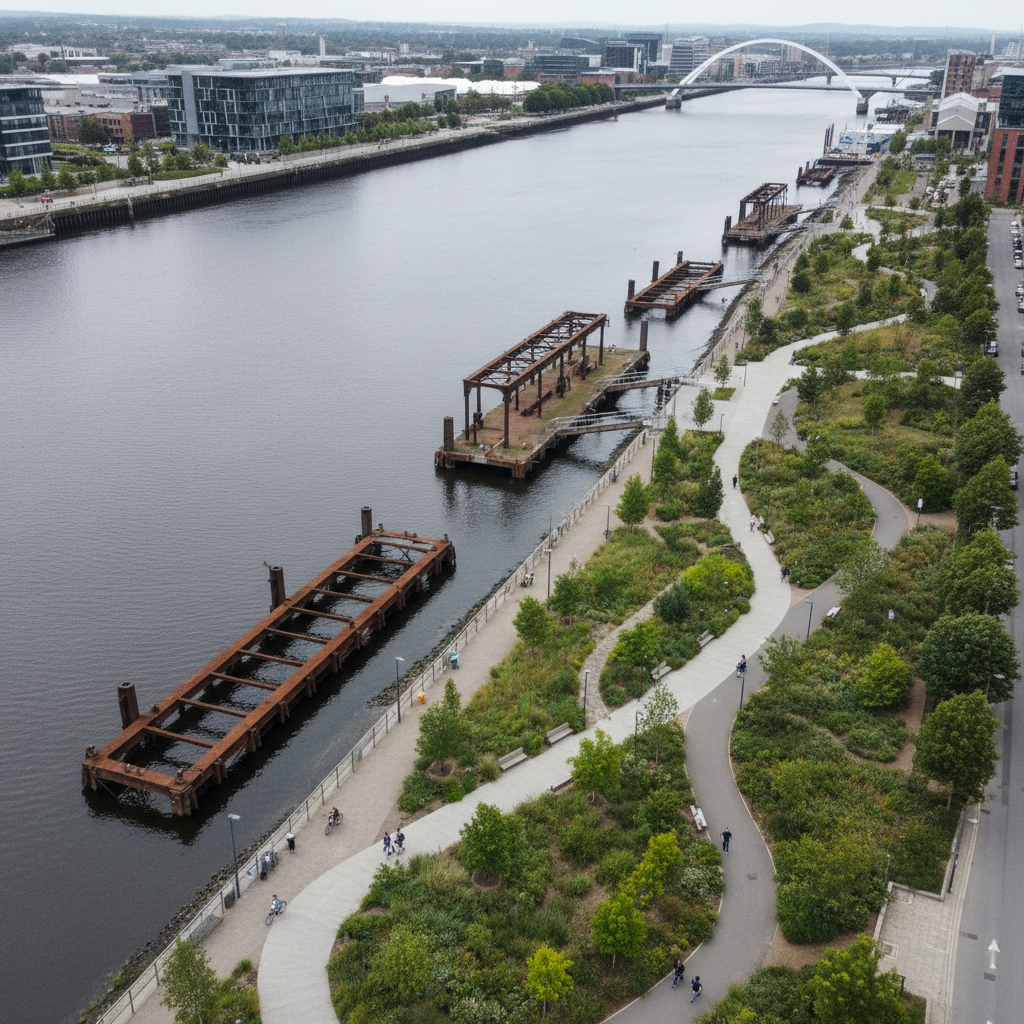
Riverside Park in Govan has officially opened on the site of the former graving docks, restoring direct community access to the south bank of the River Clyde for the first time in nearly four decades. The waterfront space transforms a long-derelict industrial site into public parkland, marking a significant milestone in Glasgow's wider waterfront regeneration efforts.
The redevelopment preserves elements of the historic dock infrastructure whilst adding landscaped paths, seating areas, and viewing points designed for local residents and visitors. Local heritage and community groups were involved in the planning process to balance conservation of Govan's shipbuilding legacy with the creation of accessible green space.
Reconnecting Govan with its waterfront
The opening represents the first time in nearly 40 years that residents have had direct access to this stretch of the Clyde's south bank. The former graving docks, once vital to Glasgow's shipbuilding industry, had remained largely inaccessible to the public since their closure, creating a physical barrier between the community and the river that shaped the area's identity for generations.
The new park design acknowledges this industrial heritage through the preservation of key dock structures, integrating them into the landscape rather than erasing them entirely. Viewing points positioned along the waterfront offer perspectives across the Clyde, reconnecting residents with views that had been lost to decades of dereliction. The park's layout includes dedicated areas for different activities, from quiet contemplation spaces near the preserved dock walls to more active zones with children's play equipment and exercise facilities.
Accessibility features throughout the site ensure that residents with mobility challenges can navigate the waterfront paths and reach key viewing areas. The design incorporates gentle gradients and rest points, addressing longstanding concerns about the exclusion of elderly and disabled residents from waterfront developments across the city.
Community involvement shapes final design
Local heritage and community groups played an active role in shaping the park's development, ensuring that the project balanced conservation priorities with contemporary public space needs. This collaborative approach reflects broader recognition that successful waterfront regeneration requires genuine community input rather than top-down planning.
The involvement of heritage groups proved particularly important in determining which elements of the dock infrastructure to preserve and how to interpret the site's shipbuilding history for future generations. Community representatives advocated for accessible design features that would serve residents across different age groups and mobility levels, whilst also pushing for the inclusion of interpretive materials that would help visitors understand the site's industrial significance.
Regular consultation sessions throughout the planning process allowed local residents to influence decisions about seating placement, pathway routes, and the positioning of memorial features that acknowledge the area's working heritage. These sessions also addressed practical concerns about maintenance, security, and ongoing community access to the waterfront space.
Govan's industrial legacy preserved and interpreted
The graving docks themselves represent a crucial chapter in Glasgow's maritime history, having served the shipyards that once made the Clyde synonymous with global shipbuilding excellence. Rather than completely clearing the site, the redevelopment incorporates surviving dock walls and structures as integral features of the new landscape.
This preservation approach reflects growing recognition of the cultural value of industrial heritage sites, particularly in areas like Govan where shipbuilding formed the economic and social foundation of community life. The park's design allows visitors to understand the site's former function whilst enjoying contemporary amenities, with interpretive panels explaining the dock's role in constructing vessels that sailed worldwide.
The retention of original stonework and metalwork provides tangible connections to the thousands of workers who once laboured on this stretch of the Clyde. Educational elements within the park highlight the technical innovations that emerged from Govan's shipyards, ensuring that younger generations understand the area's contribution to maritime engineering and global trade.
Part of wider waterfront transformation strategy
Riverside Park forms part of Glasgow's broader waterfront regeneration strategy, which has seen various initiatives aimed at reconnecting the city with the Clyde. The project demonstrates how derelict industrial sites can be transformed into community assets whilst respecting their historical significance.
The park's opening comes as other sections of Glasgow's waterfront undergo similar transformations, suggesting a coordinated approach to reclaiming the river as a public amenity. City planners have identified several additional sites along both banks of the Clyde that could benefit from similar community-focused redevelopment, building on lessons learned from the Govan project.
Funding for the park came through a combination of council resources, heritage grants, and community fundraising efforts that demonstrated local commitment to the project. The financial model provides a template for future waterfront developments where public investment can be supplemented by community contributions and targeted heritage funding.
According to reports, this represents one of several major public space projects completed across Scotland this year. The success of the Govan project may influence approaches to similar waterfront sites across the city, where former industrial infrastructure could be reimagined as public space. The combination of heritage preservation, community involvement, and accessible design provides a template for future developments along the Clyde and beyond, potentially extending the model to other Scottish cities with comparable industrial waterfront heritage.