Edinburgh's National Gallery completes £38 million transformation with new Scottish art focus
The capital's premier gallery has unveiled expanded lower galleries and a new Princes Street Gardens entrance following a decade-long redevelopment project.
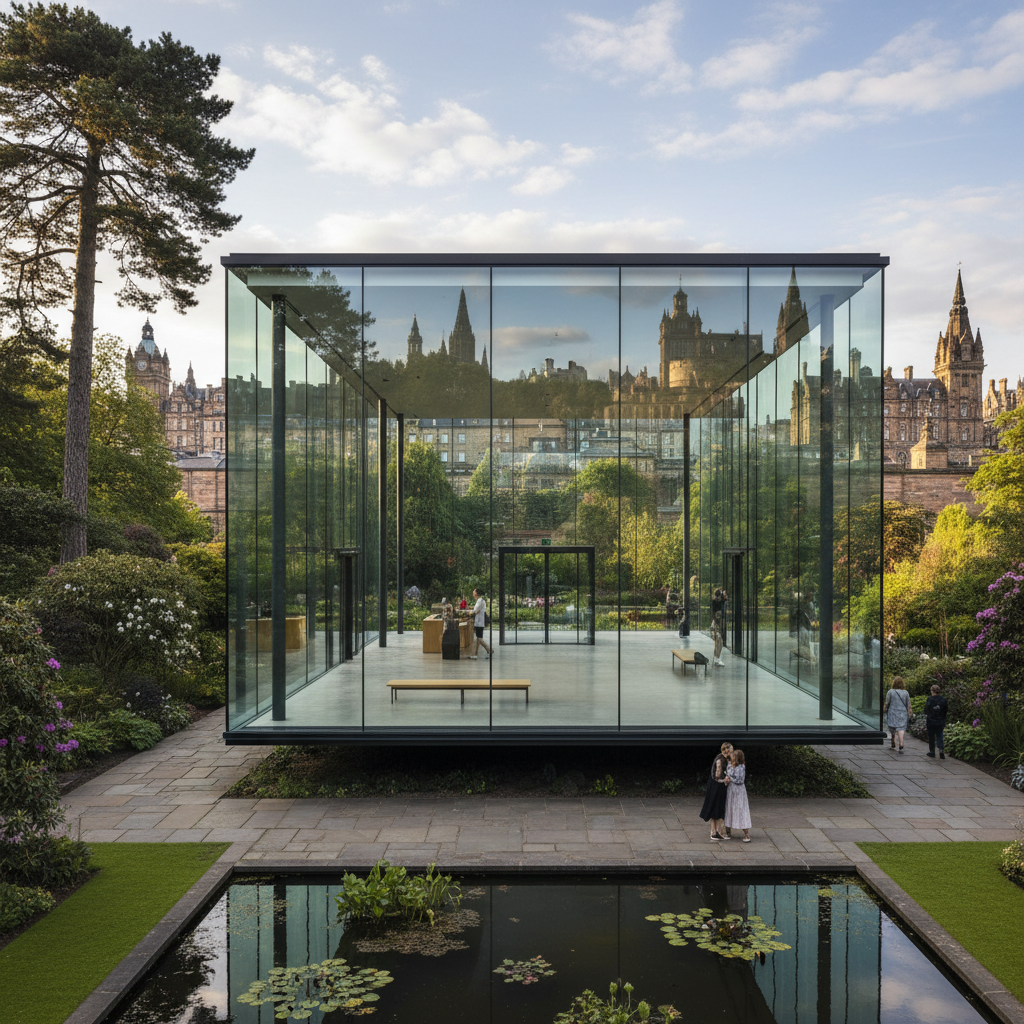
Edinburgh's National Gallery has officially opened its transformed lower galleries following completion of a £38 million redevelopment project that began more than a decade ago. The upgrade, launched publicly in early July, creates new exhibition spaces dedicated to Scottish art and introduces a reconfigured entrance opening directly onto Princes Street Gardens.
The ambitious renovation adds more than 50% extra display space specifically for Scottish works, marking a significant shift in how the nation's artistic heritage is presented at the heart of the capital. Architects have lowered sections of the landscaped gardens and inserted new glazed structures to create light-filled galleries whilst preserving key heritage views across the city.
Reconnecting City Centre and Old Town
The new entrance arrangement fundamentally alters visitor flow between Edinburgh's city centre and Old Town, addressing longstanding accessibility challenges that have persisted since the gallery's original 1859 construction. The direct connection to Princes Street Gardens creates a more intuitive pathway for tourists and residents alike, with the gallery now serving as a cultural bridge between these historic districts.
Early visitor feedback has emphasised the improved accessibility and clearer narrative of Scottish art history now possible within the expanded spaces. The reconfigured galleries allow for more comprehensive displays of Scottish works that were previously stored or rotated due to space constraints. Wheelchair access has been dramatically improved through the new entrance route, eliminating the steep approaches that previously deterred some visitors.
The transformation also addresses crowd management issues that plagued the gallery during Edinburgh Festival periods, when visitor numbers regularly exceeded comfortable capacity. The additional circulation space and dual entrance options now provide better flow during peak tourist seasons.
Funding and Cultural Tourism Impact
The project received funding through a combination of public grants, National Galleries of Scotland resources, and private donations, with the Scottish Government contributing a significant portion of the total budget. Officials expect the transformation to significantly boost cultural tourism, with the enhanced Scottish art focus providing a more distinctive offering for visitors to the capital.
Tourism industry analysts predict the gallery's enhanced capacity could attract an additional 100,000 visitors annually, contributing millions to Edinburgh's economy. The timing coincides with Scotland's broader cultural tourism strategy, which emphasises authentic Scottish experiences over generic attractions.
The new vantage points over Edinburgh's skyline, created through the architectural intervention, have already become talking points among early visitors and social media influencers. These viewing opportunities add an additional layer to the gallery experience, connecting the art within to the historic cityscape beyond, including direct sightlines to Edinburgh Castle and the Scott Monument.
Architectural Achievement and Heritage Balance
The design challenge centred on expanding gallery space whilst respecting the sensitive historic setting and maintaining the gallery's Grade A listed status. The solution of lowering garden sections and introducing glazed structures represents a careful balance between contemporary needs and heritage preservation, with Historic Environment Scotland providing oversight throughout the process.
The light-filled galleries contrast with traditional museum spaces, offering new possibilities for displaying and interpreting Scottish art. Natural lighting systems reduce energy consumption whilst protecting artworks through sophisticated UV filtering and climate control systems. The underground expansion technique avoided compromising the gallery's neoclassical facade, designed by William Burn and David Bryce.
The transformation places Scottish artistic heritage at the centre of the National Gallery's offering, reversing decades where space limitations meant much of the collection remained in storage. This shift reflects broader cultural policy priorities around celebrating and promoting Scottish creativity, aligning with the Scottish Government's cultural strategy published in 2020.
The completion of this long-awaited project positions Edinburgh's National Gallery as a more significant destination on Scotland's cultural map. According to BBC Scotland's coverage, the redevelopment represents one of the most substantial cultural infrastructure investments in the city in recent years, comparable to the Scottish Parliament building project in scope and ambition.
Programming and Future Exhibitions
Gallery officials are now planning the inaugural exhibitions for the new Scottish art spaces, with programming expected to showcase both historical works and contemporary Scottish artists. The enhanced capacity allows for more ambitious temporary exhibitions alongside expanded permanent displays, with the first major Scottish-focused exhibition scheduled for autumn 2024.
Partnerships with regional galleries across Scotland are being developed to rotate works and create touring exhibitions that can utilise the new space. The gallery's education programmes will expand significantly, with dedicated workshop areas and improved facilities for school groups and adult learners.
The success of the entrance reconfiguration and visitor flow improvements will likely influence future cultural developments in Edinburgh's city centre, including planned upgrades to the nearby Scottish National Portrait Gallery. The project demonstrates how major cultural institutions can adapt to serve both preservation and accessibility goals whilst contributing to urban regeneration efforts around Princes Street and the Old Town.