Scotland's wet relief as England faces new water restrictions amid climate divide
Heavy rain forecast for Scotland contrasts sharply with Thames Water's hosepipe ban for 1.1 million customers as the UK's third heatwave ends.
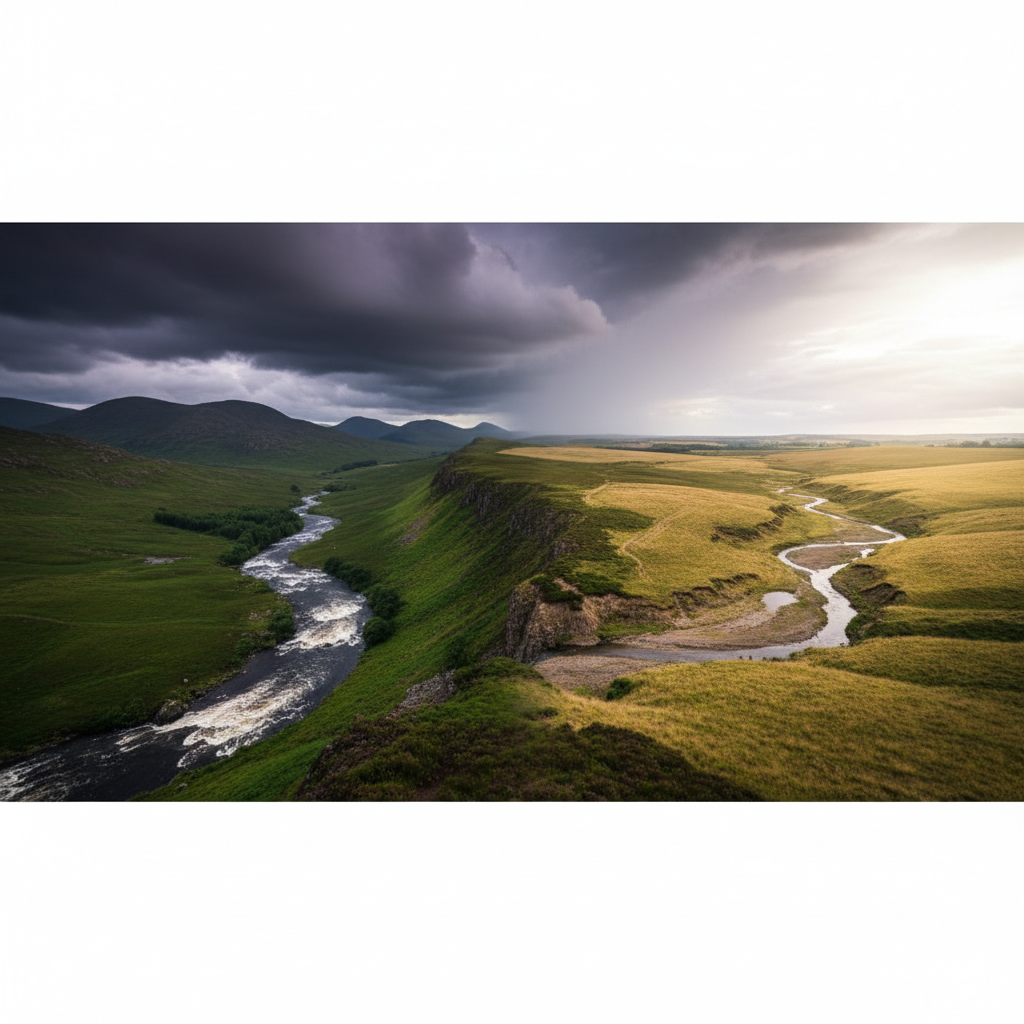
Scotland is bracing for heavy rain this week as England grapples with a new hosepipe ban affecting 1.1 million Thames Water customers, highlighting the stark regional divide in Britain's climate reality. The restrictions come into force at one minute past midnight on 22 July 2026, just as the country emerges from its third heatwave of the year with temperatures dropping to 18C–24C across much of the UK from Monday.
Tale of Two Nations
The meteorological map tells a story of contrasts that would have seemed fantastical a generation ago. While Scotland prepares for deluges and Northern Ireland expects frequent showers, southern England remains largely parched with only isolated rainfall predicted. Thames Water's announcement underscores the sustained dry conditions that have pushed water resources to breaking point in parts of the south, even as Scottish rivers run full and reservoirs overflow.
This isn't merely a temporary weather pattern—it's becoming the new normal. The hosepipe ban affects customers across parts of southern England where lawns have turned to stubble and garden centres report unprecedented demand for drought-resistant plants. Meanwhile, Scottish farmers worry about waterlogged fields and delayed harvests, a concern that would sound absurd to their counterparts 400 miles south.
Beyond the Immediate Crisis
Meteorologists emphasise that the formal end of heatwave conditions shouldn't mask the broader implications of this summer's weather patterns. The third heatwave follows an exceptionally dry spring and early summer, creating what experts describe as a perfect storm for water security concerns. The fact that we're discussing a third heatwave before August arrives speaks to the frequency and intensity of extreme weather events becoming routine rather than exceptional.
The regional disparities extend beyond simple rainfall totals. Scotland's infrastructure, built for a wetter climate, now faces the challenge of managing excess water and potential flooding, while England's water companies scramble to maintain supplies for growing populations in increasingly arid conditions. The irony is palpable: one part of Britain drowning while another thirsts.
Climate Resilience Under Pressure
The mixed weather picture across Great Britain raises fundamental questions about long-term climate resilience that politicians have been reluctant to address directly. Scotland's abundance of water resources—from Highland lochs to Lowland rivers—positions it advantageously in a warming world, yet the infrastructure to share this wealth with parched southern regions remains largely theoretical.
Water transfer schemes, once dismissed as engineering fantasies, are gaining serious consideration as the climate divide deepens. The prospect of Scottish water flowing south through massive pipelines no longer sounds like science fiction when Thames Water customers face their taps running dry in what was once considered a temperate, well-watered island nation.
The broader implications stretch beyond water policy into questions of economic development, population distribution, and even constitutional arrangements. If Scotland becomes Britain's water tower while England faces recurring droughts, the political dynamics of the Union take on new dimensions that extend far beyond traditional debates about North Sea oil or fishing rights.
Adaptation and Reality
The current weather transition offers a glimpse of Britain's climate future: more extreme, more unpredictable, and more regionally divided. The hosepipe ban affecting 1.1 million people represents not just a temporary inconvenience but a preview of the choices facing a nation where water scarcity and abundance exist within the same borders.
Scottish policymakers would be wise to view their wet summer not as a burden but as a strategic asset requiring careful stewardship. The rain hammering Scottish roofs this week represents liquid gold in a world where water security increasingly determines national prosperity. According to the BBC report, the growing regional disparities in climate impacts across Great Britain suggest that Scotland's relationship with its abundant water resources will become increasingly central to its economic and political future.
As England imposes water restrictions and Scotland braces for floods, the climate reality reshaping Britain demands policies that acknowledge not just the science of global warming but the stark geography of its local impacts. The third heatwave may be ending, but the deeper reckoning with Britain's climate divide has only just begun.