Scottish Government to publish draft independence referendum legislation
Ministers plan to set out timetable and question for second independence vote despite constitutional constraints on Holyrood's powers.
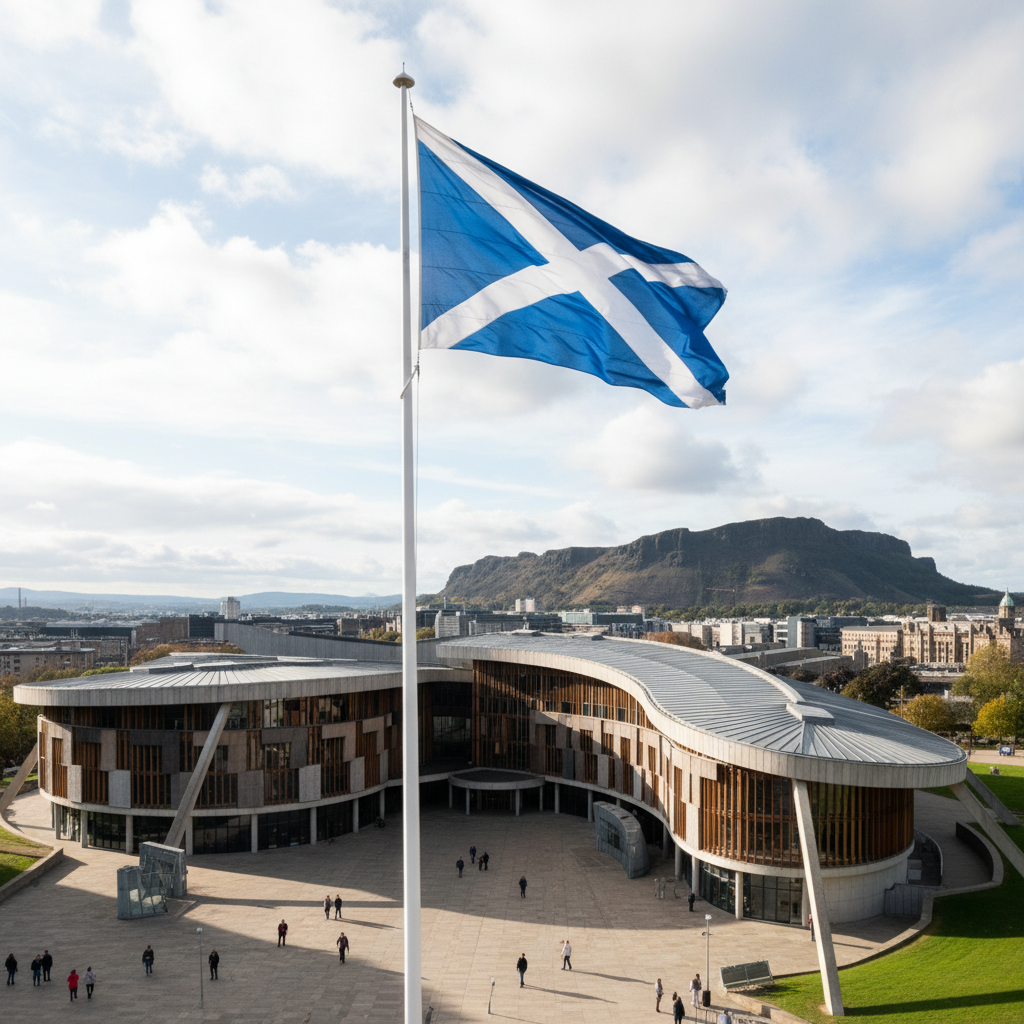
The Scottish Government will publish draft legislation outlining how a second independence referendum could be conducted, including the proposed timetable and question, First Minister Nicola Sturgeon has announced. The move represents a renewed push for Scottish independence more than a decade after the 2014 referendum.
Sturgeon said the draft bill aims to advance preparations for a future vote while ensuring any ballot could not be easily challenged in the courts. The proposed legislation would set out the framework for conducting another independence referendum, though significant constitutional hurdles remain.
Constitutional battle looms over referendum powers
The draft legislation faces substantial legal obstacles, as the UK Parliament retains control over whether Scotland can hold another independence referendum without Westminster's agreement. Holyrood's powers are limited by the Scotland Act, which reserves constitutional matters to the UK Government.
Any attempt to proceed with a referendum based solely on Scottish legislation would likely trigger a constitutional confrontation between Edinburgh and London. The 2014 independence vote was held under a Section 30 order agreed between both governments, providing the legal framework that allowed Holyrood to conduct the ballot.
The current UK Government has repeatedly stated it will not grant another Section 30 order, arguing that the 2014 referendum settled the independence question for a generation. Prime Minister Boris Johnson has described calls for another referendum as "irresponsible and reckless" during the ongoing pandemic recovery.
Constitutional lawyers have warned that any referendum held without Westminster consent could face immediate legal challenges. Professor Aileen McHarg of Durham University has noted that the Scotland Act's reserved powers provisions create significant barriers to unilateral action by Holyrood.
SNP strategy focuses on legal certainty
Sturgeon emphasised that the draft bill is designed to create a legally robust framework that could withstand potential challenges. The legislation would define the referendum question, establish the electoral franchise, and set out campaign rules and spending limits.
The move appears calculated to demonstrate the Scottish Government's commitment to independence while highlighting Westminster's role in blocking Scottish democracy. SNP strategists believe publishing detailed referendum plans will strengthen their argument that Scotland is being denied the right to choose its constitutional future.
The draft legislation would also provide clarity on the practical mechanics of holding a referendum, addressing concerns raised after the 2014 vote about campaign conduct and voter information. The Electoral Commission's recommendations from the previous referendum are expected to be incorporated into the new framework.
Senior SNP figures have indicated the legislation will include provisions for extending voting rights to 16 and 17-year-olds, as was the case in 2014. The party views younger voters as more supportive of independence, with polling consistently showing higher support among under-35s.
Political implications for Scotland's constitutional future
The announcement signals a renewed focus on independence within the SNP's political strategy, following years of Brexit-related constitutional upheaval. The party has argued that Scotland's vote to remain in the European Union in 2016, contrasted with the UK's decision to leave, represents a material change in circumstances justifying another referendum.
Opposition parties have criticised the move as a distraction from pressing domestic issues including healthcare, education, and the cost of living crisis. Scottish Conservative leader Douglas Ross accused the SNP of "obsessing over independence" while public services face mounting pressures.
Scottish Labour's Anas Sarwar echoed similar concerns, arguing that voters want action on NHS waiting times and economic recovery rather than constitutional politics. Recent polling has shown mixed results on independence support, with some surveys indicating a narrow majority for remaining in the UK.
The timing of the announcement, according to the BBC report, reflects the SNP's determination to keep independence at the forefront of Scottish politics despite Westminster's opposition. Political analysts suggest the move is designed to maintain momentum within the independence movement while pressuring the UK Government.
Next steps in independence campaign
The publication of draft legislation represents the first concrete step in what is likely to be a protracted constitutional battle. The Scottish Government will need to navigate complex legal challenges while building public support for independence.
Legal experts expect any referendum held without Westminster agreement would face immediate court challenges, potentially reaching the UK Supreme Court. The Scottish Government may seek to test the legal boundaries of Holyrood's powers through the courts before proceeding with any referendum.
The draft bill's publication will also provide opposition parties and pro-union campaigners with detailed proposals to scrutinise and challenge. The independence movement will use the legislation to demonstrate its readiness to hold a referendum while arguing that Westminster is blocking Scottish democracy.
Constitutional experts anticipate the legislation will undergo extensive parliamentary scrutiny at Holyrood, with opposition MSPs likely to table numerous amendments. The process could take several months before any final bill emerges, during which time political and legal pressure on both governments is expected to intensify.
Independence campaigners view the draft legislation as a crucial step toward achieving their goal, while unionists prepare for renewed constitutional battles. The outcome will likely shape Scotland's political landscape for years to come, regardless of whether a referendum ultimately takes place.