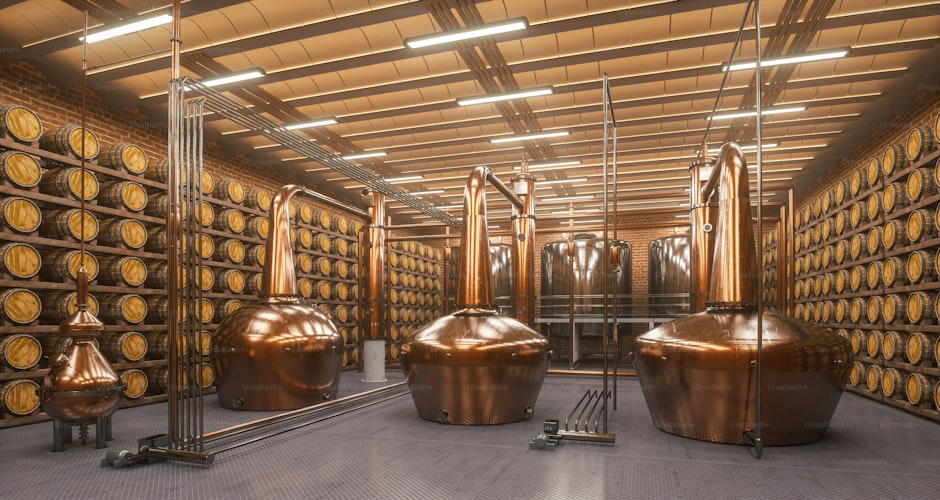
I was in Speyside before Christmas, visiting a distillery that my family has bought bottles from for as long as I can remember. The warehouse was full. Not in the proud, prosperous way that suggests booming demand, but in the anxious way that suggests stock is not moving as fast as anyone would like. The manager, a man I have known for years, put it plainly: “We are making more whisky than the world is buying right now.”
The Scotch whisky industry is worth roughly 6 billion pounds in exports annually. It supports tens of thousands of jobs, many of them in rural communities where alternative employment barely exists. For decades, it has been one of Scotland’s most reliable economic success stories. But the industry is now facing a convergence of pressures that, taken together, represent the most serious challenge it has encountered since the downturn of the 1980s.
Start with tariffs. The United States has historically been the largest single market for Scotch whisky, and the relationship has been turbulent. The 25 percent tariff imposed during the Airbus/Boeing dispute cost the industry an estimated 600 million pounds in lost exports before it was suspended. The threat of renewed tariffs under the current American administration has created deep uncertainty. Distillers I have spoken with describe a planning environment where they simply cannot predict what the cost of selling into America will be six months from now. For an industry that thinks in decades (you cannot rush the ageing of whisky), this kind of short term unpredictability is genuinely damaging.
The European Union remains important, but post-Brexit trade friction has added cost and complexity to every shipment. India, which represents an enormous potential market, maintains tariffs of 150 percent on imported spirits. Negotiations to reduce that figure have dragged on for years. The prize is vast: India’s middle class is growing rapidly and has demonstrated a strong appetite for premium spirits. But every year of delay is a year in which Indian domestic whisky brands, some of them now excellent, consolidate their hold on the market.
Beyond trade policy, consumer habits are shifting in ways that should concern the industry. Younger drinkers across key markets are consuming less alcohol overall. The rise of the “sober curious” movement is not a fringe trend; it is showing up in sales data across the drinks sector. When younger consumers do drink, they are more likely to reach for tequila, mezcal, Japanese whisky, or craft gin than for a bottle of Scotch. The Scotch Whisky Association’s own figures show that while overall export value has held up reasonably well, volumes have been under pressure.
I have heard some in the industry dismiss these trends as cyclical. Scotch has weathered shifts in fashion before, they argue, and it will do so again. There is truth in that. But I think there is also a complacency that could prove costly. Japanese whisky barely existed as a global category fifteen years ago. Now Suntory and Nikka command prices and prestige that rival the finest Scottish single malts. That did not happen by accident. It happened because Japanese producers invested heavily in quality, marketing, and storytelling while some Scottish brands relied on heritage alone.
The good news is that parts of the industry are adapting intelligently. Diageo’s investment in visitor experiences, from the Johnnie Walker Princes Street attraction in Edinburgh to upgraded distillery tours across Scotland, shows an understanding that selling whisky in the modern era requires selling an experience, not just a liquid. Smaller producers are experimenting with cask finishes, collaborations, and direct to consumer sales models that bypass traditional distribution. The growth in Scotch whisky tourism, with distillery visits now numbering over two million annually, is creating a new generation of engaged consumers who have a personal connection to the product.
But the structural challenges remain formidable. Energy costs have risen sharply, and distilling is an energy intensive process. Barley prices have been volatile. The supply of quality oak casks, essential for maturation, has become more competitive and expensive as bourbon and wine producers around the world expand. These input costs squeeze margins, particularly for smaller independent distillers who lack the economies of scale enjoyed by the major groups.
The Scottish Government and the UK Government both need to recognise what is at stake. This is not simply a commercial sector; it is a cultural institution that underpins communities from Islay to Orkney to the Borders. The freeze on spirits duty announced in the last budget was welcome but insufficient. What the industry needs is a coherent trade strategy that prioritises market access, a tax regime that recognises the unique economics of a product that must be aged for years before it generates revenue, and investment in the infrastructure (roads, housing, broadband) that allows distilleries in remote locations to attract and retain skilled workers.
Back in that Speyside warehouse, surrounded by thousands of casks quietly maturing, I was reminded that whisky is fundamentally a product of patience. The industry has time to adapt, but not unlimited time. The world is not going to wait for Scotland to sort itself out. The competition is too fierce, the markets too volatile, and the consumers too fickle. Scotch whisky is a magnificent product with a story that no competitor can replicate. But a good story is not enough on its own. It never has been.
