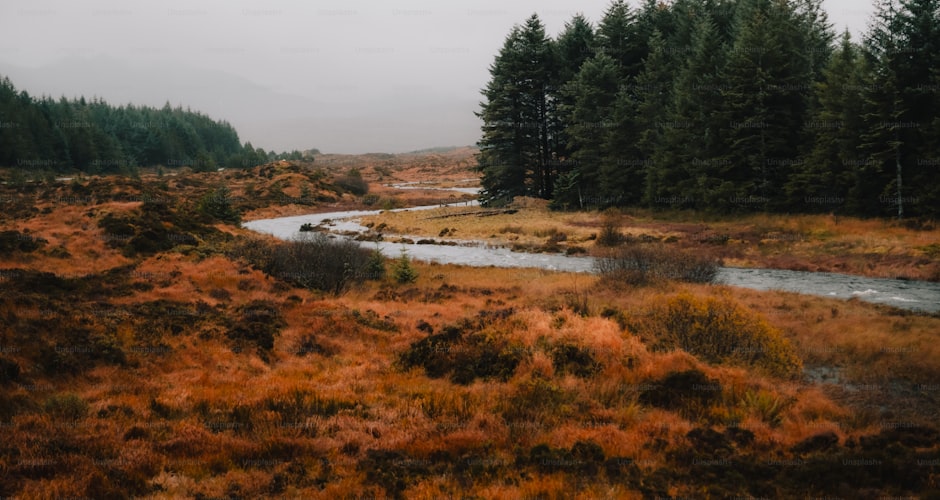
I stood at the edge of Glen Feshie last autumn, looking across a valley that would have been unrecognisable twenty years ago. Where once there was bare hillside, grazed to stubble by deer, there are now young birch and rowan trees pushing through the heather. Scots pine saplings, some already taller than me, are filling in gaps that have been empty for centuries. This is what rewilding looks like when you give the land half a chance.
Scotland’s rewilding movement has shifted from fringe idea to national conversation. Cairngorms Connect, the partnership that manages over 60,000 hectares of land in and around the national park, is the largest habitat restoration project in Britain. It brings together RSPB Scotland, Forestry and Land Scotland, NatureScot, and the Wildland estate. Their ambition is straightforward: let the Caledonian forest return. Remove the fences, cull the deer numbers, plant where needed, and step back.
I have visited the project several times over the past few years, and the change is visible even to someone without a botany degree. The understorey is thickening. Juniper bushes, once scattered and lonely, are spreading. Insect life is more abundant. On my last visit, I watched a crested tit working through a stand of old pines. These are the small victories that add up.
But rewilding in Scotland is not just about trees. The conversation has moved toward the more contentious question of large predators. The idea of reintroducing wolves or lynx to the Highlands provokes strong reactions, and rightly so. Farmers in Glen Lyon and Strathspey are not being unreasonable when they ask what happens to their livestock. These are real livelihoods, not abstract concepts. I have spoken to hill farmers who feel dismissed by conservationists based in Edinburgh, and I understand their frustration.
Still, the ecological case is compelling. Scotland’s deer population, estimated at over a million red deer alone, has no natural predator. The result is overgrazing on a massive scale. Young trees cannot establish themselves. The bare, treeless hills that tourists photograph as “wild Scotland” are actually ecological deserts, maintained by grazing pressure. Lynx reintroduction, which is further along in feasibility studies than wolves, could help restore balance. The charity Trees for Life, based at Dundreggan near Loch Ness, has been one of the more thoughtful voices on this topic, arguing for gradual steps rather than dramatic gestures.
Further north, the Alladale Wilderness Reserve in Sutherland has been at the centre of the rewilding debate for years. Paul Lister, who owns the 23,000 acre estate, has long advocated for wolves and bears behind fenced reserves. His critics call it a vanity project. His supporters call it visionary. I think the truth sits somewhere in between. Alladale has done genuine restoration work, planting hundreds of thousands of native trees and allowing the landscape to recover. Whether it needs apex predators inside a fence is a separate question.
The community dimension matters too. In Langholm, the local community buyout of the former Buccleuch estate has turned into one of Scotland’s most watched conservation experiments. The Langholm Initiative and the Tarras Valley Nature Reserve are attempting to prove that rewilding can coexist with rural communities, bringing in eco-tourism revenue and creating local jobs. Early results are encouraging, with hen harriers returning to breed on the moor for the first time in years.
What strikes me most about Scotland’s rewilding movement is its diversity. It is not one project or one philosophy. It ranges from the corporate scale of Cairngorms Connect to the grassroots effort at Carrifran Wildwood in the Borders, where volunteers have planted over half a million trees in what was once a bare glacial valley. Each project reflects its landscape and its people.
I do not think Scotland will have wolves roaming the Cairngorms in my lifetime. But I do think the forests are coming back, slowly and stubbornly, in the way that nature tends to work when you remove the obstacles. Every time I walk through Glen Feshie and see another year’s growth on those young pines, I feel something close to hope. The land remembers what it was. Given time, it will get there again.