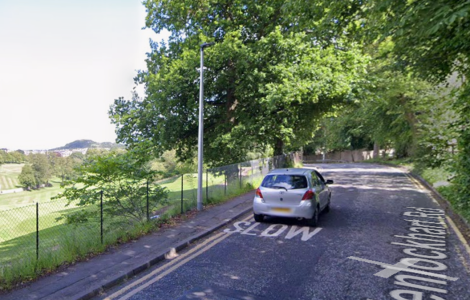
If you want to run away
and never be seen again,
don’t come here
Gerard Rochford
The July poem
 Andrew Hook
When I read the heading to Walter Humes’s contribution (1 June) I have to admit I misunderstood it. I took the phrase ‘The word "professional" is now as suspect as the word "banker" ‘ to mean that the conjunction of ‘professional’ and ‘banker’ was unfair and unacceptable. But of course I was completely wrong.
Professor Humes is fully persuaded that today’s professionals deserve as much opprobrium as is heaped on today’s bankers. Well, I disagree. Of course some of the points made in the piece are fair enough. No doubt Edward Said is right to complain about the limitations of professional organis-ations. It is true that bodies set up to protect the public from bad professionals sometimes prove to be defensive bastions of self-serving conservatism. Professionals on occasion may well be arrogantly complacent.
But what is one to make of Professor Humes’s conclusion that ‘the discourse of professionalism’ is used for dubious purposes, including the assertion ‘that "experts" always know best’?
My response is to suggest that all too often experts do indeed know best. To deny this is in my view to be complicit with one of the most nauseating shibboleths of contemporary politics: the notion that power should be taken away from ‘them’ and given to ‘us’. ‘They’ are the state, the government, Whitehall, the civil service in general, local authorities, local councillors, and more or less anyone who is committed to making civil society function. We, of course, are ‘us’. Politician after politician, of every party, bangs on interminably about how we all want more power: power to set up our own schools; power to run our police forces; power to pick and choose a hospital to treat us; power to decide how often our rubbish-bins are emptied. We know best about all these things. Utopia is ours for the taking: once we thumb our noses at all those Whitehall experts and professionals.
I don’t believe a word of it. What we want is that the ‘professionals’ – the teachers, doctors, civil servants, administrators – do a good job. What we want is a good local school, a good local hospital, and a good local administration. We want those who make decisions that affect our lives to be educated, informed, knowledgeable, expert. We want them to be professional. If they are falling short in any way, we want them to be more professional, not less. The man in the street, or on the Clapham bus – like the reader of the Daily Mail or the Sun – doesn’t know what’s best. We need to encourage professionals to hone their professionalism. What we don’t want to do is denigrate them.
In the middle of the 19th century American politics boasted a ‘Know Nothing’ party. In today’s anti-expert, anti-professional, anti-‘them’ climate, that is the party to which all our politicians seem to belong. I at least find that more than a little worrying.

The place where lives
are marred
from cradle to grave
Katie Cunningham

Photograph by Islay McLeod
The time has come for us to make a bold statement about our commitment
to social justice and to lead the UK by example.
Health visitors build close, mentoring relationships with each family, offering practical guidance on a variety of topics, from staying healthy during pregnancy and caring for an infant, to broader issues such as claiming support, finding employment and building self efficacy. Evaluations of the partnership show significant and wide-ranging benefits. Mothers exhibit better health, improved parenting practices and greater economic self-sufficiency, while children are less vulnerable to abuse and neglect, have better academic achievements and are less likely to become involved in youth crime.
Financial evaluations are equally impressive, with cost savings ranging from $17,000 to $34,000 per child by the time they reach 15. This represents a $3-5 return for every $1 invested. Indeed, the intervention has been so successful that similar models are now being implemented in such countries as Germany, Australia and England.
However, interventions alone are not enough. They must be supported by fairer and more responsible public policies.
Such pronounced social inequity is not unavoidable; it is shaped by government decisions on issues such as taxation, business and labour regulations and housing standards. Any efforts to mould a more equal society must be supported by favourable and consistent acts of government which tackle the root causes of inequity and prevent problems before they arise.
In April, the Equality Act was to have been updated by both the UK and Scottish governments to include a socio-economic duty, for the first time making it mandatory for all public bodies to consider the impact of their activities on social inequity. This would have required them to exercise decisions in a way which was sensitive to the disadvantage faced by certain groups and did not aggravate their circumstances or contribute to a widening of the socio-economic spectrum. The duty was to represent a pioneering step towards a more equal society.
It was dismissed with the arrival of the coalition government in May, 2010. This had a knock-on effect on the Scottish Government, which has since postponed implementation of the duty indefinitely.
We must urge the Scottish Government to reconsider. The time has come to make a bold statement about our commitment to social justice and to lead the UK by example. Proceeding with the duty would help create the environment necessary for change, enabling the government to achieve its founding objective of creating a fairer, healthier and wealthier Scotland.
And so I return to my original question: How would you feel if I told you something was holding you back, but that it’s something we can control? We can break the cycle of deprivation, not only for ourselves, but for our children and for the future of our country. The power is in our hands.
Click here for the winning paper by Gillian McMahon
Tomorrow: the winning paper in the Young Ireland Programme