The acquittal of
Patrick Sellar: ‘a verdict
satisfactory to the court’
The Cafe
Economics of dependence

When the judge is
your enemy, you have
nothing to lose
Michael Elcock
Bad words
 Rear Window
Three men of sport (3)
Sayings of Sir Robert Kelly (1902-71), the football administrator known as ‘Mr Celtic’
[1] His response to a suggestion that the European Cup final between Celtic and Feyenoord in 1970 should be postponed because of a transport strike and other problems: ‘We have a field here and a ball, there’s a referee and two teams waiting. We don’t need anything else’.
[2] From his speech at an official banquet following a bruising defeat in Budapest in 1964: ‘If I have heard correctly, you claim that you learned the game from us early this century. Let me assure you that no Celtic side I have ever seen has used such methods nor played in the manner you played tonight’.
[3] Opposing a proposed venue for he World Cup in 1960: ‘I can see no sense in playing the tournament in Chile, a remote country in which I understand it takes one year to become acclimatised’.
Unlike many publications SR doesn’t have an online comment facility – we prefer a more considered approach. The Cafe is our readers’ forum. If you would like to contribute to it, please email islay@scottishreview.net
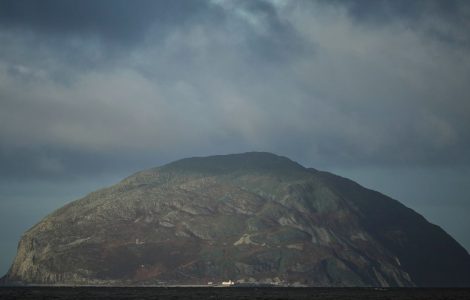
Today’s banner
Photograph by
Islay McLeod

The human folly
of slaughtering
the sharks
Six papers by young thinkers
3. Paul Keen on the marine environment
The oceans are in deep trouble. Globally we are gutting our seas of fish and turning their floors to deserts. Since 1900 many species have declined by over 90% and it’s getting worse. Nets scour reefs, super trawlers vacuum up shrimp and we continue to pour in pollution. Many nations flout laws.
It may seem harsh to describe fisherman as cruel and it certainly does not apply to all of them, but how else to portray the world’s shark fisherman who take tens of millions of sharks a year. Large numbers of them are finned alive for nothing more than shark fin soup, thrown overboard and allowed to sink to the bottom to die. How else to characterise the huge number of fish and other sea creatures scooped up in nets, allowed to suffocate and then dumped overboard as so-called bycatch? How else to characterise the longline fisheries whose miles of baited hooks attract and drown creatures such as loggerhead turtles and wandering albatrosses?
There have been some massive extinctions in the distant past, primarily associated with environmental changes. But mankind has completely changed the picture. We are now heading for a new extinction event in the world’s oceans. This time it is driven not by long-term climate change or natural disasters, such as the planet’s orientation or position in the solar system, volcanic activity or meteor impact, but our unsustainable exploitation of marine and terrestrial resources.
What is really alarming is the very recent nature of this impact. Whilst most extinctions as a result of human activity took place over thousands to hundreds of years, our impact on large marine animals is very recent. Habitat alteration, damage and loss from development, agriculture, pollution and the impact of fisheries on seabed and food species are all contributors to the disaster.
Most large-scale shark fisheries only really began to expand in the mid 1980s and demand increased for their fins, meat and cartilage. Presently some 100 million sharks a year are slaughtered. This is a species that is relatively old before reaching sexual maturity and unlike bony fish give birth to few young. Population declines of 70% to 90% have been experienced in some parts of world in the last 20 years. So although sharks have been on the planet for 400 million years – before trees or dinosaurs, the dawn of this extinction crisis is only 20 years old.
Man-eating shark or shark-eating man? – you decide.
But we need sharks in our oceans. Apart from the obvious need for food, particularly in regions where protein is scarce, we need them for recreation from which the economic benefits are huge, and far outweigh the price bartered for their fins and when they are gone forever. We need sharks and all creatures under pressure simply for the joy of knowing that they are there. Most importantly we need sharks for the regulation of the marine ecosystem.
There is so much to do I sometimes wonder whether there are any viable answers that can halt the deteriorating world environment in any meaningful way – above as well as below water.
Removing sharks does not mean their prey animals will increase. Rather their loss has and will continue to reduce populations of other species lower down the food chain as sharks no longer reduce their predator numbers. Cutting down trees may affect local environment in various ways, but explosions of plankton that feed on algae which in turn produce the vast majority of oxygen released into our atmosphere is even more worrying.
The thin spherical shell of land and water between the interior of the planet and the atmosphere holds the interacting living tissue of organisms and has been there for over four billion years. It is a self-regulating living system. We are part of it although have lost the opportunity to be in balance with that system.
The human species consumes without regulation in a stable global environment. A bacteria in a petri dish multiplies until all resources are consumed – and it dies.
Token renewable energy schemes are often environmentally harmful and in many cases fashionable political projects, offering buzzwords like ‘carbon footprint’ which do little to reduce ignorance or can fuel confusion on the issue, especially when governments continue to celebrate natural resource discoveries, and promote economic growth and global competition at the same time. The Earth is not property, an estate, there to be exploited for the benefit of humankind. This false belief that we own the Earth, or are its stewards, allows us to pay lip service to environmental policies and programmes but to continue with business as usual.
There is so much to do I sometimes wonder whether there are any viable answers that can halt the deteriorating world environment in any meaningful way – above as well as below water. I fear the tipping point for a sustainable human existence was at the start of the first industrial revolution some 400 years ago. I hope I am wrong.
We conserve only what we love, we will only love what we understand, and we will understand only what we are taught.
Nature will find a way of restoring equilibrium eventually but in the meantime I hope that the living Earth has the ability to recover from gross abuse – at least those that are still under our perceived control. Greater crises have come before, although without us as a variable or a victim. It has been vastly hotter and colder than the climate today. While living Earth suffers, the planet itself doesn’t care, it’s a rock in space after all. One thing is for sure, life will continue without us and extinctions will happen without us. The question is what world do we want to live in while we’re here?

Paul Keen delivered this paper at a recent Young Thinker of the Year event organised by the Scottish Review team. He works in local government