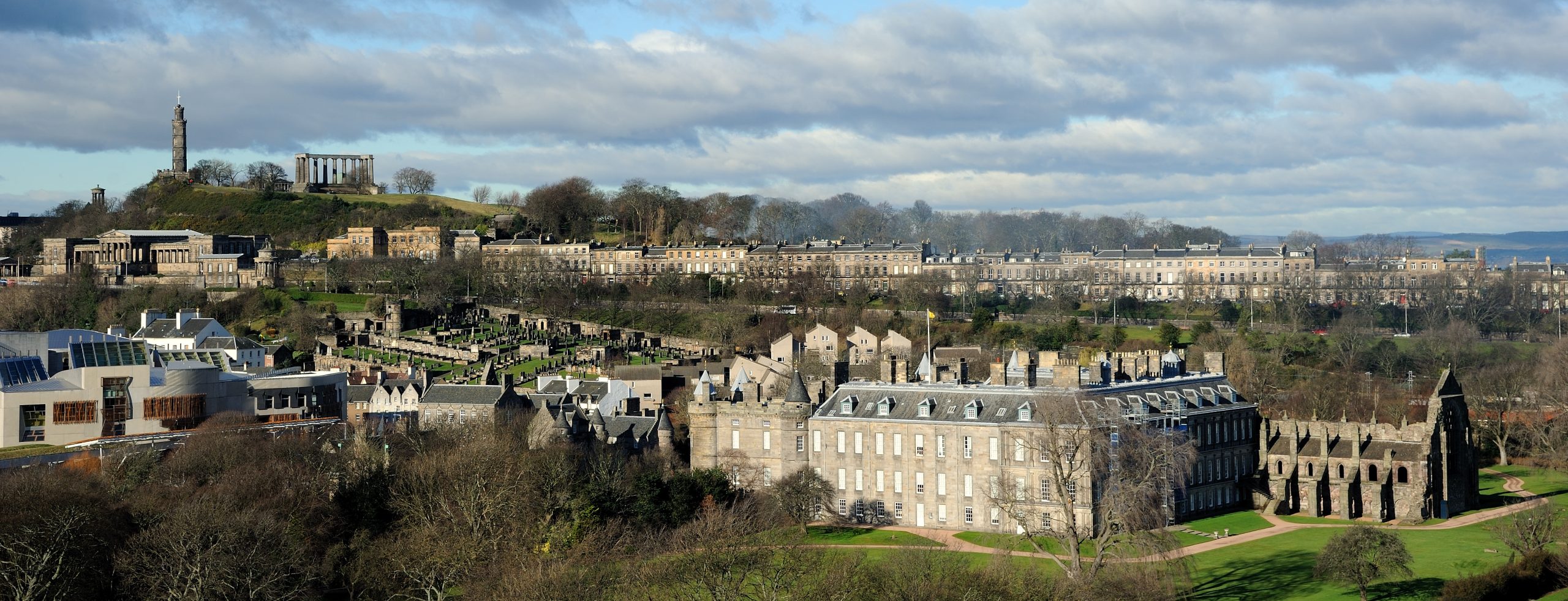
 One of R D Kernohan’s lost causes: photograph by Islay McLeod
I was surprised at how well I’ve borne up while the only football team for which I’ve any great affection has been dragged through the Valley of Humiliation. Then it dawned on me: I was conditioned to bear it by a working lifetime devoted to lost causes. It’s easier to take a stoic view of the mighty falling if you’ve worked through a few falls yourself and still see things sliding around you.
Yes, it’s easier if you’re also a rugby man and have seen Scotland drift into an undeclared but identifiable international division three, only a notch or two above the ranking of our national football team. But even that’s not as character-building as having devoted your working life to three endangered institutions: the Scottish national quality press; the Conservative Party in Scotland; and that province of the universal church which thought itself a national kirk.
There were times when my conscience was mildly troubled by what seemed the good fortune of being paid to work for what I both enjoyed and believed in. Now my mind is much more troubled by the fear that it was all in vain, with two of the institutions at risk of liquidation and the third, the Church of Scotland, so diminished in influence and leadership that (everywhere above the level of its faithfully serving and worshipping congregations) it seems already in administration.
My lament for the Scottish quality press is neither nostalgia for papers which were more solemn, restrained, and strait-laced than today’s, nor any disproportionate outrage at the variations of spelling, grammar, and syntax or errors of fact and typography which are partly the result of too few journalists being asked to do too much. It’s fear that what ought to be is no longer possible.
Scottish print journalism has still its strengths and even poor papers have good journalists. It’s a wonder that our evening papers survive at all in the face of today’s competition and media diversity. We also have very decent regional papers in Dundee and Aberdeen, with the Press and Journal perhaps the most significant regional newspaper in Britain. But the P and J’s strength, as successive owners have recognised, is as a regional paper, while both the Herald and the Scotsman have always insisted that they are much more than that. They still have some of what used to give them character and strength, but neither their means nor their styles now match their pretensions.
They lack the range and depth of specialist writers and the numbers of good general reporters to sustain quality papers, not necessarily of the London style but as counterparts of the best regionally-based papers of Europe. They also seem to lack the inclination – or is it just the money? – to carry a wide enough range of authoritative contributions from beyond their depleted staffs and chattering columnists. (The good columnists who survive show how little weight the others carry). Coverage of Westminster politics and international affairs is a shadow of its old self and their handling of affairs at Holyrood, even more of a political ghetto than Westminster, often suggests too cosy a relationship with its politicians and their expensive entourages.
A few years ago I thought that Scotland could emerge with a national newspaper of real influence and quality if the harsh economics of the business created the ‘Herald-Scotsman’; but as I look at sagging circulations and the demands the internet now puts on quality papers – see the range of Telegraph, Guardian, and even Times websites – I wonder if even that it is now within reach. Newspaper publishing, like politics and so much else, is the art of the possible and it doesn’t now look possible for print journalism, perhaps all print publishing, to flourish and expand in an age of twittering. I hope I’m wrong.
I hope I’m wrong too about the Tories in Scotland and (for it’s not quite the same thing) Scottish conservatism. Part of the trouble is that the conservative opinions, attitudes, and instincts in Scotland are sprinkled among people and institutions who either shun political Toryism or don’t realise how conservative they are: professional societies, trade unions, the Free Kirk, Roman Catholic bishops, Liberal voters in the Highlands, and a good number of plain unpolitical people whose election choice is now between Labour and SNP. Some of these groups have good historical reasons for their anti-Tory prejudices, but neither the current style nor state of the party (far weaker now than in the demonised days of ‘Thatcherism’) seems likely to win them over.
Some allowances need to be made, but though they help to explain the present condition of Scottish Conservatism they don’t encourage hopes for its future. For tactical and practical reasons it cannot aspire to leadership of the campaign to save the United Kingdom and faces the delicate task of enthusing its own supporters without driving anti-Tory waverers into Salmond’s sheepfold. It has also got itself into a mess by insisting on having a Scottish leader and getting one (thanks to the way the best candidate messed up his campaign) who cannot yet hope to match the standing that David McLetchie and then Annabel Goldie had in the more limited Holyrood role. The party also suffers from that debilitation which successive defeats can bring when some able people drop out of politics and others, most notably Malcolm Rifkind (and Teddy Taylor long before him), drift away from their old constituencies.
But it’s comparatively easy to be stoical about political failures and losing causes. What Enoch Powell said about people in politics may also be relevant to parties and their component parts. All political lives end in tears because ‘that is the nature of politics and of human affairs’. It’s harder to bear the decline and threatened fall of an institution which claims a share in a superhuman commission and an assurance that ‘the gates of Hell’ will not prevail against it.
It’s not that I’ve lost a faith that sometimes seems fragile but that the Church of Scotland, which gave me great freedom and fulfilment as an editor and put up with me as a known Tory, seems in danger of losing credibility as a national expression of biblical and historic Christianity and out of touch with much of the international growth of evangelical Christianity. It’s not just that its General Assembly is fallible – it was never anything else – or that it hesitates and equivocates on questions of sexuality where both scripture and tradition are abundantly clear, but that it now seems content to be leaderless, marginalised, and (as far as the media and politicians are concerned) largely ignored.
It seems unable to express in national life the Christian faith, work, and life still evident in the pastoral care and local influence of large numbers of its congregations. It’s not even feeling deeply enough the pain of its internal divisions, and when a couple of its finest congregations in Glasgow and Aberdeen purport to secede (wrongly, I think) seems readier to address itself to legal and administrative consequences than to plead with them or conciliate them. No wonder the voice of ‘the Church’ in Scotland often seem to be that of a strident Roman Catholic hierarchy, clear and sometimes sound in its opinions but often unsound in choosing words and striking moods.
But when you’re aggrieved and out of sympathy with many trends of the time it’s easy to strike the wrong mood – as maybe I do myself in grieving over these lost or losing causes.
Perhaps we should accept that the Herald and Scotsman, together or still apart, can never match the Süddeutsche Zeitung or the Corriere della Sera and consider how, in a twittering age, the depth, style, and values of good quality journalism can find fresh expression – as, in a modest way, they surely do in the internet survival of the Scottish Review.
And in politics maybe Conservatives, of all people, should be taking a long view, asking themselves (and not only in Scotland) if they are happy to be no more than a neo-liberal economic party, incidentally but inevitably representing the interests of those with what the Bible calls ‘great possessions’. If that is their role it can be taken over by others, as to an extent it was in Blair’s Britain and could be in Salmond’s Scotland if he either wins his referendum or extracts even more devolved powers from Westminster. In that case it would be necessary to revive, refine, and properly define Murdo Fraser’s ill-prepared scheme for a new right-of-centre, middle-class Scottish party. For unless the Tories are a national party – expressing a British identity within the United Kingdom and in relation to Europe, and roughly identifiable with conservative social values and not just social status – they will not just remain a losing cause in Scotland but a cause not worth worrying about.
Dare I say anything similar of the third and greatest of the lost causes (as they seem to much of Scotland) in which I served and enjoyed my time? Yes. The Kirk’s confession of faith explicitly recognises that the purest churches are subject to ‘mixture and error’ and even suggests (though its authors had someone else in mind at the time) that churches may degenerate into ‘synagogues of Satan’.
The Kirk hasn’t come to that or anywhere near it, and a longing for regeneration isn’t an admission of degeneration. Those who secede or hanker after a new Disruption should remember that scarcely 30 years later the Auld Kirk establishment had secured the spiritual independence and integrity which seemed so endangered in 1843. They should hope for a similar liberation from the tyranny of secular moods and fashions. But there is a real danger that although the cause will never be lost the institution which once most effectively expressed it for Scotland will be weakened and largely replaced, with any religious revival coming in styles which have sustained Chinese Christians under persecution and so modified the religious map of Latin America.
Christianity isn’t a lost cause but I hate to think that the Kirk’s network of committees, presbyteries, and General Assembly might be. But I live in hope.
 R D Kernohan is a writer and broadcaster