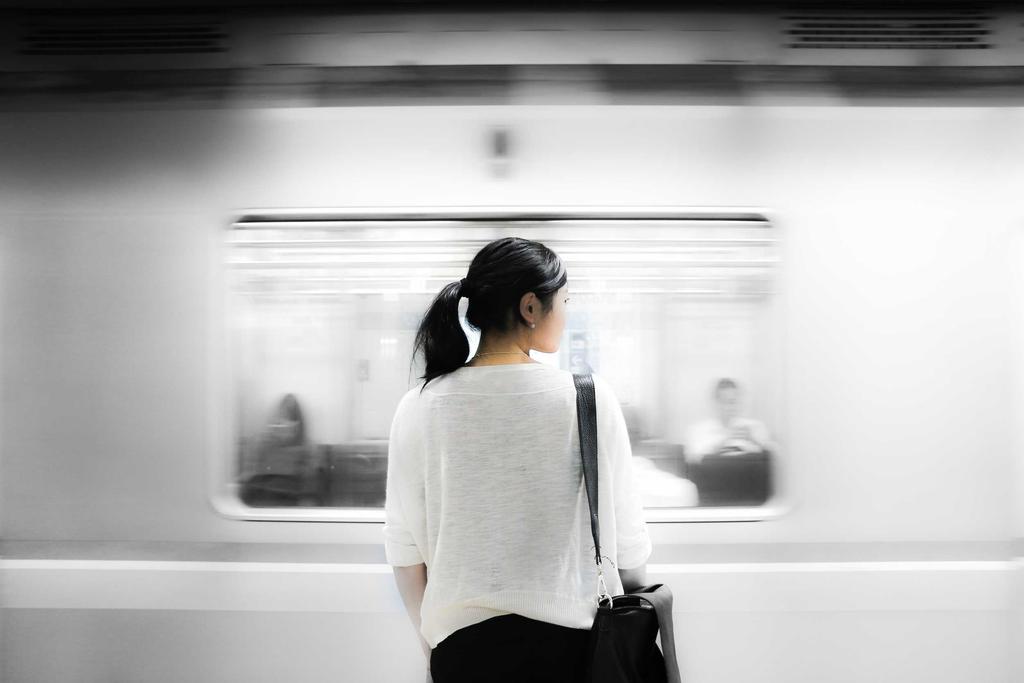
Having not been down in over a year, I was keen to check the state of play in London. Facemasks are the acid test. Well, on the streets, and even in the shops, compared with Glasgow, they are much less in evidence. The only exception is on the Underground. There masks remain the norm, and I’d say about 90% of passengers wear them.
As far as lockdown is concerned then, every day in London is freedom day. Unfortunately, during my week-long stay, I suffered a degree of personal lockdown and so Nathaniel and I did not get out and about as much as usual. The Abbeville area of Clapham where he lives is always a pleasant place to be with a range of interesting shops, good pubs, cafes and restaurants. Easily the best meal I had was dinner on my last night before leaving for Glasgow. It was a Japanese restaurant. A first for me and one to enjoy. No sushi as raw fish has never appealed, but a variety of shrimp, beef, and pork dishes, all in deliciously tangy sauces, proved a treat. Next time I’m down, I’ll be back.
Despite the staycation I mentioned above, we did manage two very different nights out. The first was to a spanking new theatre in an attractive section of the Thames South Bank. The Bridge Theatre opened in 2017. Costing a cool £12 million to build, it is the home of the London Theatre Company, run by Nick Starr and Nicolas Hytner. Its very spacious ground floor contains an unusually long bar and a wide range of different tables and chairs all very contemporary and stylish. On a lower level, it has a 900-seat auditorium which can be adjusted to suit different types of production and staging.
Having enjoyed a drink up above we went downstairs hoping to enjoy the show. It was a new play by Nina Raine called Bach and Sons , starring Simon Russell Beale and directed by Nicolas Hytner. According to its publicity, it was ‘beautiful, profound and funny’. Commentators all agree that it invites comparison with Peter Shaffer’s Mozart-based Amadeus , which was a smash-hit on stage in 1979 and subsequently as a film. Whether Raine’s plays benefits from the comparison is quite another matter.
Having sat through a rather dull first act, and an only marginally more engaging second, Nathaniel and I agreed it just didn’t work. From the opening scene on, the bumbling Beale was unconvincing as the great Johann Sebastian Bach. More significantly, the narrow focus on his strained relationship with his wife and sons never became dramatically illuminating or engrossing. Surely what matters about Bach is his music – which never became centre stage. The play’s high point came when his second wife sang snatches from an aria! We went back to Clapham thinking that the £69.90 we each had paid was not exactly money well spent.
If our first night out involved a new London theatre, our second was very different. Rather it involved a return to a much older London. Friends had invited us to have dinner with them in the Reform Club in the heart of the city’s Pall Mall. Founded in 1836, and opened in 1841, its original members were Whigs and Radicals who promoted and supported progressive social and political policies. Later, in the 19th century, it became closely associated with the old Liberal Party. Like all such London clubs, its members were long exclusively male. Only in 1981 did it become one of the first to admit women.
Early members included writers such as Thackeray, Arnold Bennett and Jules Verne, and later patrons included Siegfried Sassoon and Wilfred Owen, but inevitably it was those active politically, including several Prime Ministers, who set the tone. Today, however, the club and its 2,700 members has no political affiliation.
The Club was designed by the architect Charles Barry, best known for his mid-century creation of the Houses of Parliament but also responsible for the remodelling of Trafalgar Square, as well as many other familiar London buildings and gardens. In his preferred Italianate style, the Club was built on a quite palatial scale. Entering 104 Pall Mall, one is stunned by the soaring grandeur of the central saloon and an instant sense of its disjunction from the world outside. The portraits of past politicians on the walls underline the feeling of having moved back in time. Other guests were dining there but their number seemed small compared with the surrounding space. The food was served in highly traditional style – and the wine was particularly fine.
The whole experience seemed to belong to a world that is perhaps passing away. But to be there had a charm of its own. On this visit, it was good to experience a London both old and new.
Andrew Hook is Emeritus Bradley Professor of English Literature at the University of Glasgow
By Andrew Hook | 8 September 2021