I’m not sure that my profession has done a very good job of explaining the implications of climate change. We do tend to think in terms of infections spread by the movement of people and of insects, from previous experience with malaria and tuberculosis. The fact is that we have never before been presented with the prospect of such widespread and diverse threats to all of mankind. It is no longer a question of when these will be seen; they are happening now, and the threat is existential. This adjective is overused but, when I write it, I mean it literally.
Predicting the future of a pandemic is hard enough; the future consequences of climate change may be impossible to predict in detail and will obviously differ from place to place. However, climate does change in response to alteration of the physics of the atmosphere and is subject to the laws of physics, so it is possible to relate the changes in greenhouse gas concentrations to alterations in temperature and sea level with confidence.
This has allowed predictions of changes in average atmospheric temperature and rise in sea level to have been made over three decades with remarkable accuracy so far. We know that millions of people living in low-lying areas will eventually be displaced and we know that increasing millions will die in the summer from heatwaves while many others will move or starve because of crop failure.
It is now certain that these effects are already affecting many in hotter parts of the world, including regions in southern Europe and large areas of the western United States. The greatest imponderable has been the change in weather patterns, which are affected by air and sea temperature change but essentially chaotic. Only 10 years ago, scientists were debating whether climate heating caused an increase in number and severity of storms – now there is no doubt. There is still debate about the likelihood of a disastrous change in the direction of the Gulf Stream, bringing Canadian winters to western Europe, but there is good evidence that its rate has slowed.
Another important uncertainty is the likelihood of a tipping point, when the process becomes irreversible and humanity starts to decline into small groups of warring tribes. I have pointed to the hint of an acceleration in the speed of change in an earlier article ( 13 October 2021 ). We are familiar with the concept of doubling risk from thinking about the rates of infection with COVID-19. There are several very important feedback mechanisms as temperature rises that will lead to acceleration, the main ones being:
• release of methane from melting permafrost;
• heat-induced death and burning of forests with release of their CO2;
• death of phytoplankton in warming oceans;
• loss of ice and its ability to reflect heat back into space, and;
• increasing acidification of the upper levels of the oceans reducing their ability to absorb CO2.
All these are now definitely happening. Are we seeing the start of the consequential acceleration already?
You will have noticed that spring is coming earlier. You will have noticed on long drives in summer, if you still take them, that your windscreen no longer gets covered with squashed insects. You will have seen trees dying of diseases that we hadn’t heard of a few years ago. And you cannot have failed to notice the weather records being broken: hottest years, strongest storms, widespread flooding, and torrential rainfall. If you are young, you may think this is the way it has always been. It is not – it is the effect of climate change, and it is becoming more severe each decade.
We cannot expect governments to take all this seriously if they do not see us doing so. Their primary interest seems to be in getting re-elected in a couple of years’ time – ours is to provide for the future of our families and friends, a future that we, usually inadvertently, have put at serious risk. This explains why we must all, individually, set an example.
When I started writing these articles in the lead-up to COP26, I suggested that readers might estimate their own and their households’ carbon footprints in relation to UK and world averages ( 18 August 2021 ). Many of those of you who did this will have had a shock, and some will, I hope, be taking action to reduce them in the three major areas: domestic energy use, transportation and holidays, and consumption of food and material goods.
I venture to suggest that a reasonable initial aim is to reduce our individual footprints to below the UK average, which currently is estimated to be about five metric tonnes per year, or below the world average of about 4.3 tonnes. An average small car will produce one tonne per 5,000 miles. An average detached house may produce about five tonnes of carbon from gas heating and a similar amount from electricity usage, while shopping for food, commuting and going on holidays will double this. So many middle-class people living modestly will have footprints well over the national average, even when you remember to divide the total by the number of residents in your home.
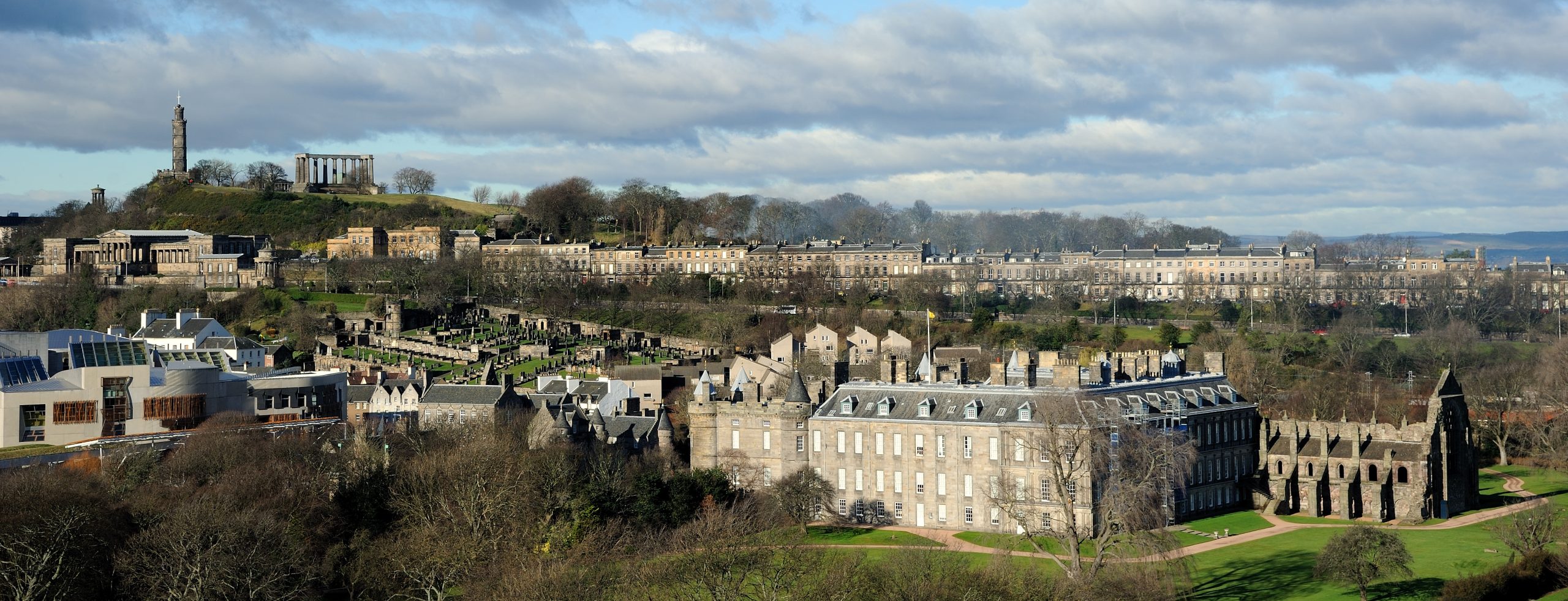
The two easiest steps to take are to move to an electric car and to purchase only renewable electricity; I have done both. Next, get rid of second cars and commute by bicycle, bus or rail. Make sure the house is well-insulated and turn down the heat, wearing warmer clothes indoors if necessary. I assume you already switch off electric apparatus and buy low energy equipment when feasible. Heat pumps and solar panels are expensive but getting less so – I have had panels for years and they have well repaid the initial costs, even in dreich Edinburgh. I heat my water by an air source heat pump but still use gas for central heating – this is my main problem.
Changing diet to eat less red meat and dairy products is difficult for most people of my age but thankfully is increasingly popular among the young and should be encouraged. The easiest start is to have vegetarian days. Keep an eye on where your food comes from – the closer to home, the better.
We have become accustomed to foreign holidays but these give us a shocking carbon footprint, in contrast to the early days of UK seaside and cycling, or inter-rail and camping in Europe. We must return to simpler times if global warming gives us more clement summers – I note a renewed enthusiasm for sea and open water swimming, so perhaps we are again becoming a hardy people. We need a revival of the great British holiday when the Scots went to Blackpool and the Isle of Man, and the English came to the Highlands and Western Isles.
I hope you will all join me in making this effort on behalf of our children and all children worldwide. What our nation does is largely up to our example and what the world does depends on the leadership of all nations, perhaps especially ours which has primary responsibility for causing the problem in the first place.
Anthony Seaton is Emeritus Professor of Environmental and Occupational Medicine at Aberdeen University and Senior Consultant to the Edinburgh Institute of Occupational Medicine. The views expressed are his own
By Anthony Seaton | 15 February 2022