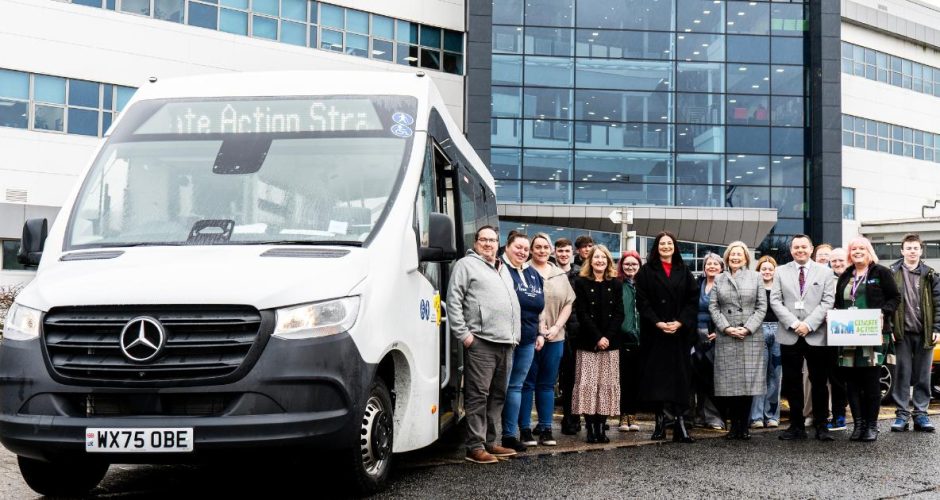
A new environmentally friendly bus service has commenced operations in East Kilbride, aiming to enhance student access to South Lanarkshire College while simultaneously reducing carbon emissions. The pilot scheme, launched by the college, has already transported more than 620 passengers since its inception.
The service establishes a direct link between the town centre and the college campus. It represents a collaborative effort involving South Lanarkshire College, Climate Action Strathaven, and is financially supported by South Lanarkshire Council’s Community Benefits Fund. Operations for the new route began on Monday, January 26, 2026.
Stella McManus, Principal and Chief Executive of South Lanarkshire College, emphasised the importance of such partnerships. She stated:
“We are delighted at South Lanarkshire College to be partnering with Climate Action Strathaven and South Lanarkshire Council to provide this service for our students. By working together, college, community and council partnerships like this can deliver real action and benefits for our local communities.”
Ms McManus further outlined the college’s dedication to its student body. She added:
“At South Lanarkshire College, our guiding principle is that we are one college, one community, focused on our students. The college will continue to deliver on projects and programmes like this bus service to ensure that we have a college campus working for all our students.”
The initiative aligns with broader Scottish efforts to promote sustainable transport and reduce the carbon footprint of daily activities. Such local projects contribute to national climate objectives, mirroring developments seen in other parts of the country, such as the focus on low-carbon housing solutions in Linlithgow.
Joe Fagan, leader of South Lanarkshire Council, commended the collaborative nature of the project. He said:
“This is a great example of partnership working between the council, college and local community organisations to make getting to and from the college much easier for students.”
Councillor Fagan also highlighted the role of council funding in facilitating the service. He added:
“I am sure it will help the college go from strength to strength, and I am delighted that Community Benefits Funds were able to support this being set up.”
The Community Benefits Fund is a mechanism utilised by South Lanarkshire Council to invest in local projects that offer tangible advantages to residents.
The pilot service is scheduled to continue until the summer months. Following this period, South Lanarkshire College intends to undertake a full review of its effectiveness. This evaluation will inform decisions regarding potential opportunities for expansion of the service, reflecting a commitment to ongoing improvements in student accessibility and environmental performance.
This local transport development contributes to Scotland’s wider agenda for sustainable living and energy transition. Discussions around such shifts are ongoing across various sectors, including the strategic considerations for Scotland’s green energy future and offshore wind development. Improvements in public transport infrastructure, even at a local level, are crucial for reducing reliance on private vehicles and fostering more environmentally sound commuting habits. This mirrors efforts to encourage active travel, as evidenced by rising cycling levels in Glasgow following infrastructure investment.
Educational institutions across Scotland, supported by bodies like Colleges Scotland, are increasingly integrating environmental responsibility into their operations and curricula. This bus service stands as a practical demonstration of South Lanarkshire College’s commitment to these principles, benefiting both its students and the broader community by promoting sustainable travel choices.
The success of such localised initiatives is often a key factor in informing larger-scale policy and infrastructure decisions, contributing to a more sustainable and accessible transport network across Scotland.