
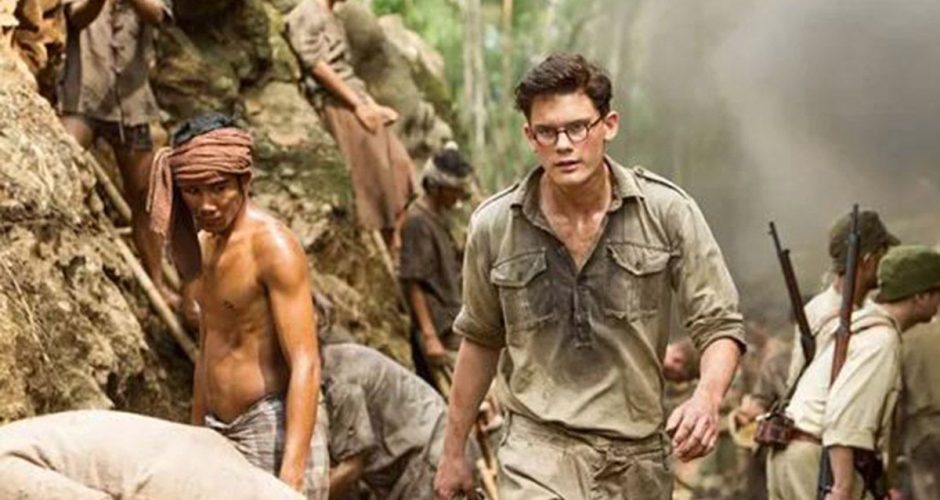
Some stories just get under your skin, don’t they? Especially the ones that remind you of the quiet battles people fight long after the big, noisy wars are over. I’ve been thinking a lot about a film called ‘The Railway Man’ recently, not just because it’s now available to stream for free, but because it shines a light on something we too often forget: the long shadow of trauma.
It’s an inspirational true story, set during the Second World War, about a British Army Officer called Eric Lomax. He was captured in Singapore and forced into unimaginable labour on the Thai-Burma Railway, a place of horror. It’s a hard watch, I’ll tell you, but a necessary one. What makes it hit even closer to home for me is knowing that parts of this powerful film were shot right here in Scotland, in places like Edinburgh, Perth, North Berwick, and St Monans in Fife.
Imagine, the serene beauty of our own scenes, the familiar streets, serving as a backdrop for a story so steeped in suffering and the struggle for peace. It creates a peculiar connection, doesn’t it? It makes the global tragedy of war feel a bit more immediate, less distant, even when the horrors depicted are from halfway across the world.
Colin Firth, who plays the older Eric Lomax, spoke about how the film looks into something rarely shown. He said: “I think what is not often addressed is the effect over time. We do sometimes see stories about what it’s like coming home from war, we very rarely see stories about what it’s like decades later. This is not just a portrait of suffering. It’s about relationships … how that damage interacts with intimate relationships, with love.” That really resonated with me. It’s not just about the bombs and the battles, but the quiet, internal wars that rage for a lifetime.
The film, starring Firth and Nicole Kidman, has been rightly praised. One viewer, zken, called it “an instant classic,” ranking it “among the greatest” war movies. That’s high praise, but I reckon it’s deserved. It’s the kind of film that stays with you, prompting reflection on the cost of conflict far beyond the armistice.
Another viewer, Johnk-schwarz, highlighted two crucial aspects the film captures. He said: “I am grateful for the film and for its depiction of two of the most important things regarding this story; 1- that the spouses of these great surviving POW’s tolerated and handled these men making they too, true heroes. 2- My Dad told us many times over that all he ever wanted was an APOLOGY. Bless this movie for its very existence and for its sensitivity to these two so important elements to the story’s perspective.” It’s a powerful reminder that the partners of those who’ve endured such trauma carry their own heavy burdens, becoming unsung heroes in their own right.
And the call for an apology, that simple human desire for acknowledgement of wrong, it’s a profound thing. It speaks to the deep need for closure, for some form of reconciliation, even decades later. It’s a testament to the film’s sensitivity that it explores this so thoroughly. Llgcpr, another viewer, praised Firth’s “standout performance depicting PTSD,” calling it an “uplifting, wonderful film.” To find uplift in such a harrowing story, that’s quite something.
VickiHopkins echoed this, saying she was “astounded by Colin Firth’s portrayal as the older Lomax, and Jeremy Irvine as the younger Lomax.” It’s the dual performance, showing the man before and after, that really drives home the enduring impact of his experiences. It’s a stark illustration of how post-traumatic stress disorder, or PTSD, can shape a life, a family, and a future. Understanding this is vital, and you can find more about NHS Inform’s guidance on PTSD, which is a crucial resource.
For me, ‘The Railway Man’ is more than just a war film; it’s a profound exploration of human resilience, the quiet strength of those who love and support, and the long, arduous journey towards healing. That it features our own Scottish towns and cities in its making just adds another layer to its significance, weaving it into the fabric of Scottish entertainment and our shared cultural memory.
It makes you think about how film, as an art form, can bridge distances and bring these deeply personal, yet universally resonant, stories to life. It reminds us that while we might be enjoying our rich cultural calendar and the peace of our modern lives, the echoes of past conflicts continue to shape the present for many. This kind of cultural output is something to be proud of, demonstrating the depth and reach of our creative industries, a topic often highlighted in the Scottish Government’s policies on arts and culture.
So, if you’re looking for a film that offers more than just entertainment, one that looks into the very heart of human experience and the long road to recovery, I highly recommend ‘The Railway Man’. It’s a powerful, moving piece of cinema that truly deserves your time, offering a window into a past that still informs our understanding of trauma and resilience today.
Source: Edinburgh Live