
Kenneth Roy
Eck’s
literary
luvvies


Jim Swire
An open
letter to
Kenny MacAskill

The Cafe
Should an
independent Scotland
be part of NATO?

Alan Fisher
The township of 12 people
which sells four million
cans of beer a year

Bob Smith

Islay McLeod
Scotland
in the
heat
 06.03.12
No. 522
 John Cameron
Sandy Rutherford, St Andrews’ Prophet of the Links, argued in 1997 that a Scotsman needed but three levels of governance: Westminster, a local council, and the wife.
The demise of local government started in 1975 when the Labour government abolished 196 councils leaving Scotland as the least represented democracy at local level in Europe. We were left with only 32 councils whereas Sweden has 290 municipalities, Norway 431, Belgium 539 and France – with its powerful mayors – an astounding 36,871. Yet for 700 years provosts were elected in our burghs and Rutherford argued for a return to local democracy by re-establishing town and parish councils with entrenched powers.
The other day Allan Massie wrote in the Scotsman that our local authorities are losing power to central government and we should consider ‘elected provosts’ to stop it. The Scottish Government has been replete with unintended consequences but the worst is the way it has extended its own powers at the expense of subsidiary authorities. At the same time Holyrood has set its face against the sort of measures being enacted in England to introduce choice and variety in the health service and schools.
Mike Russell is assuming more powers with regard to colleges of further education, which were and should be the responsibility of local government. Local authorities used to have a degree of financial autonomy which they have lost to such an extent that a council tax freeze can now be centrally imposed upon them. The Holyrood diktat that there will be only one Scottish police force is a sinister move leaving our police vulnerable to political interference and is seriously undemocratic.
The stated purpose of devolution was to bring government closer to the people but this centralisation and the emasculation of local authorities has taken it further away. The political historian Michael Fry wrote that central government used to provide ‘the wherewithal to the institutions catering for the people’s welfare, which otherwise acted in the freedom they chose for themselves’.
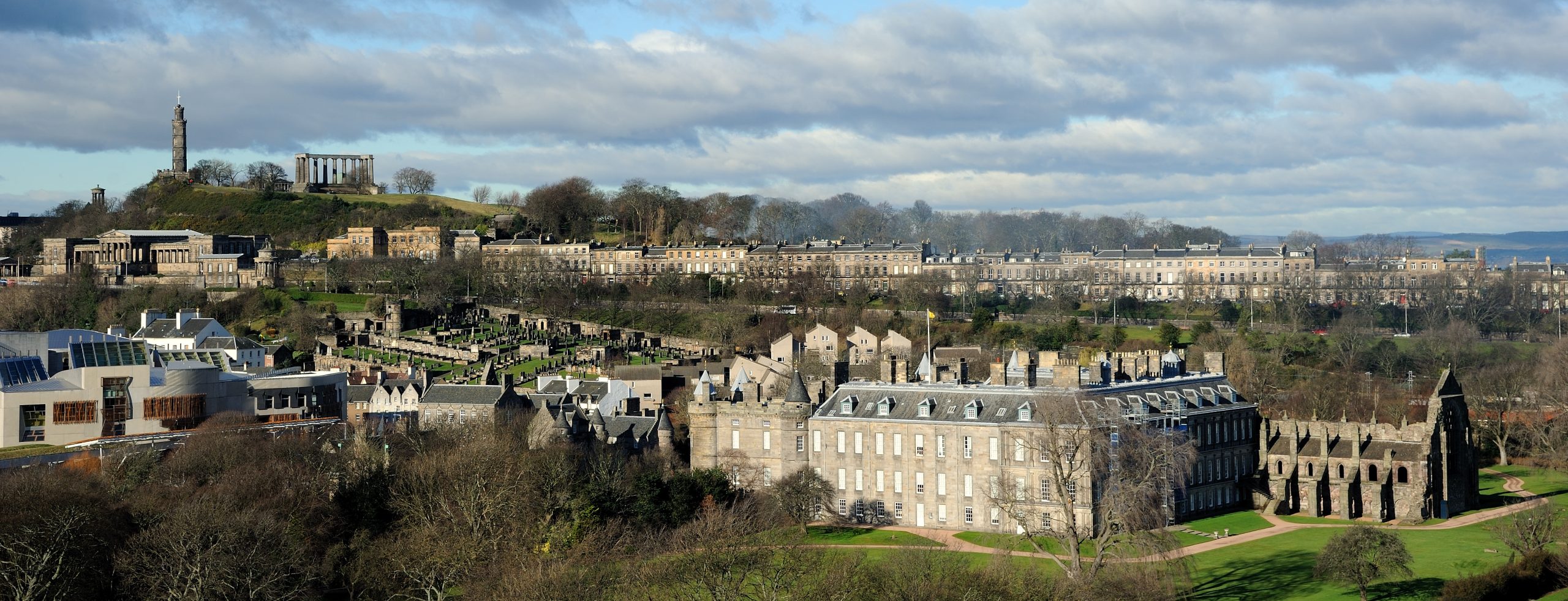
The Holyrood martinets have created an atmosphere of irresponsibility most obvious in the Edinburgh tram fiasco which no former local authority would have ever allowed.
Scotland used to benefit from a weak central government and a strong local government but now the opposite is the case, and devo max will only make things worse.

Scotland the junkie
needs to go
cold turkey
Judith Jaafar
In reference to Kenyon Wright’s very lucid piece (1 March
For other Scots, however, the decision may not be so easy. They know that there’s something very, very wrong with Scotland’s status and place in the world, along with all the domestic tragedies that have been unfolding ever since we ceased to be the powerhouse of the erstwhile British empire, when we had a skilled, well-educated population that was generally kept in work, grandfather to father to son (excuse the gender bias here, but that’s how it was).
Now we are being told that we’re the sick, lazy, feckless man of Europe, and we’d better stay in some sort of union with the UK, otherwise we’ll just get poorer and sicker and have no international standing at all, possibly even denied membership of the EU, UN, NATO, the International Rotary Club, the WI, the Library Service – hell, you might even get your Nectar Points and Air Miles cancelled. Joking aside, if I may lift all of this out of a political context and transfer it to an area where I have a little more expertise – mental health. Mental health is not just microcosmic, pertaining solely to the individual. It, or the lack of it, affects families, small societies, larger organisations and ultimately whole nations. The same principles that apply to one apply to many. People laugh at countries nowadays trying to gauge a happiness index within their populations – is it the King of Bhutan who so champions this idea? Not so daft at all. Even David Cameron seems to be exercised by this, badly articulated through his Big Society ideas, but he has no earthly clue as to how to change anything to make people happier.
I see Scotland as the heroin junkie, metaphorically for my purposes here, although I am aware of the real heroin problems now endemic within society. Addiction is a very complex process, starting off subtly and unnoticed at first and providing many subjective rewards for the soon-to-be addict. There are losses which are ignored or rationalised. In our case, I see this insidious process beginning with the creation of the UK. There were great rewards for many, especially when this new amalgamated entity started conquering the world. Power, remuneration, ascendancy fuelled our burgeoning addiction to the United Kingdom system of government and its ever-present imperialism. Many Scots prospered, and some still do.
Centuries of Celtic psychology and sociology, distinctly different from the English equivalent, fell victim to the growing dependency. Many notable Scots have sold out their countrymen just to get their next, bigger fix; you might equate them with the addictive brain receptors that are constantly crying out, ‘feed me, feed me’. Westminster has been the dealer par excellence. Once the dealer has groomed you, alternately rewarding and punishing you, he’s got you, watching you coming back for more, begging for a bigger hit. He’ll give you a free sweetener from time to time to assure you of his love and care.
All this needs to be put before the Scottish people and discussed at a
national level. They need to be told what this putative devo max would actually mean, if it means anything at all.
Signs of back-sliding, recalcitrance, getting ‘clean’ are problematic for the dealer; he has to lure you back so he can keep exploiting you. Okay, thinks the dealer, Scotland seems to be on the verge of going cold-turkey, can’t be having that, let’s offer them methadone instead of heroin. For me, devo-max is methadone, pure and simple. Slightly different substance, same dependence. A heroin addict who moves on to methadone thinks he’s made a big step forward, has changed his life – he hasn’t. He’s just substituted one addiction for another, but it seems better, seems safer, seems like he’s regained some control. It’s an illusion, just as devo max is likely to be if it ever gets on the table.
And what is this substitute sweetener anyway, this devo max? Does anyone know? Has any pro-union politician ever articulated it, properly? From what I can gather, it would entail retaining the crown estates and the oil and gas revenues for Westminster. Nuclear arms would continue to be stored in Scotland, and our military personnel would still be on standby to be sent off to any illegal/immoral war that UK/US thinks would serve their interests. Scotland would have no say in any foreign policy/diplomatic initiatives at all. Monetary policy would still be dictated by the Bank of England (which would probably be the case in the short-term at least for an independent Scotland), with only fiscal powers being devolved. In reality, what would actually fundamentally change about anything important? Not a lot – heroin versus methadone. In fact, it would probably serve Westminster well. If Scotland raises its own taxes it won’t be requiring any disbursements from London. The Treasury would win, all round.
All this needs to be put before the Scottish people and discussed at a national level. They need to be told what this putative devo max would actually mean, if it means anything at all. Ditto with full independence. We’ve spent 300 years in a union with England and I think it behoves us to carefully consider all these matters in a measured and timely fashion over the next couple of years, and not to be rushed into a vote when people don’t actually know what they’re voting for. I would hope that the Scottish media would ‘get real’ sometime soon and articulate all the issues, pro and con, in a knowledgeable and unbiased fashion. This is far too important for dissembling. It may be a forlorn hope.
Me, I’d rather be rid of dependence and go cold turkey, no matter how difficult it may be in the short-term. It can only be good for Scotland’s collective health, mental and otherwise.

Judith Jaafar is an anomaly researcher and writer for last 20 years, as well as being a clinical/medical hypnotist