Scottish Ministers have dismissed an appeal for a major tourist development proposed for the banks of Loch Lomond, overturning a previous recommendation for approval. The decision effectively halts plans by Flamingo Land, operating as Lomond Banks, to construct a substantial resort near Balloch, a proposal that had garnered significant public opposition.
The controversial £40 million project envisioned two hotels, a water park, over one hundred holiday lodges, a monorail, and 372 car parking spaces, alongside various retail outlets. The site, known as Lomond Banks, is situated within the protected scene of Loch Lomond and The Trossachs National Park.
Ministers cited “significant concerns relating to flood risk and woodland loss” as primary reasons for their refusal. They concluded that these environmental impacts, combined with other identified conflicts with the development plan, meant the proposed development did not comply with overall planning guidelines. The formal decision notice stated that material considerations did not outweigh the policy conflicts in this instance.
The application, initially put forward by Yorkshire-based Flamingo Land Ltd in 2017, was later revised and resubmitted in 2022. In September 2024, the Board of the Loch Lomond and Trossachs National Park Authority had unanimously rejected the planning permission in principle. However, a Scottish Government Reporter subsequently overturned this verdict on appeal, recommending approval.
The Scottish Government then recalled the appeal in June 2025, acknowledging the national significance of the proposed development and its potential impact on the National Park. This recall led to the final ministerial review and decision.
Ross Greer, co-leader of the Scottish Greens, expressed strong approval of the outcome. He remarked: “Flamingo Land has finally been rejected! For the last decade we have fought to save Loch Lomond from this destructive mega-resort plan. Thank you to the 155,000 people who joined our movement. This is your victory.”
Heather Reid, Convener of Loch Lomond & The Trossachs National Park Authority, welcomed the ministerial decision. She stated: “In September 2024, our Board voted unanimously to refuse the Lomond Banks planning application. Today, Scottish Ministers confirmed their decision to dismiss the appeal against that decision. This means the National Park Authority’s refusal of planning permission in principle stands. We very much welcome this decision, which largely vindicates and aligns with key conclusions reached by both our Planning Officers’ recommendation and our Board in its unanimous refusal of this application. It also provides welcome clarity as to how National Planning Frame” The National Park Authority’s original refusal had been based on similar concerns regarding the development’s impact.
Conversely, Jim Paterson, Development Director for Lomond Banks, voiced his deep disappointment with the ministers’ decision. He commented: “We are extremely disappointed by the Scottish Ministers’ decision to dismiss our appeal for Lomond Banks. This proposal represented a transformational investment in Balloch and the wider area, delivering significant employment, regeneration and long-term economic benefits to one of Scotland’s most disadvantaged communities. The independent Reporter appointed by the Scottish Government carefully assessed the application and was still minded to recommend approval, recognising the substantial socio-economic, tourism and heritage benefits the project would bring. Today’s outcome is dismissive of the Reporter’s recommendation and flies in the face of what this area was ear-marked to accomplish, which is bad news for Scottish business and tourism as a whole, not to mention the local people who will now miss out on jobs, local supp.”
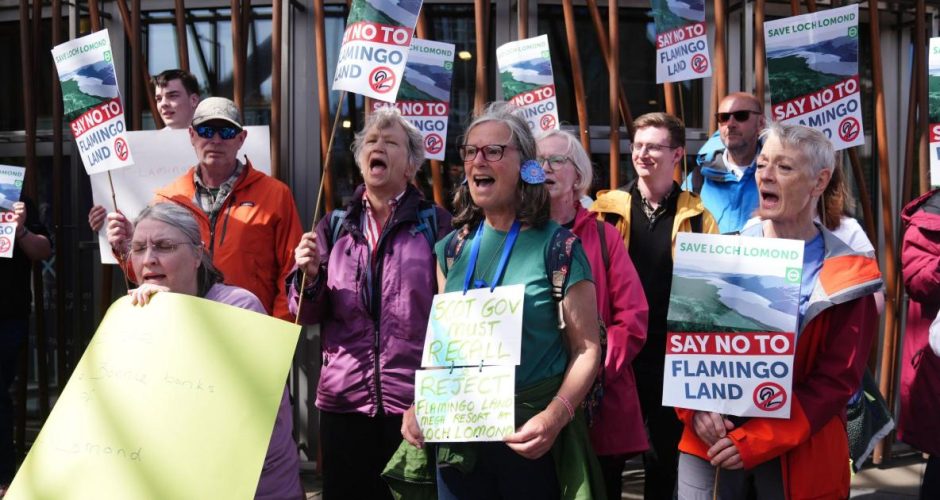
The proposal had been a source of considerable contention across Scotland, drawing an unprecedented level of public objection. Over 150,000 individuals signed a petition organised by the Scottish Greens against the resort, making it one of the most vociferously opposed planning applications in recent Scottish history. Local community groups and environmental organisations, including the Woodland Trust and Ramblers Scotland, also joined the campaign. Opponents highlighted potential issues such as increased traffic, environmental degradation, and adverse effects on existing local businesses.
A Scottish Government spokesperson had previously clarified the recall of the appeal, explaining that ministers had decided to review the Lomond Banks proposal due to its “national significance in view of its potential impact on Loch Lomond and the Trossachs National Park.” This careful scrutiny is consistent with Scotland’s commitment to balancing economic development with environmental protection, a theme often explored in discussions around Scotland’s Green Energy Gamble: Offshore Wind and the Oil Transition.
The decision underscores the Scottish Government’s emphasis on adhering to development plans and addressing environmental risks, particularly within nationally designated areas. It reflects ongoing debates about the future of tourism and conservation in Scotland, where initiatives like the launch of low-carbon homes and campaigns for battery recycling demonstrate a broader shift towards sustainable practices. The full text of the ministerial decision can be found on the Scottish Government website, providing further details on the rationale behind the dismissal of the appeal. This outcome sets a precedent for future large-scale developments within Scotland’s protected natural scenes, reinforcing the importance of national park aims.