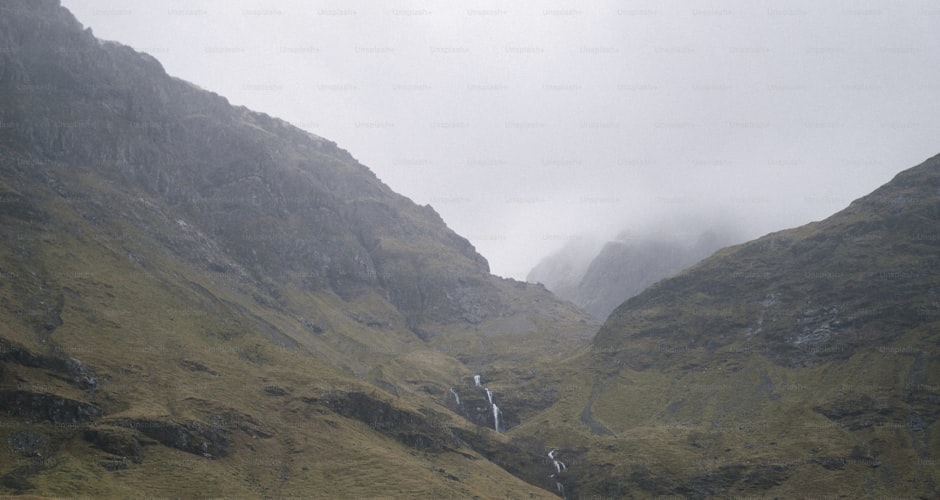
Scotland has a land ownership problem. It has had one for centuries. Roughly half of the country’s private land is owned by fewer than 500 people. In parts of the Highlands and Islands, single estates stretch across tens of thousands of acres, owned by individuals or trusts based in London, the Middle East, or Scandinavia. If you have ever driven through Sutherland and wondered why mile after mile of empty glen has no villages, no farms, no people, the answer begins with land ownership.
I grew up aware of this, in the way that most Scots are. It sits in the background, part of the furniture. But the land reform debate has gained real momentum over the past decade, and it deserves closer attention than it typically receives.
The Land Reform (Scotland) Act 2003 was the starting point. It established the community right to buy, giving communities first refusal when rural estates come up for sale. The 2016 act went further, extending the right to buy to urban areas and introducing the right to buy land “to further sustainable development” even when the owner does not want to sell. These are significant powers on paper. In practice, they have been used cautiously.
The most visible success stories are in the Highlands and Islands. The community buyout of the Isle of Eigg in 1997, before the legislation even existed, remains the template. Since then, communities on Knoydart, South Uist, Gigha, and dozens of other places have taken ownership of their land. The Isle of Ulva, bought by the community in 2018 with support from the Scottish Land Fund, has seen its population stabilise after decades of decline. New housing, a restored pier, and returning families tell a story that raw statistics miss.
But community buyouts remain difficult and rare. The process requires enormous volunteer energy. Communities must form a legal body, commission valuations, raise funds (the Scottish Land Fund covers up to a million pounds, sometimes more), and negotiate with owners who are not always cooperative. I spoke to a community trust board member on the west coast last year who described the process as “exhausting and adversarial.” They succeeded, but several board members stepped back afterward, burnt out.
The larger estates remain largely untouched by reform. Buccleuch Estates still owns around 200,000 acres. The Danish billionaire Anders Holch Povlsen owns roughly 221,000 acres, making him Scotland’s largest private landowner. The Crown Estate manages another 37,000 acres of rural land plus most of the seabed. These are not inherently bad owners. Povlsen’s Wildland Ltd has invested heavily in rewilding and ecological restoration. But the concentration of ownership in so few hands raises legitimate questions about democratic accountability and community agency.
The Scottish Land Commission, established in 2016, has been tasked with driving further reform. Its recommendations have included a public interest test for large land transfers, greater transparency in ownership structures (many estates are held through opaque trusts and offshore companies), and measures to break up monopoly ownership where it is demonstrably harmful. Progress has been slow. The political will exists in principle but falters when confronted with the legal complexity of property rights.
Right to roam, codified in the 2003 act, is one area where Scotland genuinely leads. Unlike England, where access rights are limited to designated paths and open land, Scotland grants responsible access to virtually all land and inland water. I use this right constantly, walking through estates, along rivers, across moors. It is a profound expression of the idea that land belongs, in some fundamental sense, to everyone. Visitors from England are often astonished by it.
Yet access and ownership are different things. You can walk across an estate, but you cannot decide what happens on it. You cannot build a house, start a business, or plant a tree without the owner’s permission. In communities where the estate owner is absentee or indifferent, this creates a quiet paralysis. People leave because there is no housing. Housing is not built because the land is not available. The land is not available because the owner has no incentive to release it.
I do not pretend to have a neat solution. Compulsory purchase is legally possible but politically fraught. Tax reform (particularly a land value tax) could incentivise productive use but would need careful design to avoid punishing crofters and smallholders. What I do know is that the current pattern of ownership, shaped by the Clearances, reinforced by tax structures, and maintained by inertia, is not serving Scotland well. The quiet fight over who owns this land, and what they do with it, will define the country’s future as much as any election.
