We were told to forget
our cares at the door.
I didn’t forget mine
The Cafe 3
Cybernats
What on earth has
happened to
my dongle?
Islay McLeod
Lust in Balloch
 John Cameron
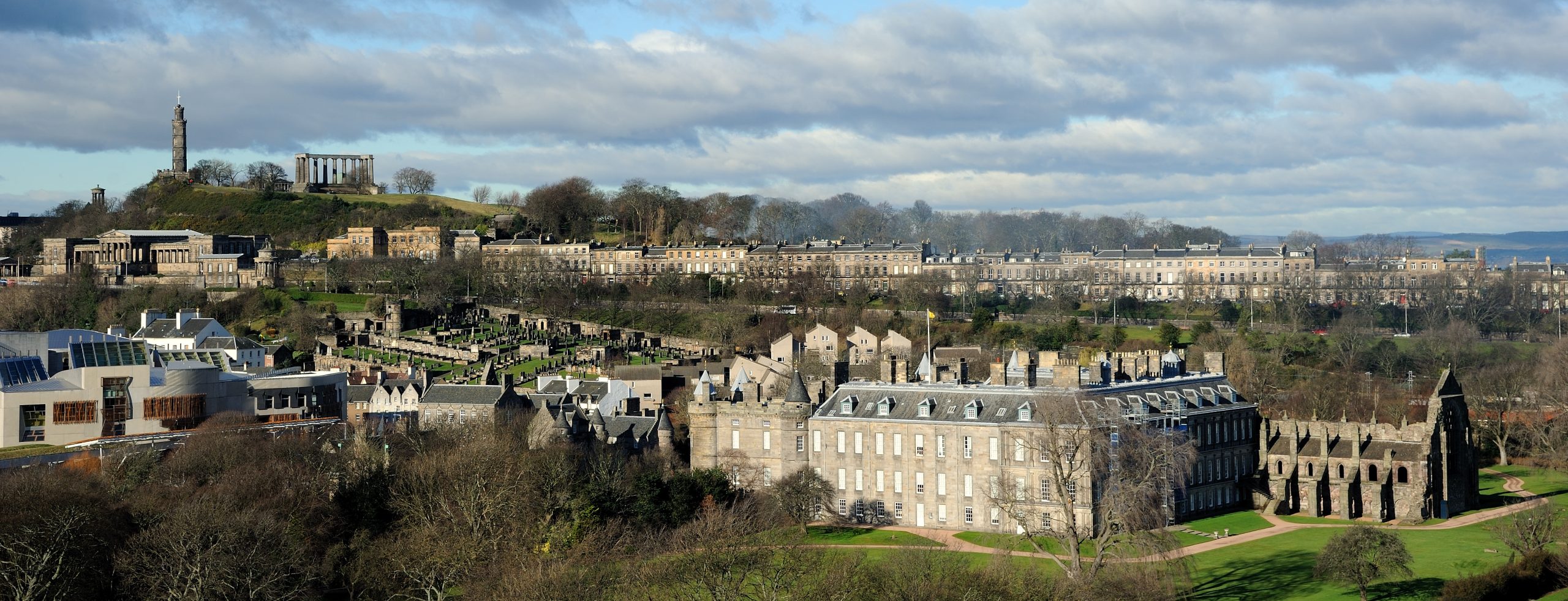
Today’s banner
Winter sunset over
the Clyde
Photograph by
Islay McLeod

Where is the Scottish
theatre in our journey
of liberation?
Thom Cross
Scotland does it all the time. We were taught it at school and in the street, by grannies and the meenister; more significantly (ominously?) by our Scottish media: the BBC, the Herald, the Scotsman (and for us in Fife) the Dundee Courier.
‘It’ is to honour the conservative way; to be cautious; to play nine-men behind the ball, especially when you are a new manager, a new boy or a new woman. The unheralded underground historical Glaswegian conservatism was a powerful (samizdat) ideological tradition not confined to Orange politics. Remarkably it even produced socially conservative radicalism. Remember ‘nae bevvying’ during the Clyde work-in? Much of the support for the USSR on the Clyde was due to the very fact of Soviet caution, its orthodoxy creating entrenched institutional statist ‘socialism’.
This Scottish Knoxian tradition of contradictory conservative radicalism (Burns is a prime example) delivered by cautious leadership, surfaced recently in a very unexpected place – the Citizens Theatre. The Citizens has a new director – the well-respected Dominic Hill, late of the Traverse (simply the best of Scotland’s theatre companies). He has published his playlist for his first Citizens’ season. In one fell swoop he has brought to the Gorbals the three-in-one holy trinity of British theatre: William Shakespeare, Harold Pinter and Samuel Beckett – the father, son and holy ghost.
With such a team behind the ball, Hill is playing not to lose. The two mighty pillars of British theatre, Shakespeare and Pinter, with the author of the 20th-century’s supreme theatre text, ‘Waiting for Godot’, is a triumphant troika nay triumvirate of theatre icons – body, heart and soul.
There is more. Within the Shakespeare canon the finest shot is ‘King Lear’. A truly magnificent dramatic text full of contemporary nuances and reflections that strips away the pomp of power and gives us intensely moving theatre. Pinter’s ‘Betrayal’, again a wonderful choice, winner of the Laurence Olivier award for best new play in 1979, has tabloid-tinged sexual philandering, based very much on Pinter’s own self-confessed adultery while he was married to Vivian Merchant. (I remember vividly her erotic performance in her husband’s ‘Lovers’.) It is an assured popular success with its innovative reverse storytelling giving it added allure. Then there is the pair of Becketts that would lift any season of plays into a compelling repertoire.
Dominic Hill has selected an odds-on triple and I wish him well in the realisation of the selected texts. But Hill’s selection has British greatness in its DNA and would live so well in Bath, Bristol, Bournemouth, Battersea, Birmingham, Bolton, Bradford. But Glasgow demands and deserves more as an active centre of dramatic affirmation, as well as a 2012 stage in our journey of liberation.
The tradition of English theatre dominance in Scotland is not a calculated imperial plot. It is a historical outcome of a process of national neglect
and repression combined with a validating relationship defined by subordination and sheer quantity.
We have moved on too far from a sense of a progressive one-nation continuum to the modernity of a sovereign rupture. We can see if we look hard enough, a denied past, a dislocation since Burns. This has produced (as seen in the 2011 May elections) the reasonable ambition of a new-day future.
Post-devolution Scotland has acquired an altered political DNA with fresh ideological energy that has transposed the nature of cultural discourse. One outcome of this ‘new-nation’ energy is the questioning of the assumed traditional hegemony and inviolability of English masterpieces, particularly in the theatre.
We saw this quite clearly in Ireland, with the deliberate development of the Abbey with Yeats and Synge and Lady Gregory and O’Casey. Did Hill have any thought that he might have made the Citizens our Abbey? If not, why not? I want to be quite straightforward. Any theatre company in Scotland (particularly any company receiving public funds) not should, but must, include a Scottish text within the mix. It is imperative that either a new Scottish text is staged or we see a revival of one of Scotland’s ‘great’ dramas. (isn’t it time to revive a 7:84 classic.)
Quite frankly, in Scotland in 2012 we should not be petitioning for a token presence in a major theatre season on our own doorstep. If theatre is to reflect or alter through its art, the form and nature of our society, then surely a new director would understand the cultural significance of these times. We see, hear and feel the development of a self-conscious and confident culture that deserves expression – where is that with Shakespeare, Pinter and Beckett? Sure, we need the significant texts from the metropolitan centre. But where is our centre?
The tradition of English theatre dominance in Scotland is not a calculated imperial plot. It is a historical outcome of a process of national neglect and repression combined with a validating relationship defined by subordination and sheer quantity.
Yet Scotland does have an authentic theatre hinterland from mediaeval mummers-type performances through the repression of the reformation, all well-documented in a flurry of books on the history of Scottish theatre.
Scotland has a rich field of talent from which to offer us a Scottish play. I would not insult Hill by suggesting titles or listing the host of contemporary authors that are desperately looking for a stage – many he helped produce. But we need more.
The Citizens or some other major company needs to examine the idea of an authentic ‘native’ theatre. (The ‘native’ title is borrowed from the Unity Theatre of the 1940s who, in their magazine Scots Theatre, called for ‘A Policy of Native Theatre’.)
The Abbey is the model. The Citizens have lost a major opportunity to feel the times and give Scotland a liberal sovereign theatre experience.