Literary lunacy
Kenneth Roy
The greats Edinburgh would
have excluded
Also:
The Midgie
Where is he?
Andrew Hook
Byres Road blues


The Snowbound Cafe
Readers’ reaction to
Scotland The Feeble
Also:
Mike Lloyd
The BBC malaise
Steve Tilley
Reflections on Scotland

My dirty laundry
Anthony Silkoff
A young Jew’s thoughts
on Chanukah
Also:
Jill Stephenson
Football tribalism
Bob Smith
A tribute to Jock Stein

What is to happen
to me?
Arthur Bell
A disabled man’s view
of euthanasia
Also:
Kevin McCarra
Rear Window
Islay McLeod
Who’s in there?

Bob’s People
The other Ed

Last week we brought you the brothers, including an Ed who is now the slight favourite to win the Labour leadership ahead of his sibling David. Today, we introduce a second Ed – Balls of that ilk. He is unlikely to do very well.
Angus Skinner

Last week’s welcome but extraordinary display of unity between Alex Salmond and Iain Gray over the work on two navy aircraft carriers raises an intriguing question.
Could Scotland in 2011 see the second most unexpected coalition? These two men are well capable of delivering it. Taking their members to such a party may prove too much.
Still the question is now on the table. Devolution is over – does extraordinary unity lie ahead?
Poems by Gerard Rochford
Sanitising the Pope
Tom Gallagher

Pope Benedict XVI
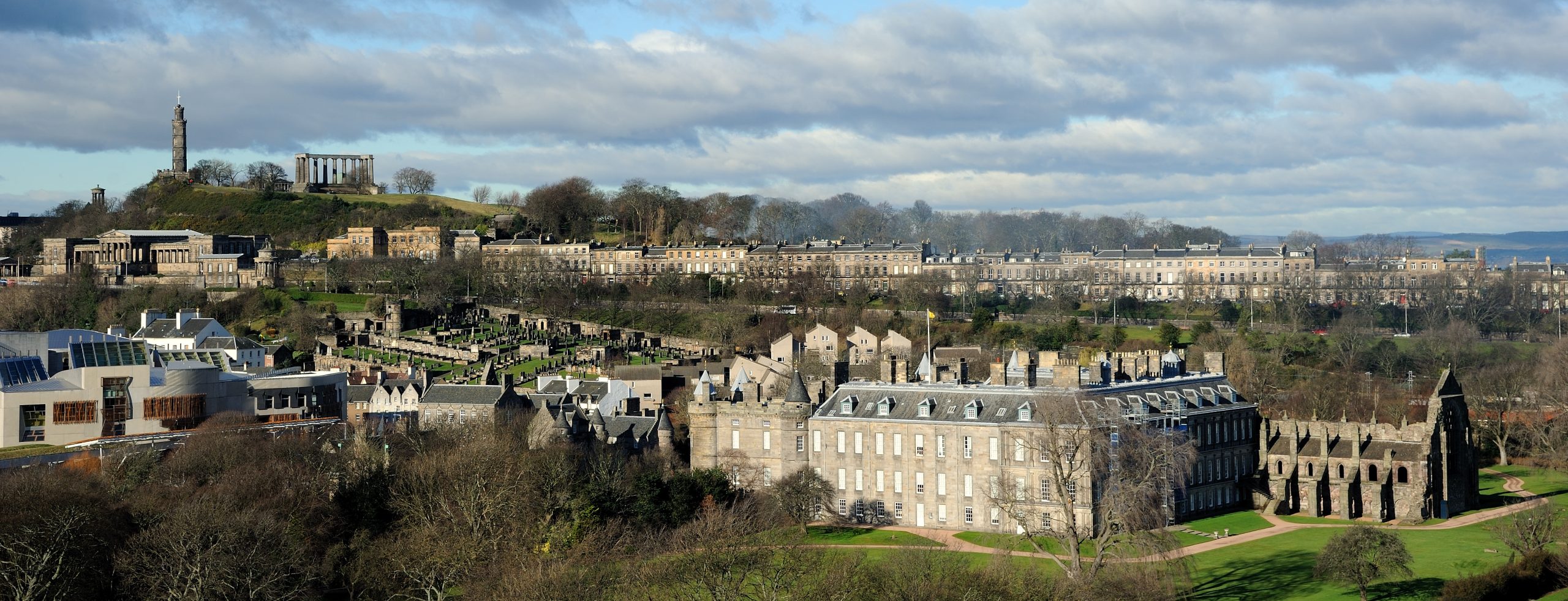
The essentially mundane nature of the concerns over the Pope’s visit on Thursday show how far Scotland has moved away from corrosive intra-Christian sectarianism. There has been a quantum leap from the situation exactly 75 years ago when Scotland witnessed one of the most ferocious bouts of anti-Catholic agitation since the Reformation. The unrest did not occur in the cauldron of Orange v Green antagonism, Glasgow, but in Edinburgh and it was the leafy district of Morningside which saw the most dramatic scenes.
On 25 June 1935, 10,000 protesters gathered in the streets around St Andrew’s Priory, Canaan Lane, as an open air procession of the blessed sacrament was taking place in its grounds before Catholics bussed in from all over Scotland. This was the climax of a Eucharistic Congress, meant to demonstrate the real presence of Christ in the Eucharist. This doctrine of transubstantiation was repugnant to many Protestants. They were mobilised to challenge what was viewed as Catholic triumphalism in Scotland’s capital by John Cormack, a local ex-soldier who had served in Ireland with the Black and Tans of the British Army. His Protestant Action movement won nearly a quarter of the vote at that year’s local elections in Edinburgh and Cormack would remain a councillor for nearly 30 years.
At the height of the unrest the army at Redford barracks was placed on standby. Many Protestants felt that a despised lesser faith was trespassing on sacred ground from which had sprung the Scottish Reformation. But eventually the agitation subsided. Today, any Protestant protests are likely to be low-key and dignified ones. So why in that case did I think that a censorious and even bigoted Scotland had won out when I saw Sunday newspaper billboards proclaim that ‘Pope urged to avoid provocative statements’?
This was the headline to an article revealing that a leading lay Catholic, John Haldane, professor of philosophy at St Andrews University, had advised the Vatican that instead of taking a confrontational stance against atheists and those of other faiths, Pope Benedict should instead reach out to them. Haldane’s advice to the Vatican was that the Pope’s ‘speeches ought to rise above the detail of some of the recent disputes and try to fit them…into a larger context’. The clear sub-text here is that if the Pope has a message to the world that will unsettle secularists and others who question the relevance of the Catholic message in today’s world, he should dilute it and confine himself to banalities, that is as long as he finds himself in Scotland.
I find such advice puzzling coming from Professor Haldane who has taken up the cudgels in the past against the moral relativists who argue that there are no absolute or universal standards around which we should try to shape our lives. More to the point, I think he is probably closer than me in his identification with the Pope’s views on issues ranging from the role of women in the church to the celibacy of the clergy.
Of course if this Pope is muzzled by academic spin doctors and media handlers, it could turn out to be poetic justice. As Pope John Paul’s right-hand-man he ensured that progressive voices were silenced or driven out of the church.
It is well-known that when John Paul II became Pope in 1978, Cardinal Ratzinger, as he then was, halted the reforms associated with the second Vatican council of the 1960s. A tight conservative orthodoxy was imposed which had its Scottish casualties. Nevertheless, Benedict will be welcomed by most Scottish Catholics and by many other Scottish Christians. Professor Haldane’s concerns appear to be directed at atheists and humanists, who are poised to mount noisy protests with some arguing that Benedict should be arrested for allegedly shielding priests responsible for the sexual abuse of children. Their visibility is perhaps an unconscious recognition of how the secular left has shaped the agenda on social policy in Scotland since the onset of devolution both under Labour and the SNP.
The ‘recreational individualism’ and ‘lifestyle liberalism’ championed by power-holders has been denounced by prominent lay Catholics such as the composer James MacMillan and the retired Glasgow University academic Professor Patrick Reilly. Reilly complained in 2008 that members of the New Labour establishment wished to eradicate religion itself and saw the Catholic Church ‘as a key barrier to the complete secular society they seek to establish’.
But if Professor Haldane’s advice is followed by Rome it appears that the Pope will not flutter many Caledonian dovecotes even though there is much he could say about a Scotland locked into a narcissistic and increasingly consumerist culture, remarks many non-Catholics would agree with.
There is bound to be dismay not just among Scottish Catholics if the Pope appears to bend the knee to a secular establishment whose ascendancy has coincided with Scotland acquiring some of the most troubling statistics for social pathologies anywhere in the Western world.
Of course if this Pope is muzzled by academic spin doctors and media handlers, it could turn out to be poetic justice. As Pope John Paul’s right-hand-man he ensured that progressive voices were silenced or driven out of the church. Even though he only spends a day in Scotland, the visit could still prove significant. It could show the world a Pope previously known for his conservative social values cowed and silenced before a secular Scottish establishment which has shown its displeasure with views that disturb its own group think. Benedict is too crusty a Pope for my liking but he has a vision of society that deserves a full hearing.
In 2004, he write an article called ‘If Europe hates itself’ in which he observed: ‘Europe, precisely in its hour of maximum success, seems to have become empty inside, paralysed in a certain sense by a crisis in its circulatory system, a crisis that puts life at risk, resorting as it were to transplants that cannot but eliminate its identity’.
He warned that ‘ethically, Europe appears to be on the way out. There is a strange lack of desire for the future…We are forced to make comparisons with the Roman Empire at the time of its decline: it still worked as a great historical framework, but in practice it was already living off those who would dissolve it, since it had no more vital energy’.
Benedict, not even in his most militant frame of mind, is likely to come here and deliver a variation of this sombre address entitled ‘If Scotland hates itself’’. But it appears that influential voices within the Scottish church may be urging him to flinch from referring to the maladies which have created a social void in parts of our cities and whose origins do not lie in the curse of unemployment but in perhaps well-meaning but certainly wrong-headed policies that do not give people a stake in society or a sense of moral purpose.
He referred in his 2004 article to the unwillingness of many heterosexual Europeans to desire to start families: ‘children who are the future, are seen as a threat for the present; the idea is that they take something away from our life. They are not felt as a hope but rather as a limitation of the present’.
It might be felt impertinent for a Pope battling to preserve the Church’s reputation in light of its handling of child abuse scandals to criticise the collective values which are contributing to a growing demographic crisis. But the dominance of secular and utilitarian perspectives is not so complete that his views on the centrality of the family should not be heard out. He may even have some insights about what needs to be done about the existence of at least 50,000 children in Scotland who have one parent or more who uses hard drugs, in order for these children to have a chance of growing up to be responsible adults capably of leading fulfilled lives.
There are still Catholic social experts around in Scotland who might familiarise him with what must be one of the most troubling aspects of national life and where the lack of action may suggest that Scotland indeed does hate itself. Of course there would probably be a reaction from secularists who shape children policy in Scotland such as Susan Deacon, the ex-Labour politician recently appointed children’s commissioner for Scotland by the SNP government. And why not?
Her views, whatever they are on this matter, deserve attention and surely some breakthroughs might emerge if different practical visions for dealing with such an alarming situation were put on the table at a time when the eyes of the world are on the country.
But all the signs are that the visit will be a protocol occasion where the Scottish Catholic establishment basks in the limelight and dances a careful minuet at Holyrood park with the country’s ascendant secular elite (the police silencing protesters who get too raucous).
Scotland currently lacks core ideas that promote intellectual and spiritual advancement and the Pope is being asked to take part in a masquerade that will cover up this fact.
This is a great pity. The writing was already on the wall when the church appointed a failed politician, David Kerr, who hastily left the BBC in 2008 to stand as a candidate in the Glasgow North by-election, as its public relations chief for the event. Obviously getting the publicity right was going to take precedence over the pastoral nature of the visit. Professor Haldane’s admission that the paramount need to avoid controversy required the Pope to indulge in self-censorship just confirms that this visit is going to be strong on the ceremonials and painfully deficient in any ethical perspective.
It is also yet another triumph for the narrow conformism at the top of Scottish public life which abhors fears free-wheeling debate in favour of mealy-mouthed platitudes. Scotland currently lacks core ideas that promote intellectual and spiritual advancement and the Pope is being asked to take part in a masquerade that will cover up this fact.
Perhaps Scotland should accept its stultifying character and market itself as a land which will give a platform to controversial leaders who feel the need for a quieter image. After all, Ahmedinijad, Mugabe and Chavez cannot be firebrands 24-7. Think of the contribution Scotland could make to a troubled world if such leaders came here and suddenly began to speak like many MSPs, rectors of some of our universities, and heads of quangos.
Benedict’s predecessor John Paul II was subject to similar pressures during negotiations with communist authorities about the content of his sermons on the visits he made to his native Poland when it was still part of the Iron Curtain. The ruling elite preferred it if he offered no alternative moral vision to the bankrupt Soviet-imposed order. The Vatican kept its nerve then but it looks as if it will comply with the painfully limited outlook of an elite terrified that its own stunted vision for healing a wounded society might come under critical scrutiny.
Did Catholics endure a painfully slow march out of the ghetto only to join a superficially radical establishment which is just as hostile to pluralism as when it was dominated by Calvinist capitalists? Part of the answer may be revealed by what his Scottish minders permit the Pope to say in Bellahouston and Holyrood Park this week.

Tom Gallagher has written and co-edited several books on the role of religion in contemporary Scotland. More about the events discussed at the start of this article can be found in his book, ‘Edinburgh Divided’ published by Polygon in 1987.

- Friends of SR
- We need your help to maintain our inquiring journalism.
- To become a Friend of SR, click here
- Scottish Review
- 66 John Finnie Street
- Kilmarnock KA1 1BS
- Tel: 01563 530830
- email: admin@scottishreview.net
- web: www.scottishreview.net
Related Articles
Local Councils Are Running Out of Money: What Happens Next?
7 Mar 2026Scottish Labour Candidates Sense Opportunity Ahead of May Election
7 Mar 2026Digital Assets Bill Passes Final Stage at Holyrood
6 Mar 2026Scottish Politics: Power, Policy, and the Path Forward
5 Mar 2026Holyrood Election 2026: SNP Lead Polling as May Vote Approaches
5 Mar 2026Holyrood 2026: The Election That Could Reshape Scotland
5 Mar 2026