Alistair R Brownlie
The brigands have taken over
 The Cafe 2
It was interesting to read John Forsyth’s take on the question of party political funding in the Scottish Review (14 December).
At first glance it seems an elegant way to raise funds while at the same time dealing with contentious issues such as foreign and trade union donations. However, I think I see two flaws in this.
The first is the use of a fixed rate levied on personal tax liability. Surely this would mean that higher earners would contribute more, making them the more desirable voter to chase. This could lead to the driving of policy direction to secure more funding. Of course it could be argued that this happens already but the ease with which an individual could opt in may well result in more people contributing.
A lot fewer people donate when it takes more effort on the individual’s part. So with more people likely to contribute and political funding achieved solely through taxes, the need to appeal to the affluent in society may become more acute.
The second flaw is the bias of the media. When practically all of the mainstream media, both in print and broadcasting, is focused solely on the Tory and Labour parties, others struggle to get their message to voters. They invariably have to produce and distribute much more of their own material to counter the lack of coverage and misrepresentation of their policies. This all comes at a cost so in order to try and establish a level playing field other parties need to outspend the big two.
I think a central pot of money raised through taxation would hinder this ability.
Zander Sneddon
Unlike many publications SR doesn’t have an online comment facility – we prefer a more considered approach. The Cafe is our readers’ forum. If you would like to contribute to it, please email islay@scottishreview.net
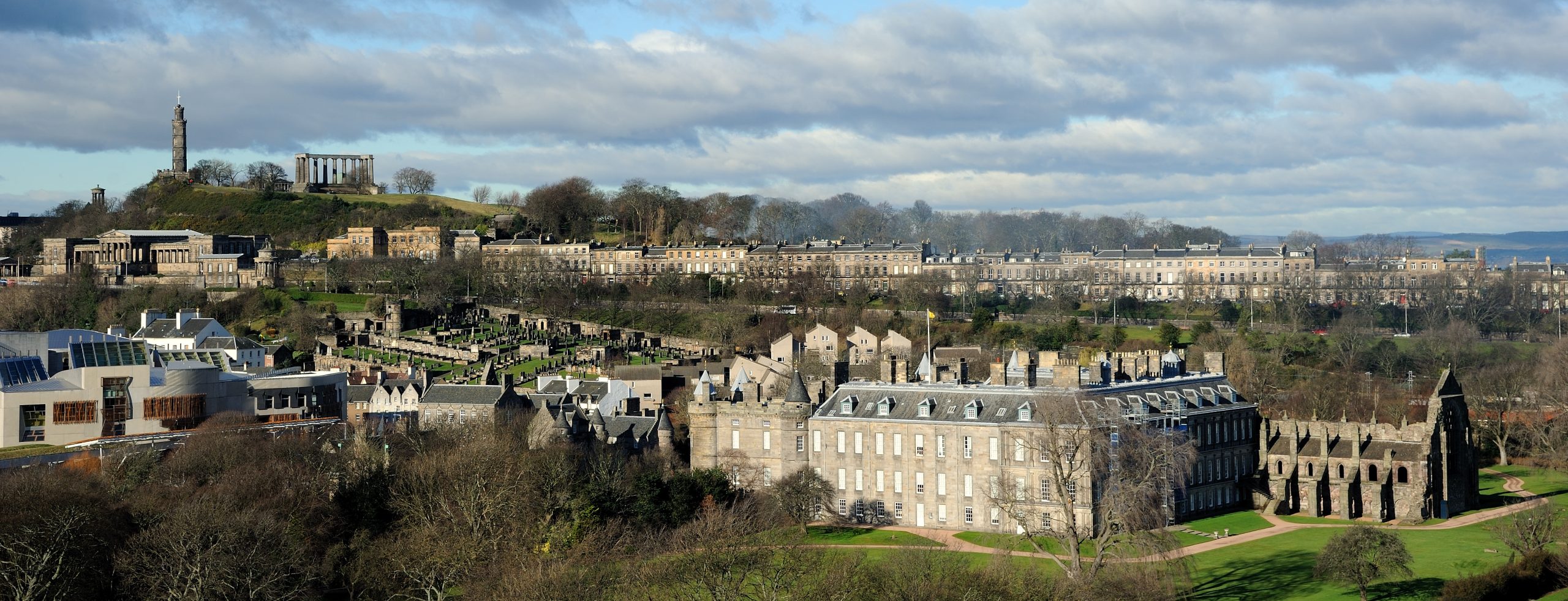
Today’s banner
The upstairs room
Photograph by
Islay McLeod

The danger of letting
the police decide what
is offensive
Tom Gallagher
Scotland managed to avoid the worst fall-out from the Ulster conflict
because by and large, the state and civil society, even in its orange and
green manifestations, kept the head.
The British state in the 1970s made the calamitous decision of setting up the Ulster Defence Regiment (UDR), a locally-recruited part of the British Army in order to quell a rebellion from a section of the minority. The community which dominated the UDR was being allowed to fight an undeclared civil war with an alienated minority. Nothing as dramatic will emerge from this doubtful law thankfully. But it will re-define the legitimacy of the police in the eyes of many Celtic supporters because their expressions of group identity will bring them into conflict with officers who are suddenly going to be tasked with being stern critics of their melodies and chants.
One of the new intake of SNP MSPs who was standing next to me in the committee room turned to a colleague and said ‘I’m getting out of here’ when Hugh McLaughlin, a senior figure in the Celtic group compared the 2011 bill with the 1954 Flags and Emblems Act in Northern Ireland. A decade later Terence O’Neill, the prime minister of Northern Ireland, was (like the SNP now) keen to project the province as a modern go-ahead society but the way that he chose to proscribe ‘foreign’ identities led to a serious riot in Belfast during the general election of 1964 when the police tried to remove an Irish tricolour from a candidate’s election offices.
If there is still inter-communal tension in Lowland Scotland, then clearly Roseanna Cunningham, like Mr O’Neill before her, is preoccupied with questions of our image in the eyes of others: ‘Football is the ugliest and most visible manifestation of sectarianism’, she proclaimed on 14 December. Her SNP colleague from Kilmarnock, Willie Coffey, was in no doubt that ‘the world is watching closely to see whether Scotland’s parliament is ready to make a stand against the bigots’.
Scotland managed to avoid the worst fall-out from the Ulster conflict because by and large, the state and civil society, even in its orange and green manifestations, kept the head. But now the desire to drive ahead with ‘Scotland the Beautiful’ means that the current rulers of Scotland are in danger of copying pre-powersharing Northern Ireland. The SNP MSP who immediately exclaimed ‘I am getting out of here’ when he heard of the Ulster parallel displays the impatience of a party with anything that counters its own image of the nation: the SNP refuses to see that Scotland is not unique, others have been where it is now, and good and bad decisions have been made that it is possible to learn from.
But no self-reflection occurred on 14 December. Under a three-line whip, the SNP voted en bloc for legislation which had few sustainers beyond the police and the Edinburgh civil service.
Beforehand, talking to the Celtic supporters, Humza Yousaf MSP referred to ‘factions’ needing to be restrained. This bright SNP parliamentarian, for whom many predict a stellar future, might have been discomfited if anyone had singled out the Pakistani community in Glasgow or the city’s nascent Somali community in such terms.
Alison McInnes, a Liberal Democrat from the north-east, expressed her astonishment about the SNP’s disinclination to work with key groups which had expressed their deep unease about the bill; she reminded the chamber that on 23 June, at stage 1, Mr Salmond had said: ‘On this issue above all, I want consensus; I want consensus across the chamber and across our partner organisations’.
Siobhan McMahon shortly afterwards expressed her alarm that ‘the task of negotiating the minefield of deciding who is responsible and who is abusive will fall to the police’. She pointed out that she had made representations in the past about potatoes being thrown at Celtic fans and ‘Irish nationals playing for Celtic being booed and taunted in football grounds up and down the country’ . She went on to say: ‘When I have pointed out the culprits to police officers, I have been ignored…Not once has my complaint been acted upon’. The Labour MSP, when she declared ‘I am a proud Celtic supporter’, caused a nearby SNP colleague to snap at her, ‘Yes you’ve made that clear’.
At least Humza Yousaf was prepared to say that his sympathies for the bill would diminish if it was implemented in a heavy-handed manner by the police. But Holyrood’s security unit had shown how rigid holders of authority in Scotland remained when Stuart Waiton, one of the most effective critics of the bill, also fell foul of them. This was for wearing a t-shirt which proclaimed: ‘I may hate what you have to say but I will defend to the death your right to say it’. These are the words of Voltaire, who might have found a more genuine national and even liberal spirit residing in the Edinburgh of the 1760s than in Alex Salmond’s provincial 21st-century capital.
 Tom Gallagher is working on a new edition of his 1987 book ‘Glasgow: the Uneasy Peace’ which will be renamed ‘Scotland and Sectarianism: A Two Hundred Year Preoccupation’