The township of 12 people
which sells four million
cans of beer a year

Scotland
in the
heat
 Listening
to the
other side
R D Kernohan discovers common ground in unexpected places
 Get SR free in
your inbox three
times a week
Click here
The Store
The new space for articles you may
have missed
 The history of
our post-war progress
is not all it seems
Click here for
Jill Stephenson
 The Cafe
Unlike many publications SR doesn’t have an online comment facility – we prefer a more considered approach. The Cafe is our readers’ forum. If you would like to contribute to it, please email islay@scottishreview.net
Today’s banner
North Berwick flowers
Photograph by
Islay McLeod


Edinburgh, where
the only sound is a little
mood music
Tom Gallagher
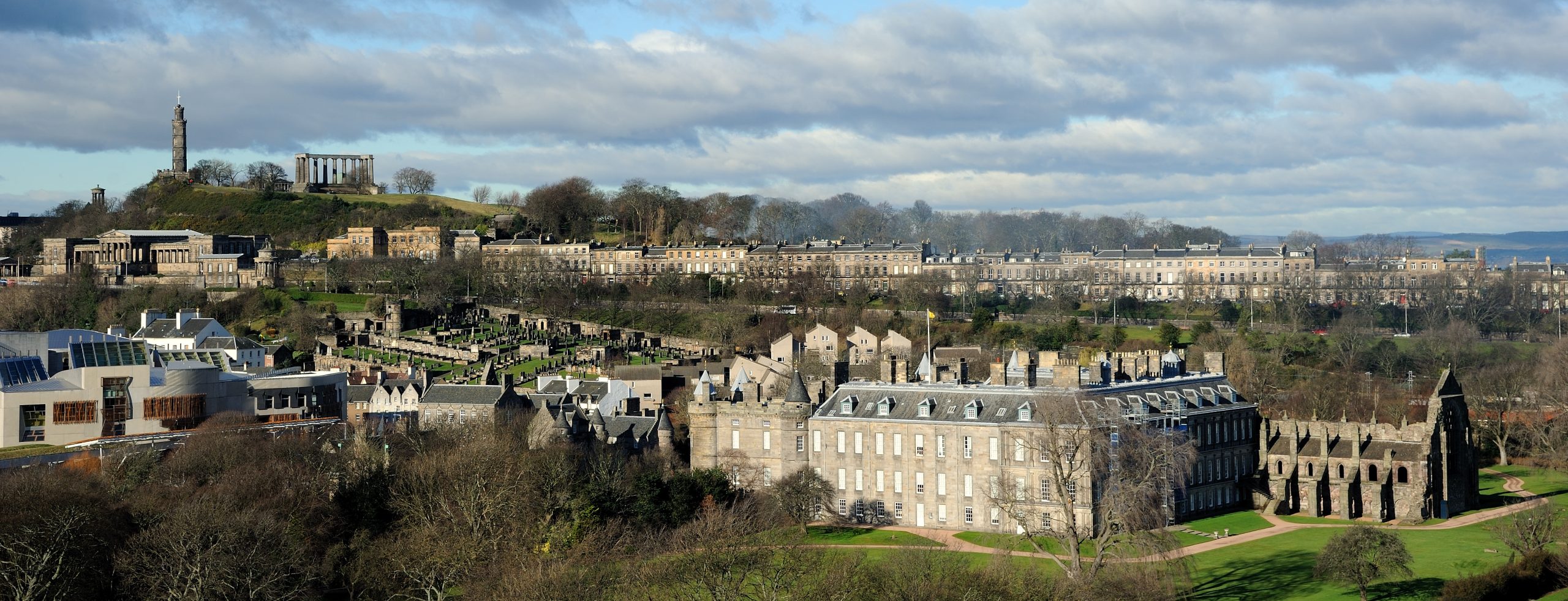
The plea from Walter Humes (21 March) for Bill Jamieson to expose the goings-on in Edinburgh’s dark corridors of power and influence was magnificently put. But the dovecots of corporate, political and professional power are unlikely to be fluttered any time soon. It’s not just because the veteran journalist’s time as a somebody at the Scotsman is drawing to a close (as he himself explained, last week, in his valedictory piece for the Scottish Review).
The political economy of Edinburgh simply does not invite close examination. The city makes a living from selling artefacts that too often involve hype and concealment about their alleged benefits. From the products of the financial services industry to the schemes for Scotland’s betterment dreamt up in the bureaucratic empire on the shores of Leith, and not forgetting the degrees dangled in front of young people for whom careers increasingly will be a thing of the past.
A newspaper like the Scotsman, dependent on advertising revenue to stay in business, needs to be circumspect about sharp practice, serial incompetence, nepotism, cover-ups or the like. Even if it finds itself the capital of a new state, Edinburgh will remain a multi-layered secretive city where the misdeeds of its merchant princes, thrusting bureaucrats or cultural commissars are not judged in the public agora. Only the king-sized row over the Scottish Parliament briefly broke this taboo. Order and decorum had been restored by the time the trams fiasco came along and Princes Street and St Andrews Square, and the Haymarket area, were carved up by trenches for as long as Flanders in the first world war.
But much of Edinburgh seems happy to turn a Nelsonian eye to knavery and rascality. A poll in the Scotsman earlier this month showed that a majority of Scotsman readers disapproved of the decision to strip Fred Goodwin of his knighthood. No Edinburgh publisher has yet published an account of the financial cupidity that in 2008 felled two banks which only a few months before were being hailed as anchors of Scotland’s future economic independence.
Occasional mavericks are to be found, such as the architect Malcolm Fraser who has performed an estimable service by pointing out how profit and the convenience of a few has damaged the built environment in the city and further afield (notably the very utilitarian schools and hospitals arising from Gordon Brown’s misconceived public-private initiative).
Bill Jamieson in the Scotsman has had to turn to radical commentators who bemoan the fall of justice and virtue in general but shrink from campaigning to expose any particular shady dealings or right an egregious injustice.
But he seems to be the Last of the Mohicans. Probably there has never been a time when academia, the churches, law, and the cultural industries, Edinburgh’s chief excuse for being seen as a distinctive city, have been so mute about what is going on in their midst. Perhaps in desperation, Bill Jamieson in the Scotsman has had to turn to radical commentators who bemoan the fall of justice and virtue in general but shrink from campaigning to expose any particular shady dealings or right an egregious injustice.
The implacably unionist executive editor of the Scotsman has surrounded himself with utopians who provide the mood music for Scotland’s freedom journey. They happily co-exist with the paper’s decidedly freemarket and avowedly entrepreneurial take on economic matters in its financial pages. This combination of dry economics and wet cultural and social coverage is actually a common formula in the upmarket media. The Economist and the Financial Times exemplify it, applauding multi-culturalism and European integration in all seasons while defending the enterprise ethic during this nadir of modern capitalism.
I have no bone to pick with the Scotsman as the last article I submitted was nearly two years ago and eventually it got published. But I did write to Bill several months ago, asking if he had been aware about the sudden increase in the Romany population and whether he thought the arrival of as many as several thousand very poor people at a time of cuts in public services ought to be flagged up as an issue. As someone who is a regular visitor to Romania, the country from where most of the Roma originated, I offered to provide background information to any journalist he wished to put onto the story. But I never heard back.
Hosting conferences on devo-max, the forthcoming referendum, and alternatives to independence appear to be more pressing tasks at the top of the Scotsman. And why not – because, wherever the constitutional dice land, Edinburgh is sure to enjoy more centralised power in Scotland than London does over the whole of Great Britain. But Bill would perhaps leave an even more impressive footprint in the city if he had been prepared to tackle the unglamorous and even awkward issues that will be ducked by politically-correct clerics, bureaucrats and politicians.
 Tom Gallagher is the author of ‘The Illusion of Freedom: Scotland
Under Nationalism’. His most recent visit to Romania was earlier this month and he has written three books about the country’s painful exit from communism.