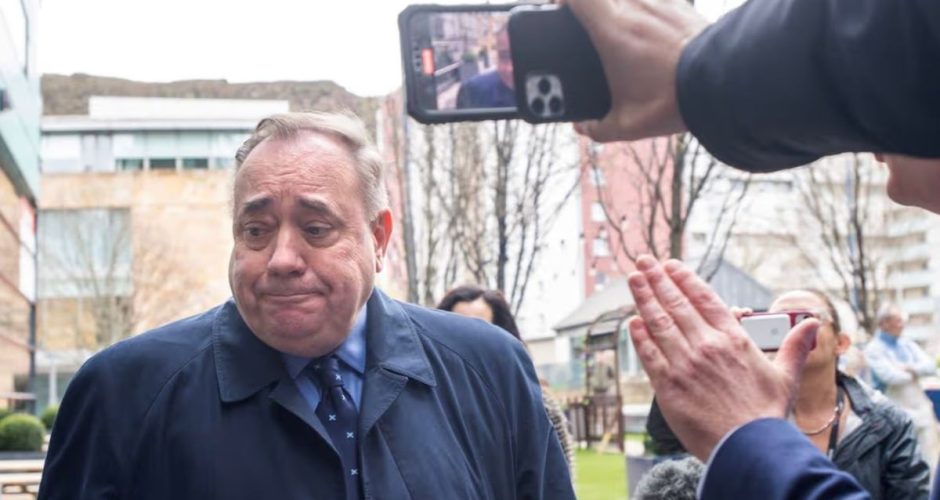
Well, I must say, it’s a right old carry-on, isn’t it? After all the huffing and puffing, the legal wrangling, and the eye-watering sums spent, we finally get a glimpse of the Alex Salmond files. And what a surprise, they’re heavily redacted. It makes you wonder what the big secret really was, or rather, what they didn’t want us to see.
These are the documents, mind you, from the 2021 ethics investigation into Nicola Sturgeon. That inquiry, led by James Hamilton KC, cleared her of breaching the ministerial code regarding the Scottish Government’s handling of complaints against her predecessor. The whole saga, from the complaints themselves to the botched government process and the subsequent court case, has been a dark cloud hanging over Scottish politics for years.
Scotland’s Information Commissioner, bless them, had told the SNP Government to release parts of this evidence by January. But no, that wasn’t good enough, was it? Instead, ministers launched a court appeal, stretching out a five-year battle that a member of the public started using freedom of information laws. It just feels like a constant fight for basic openness.
Jackie Baillie, the Scottish Labour deputy leader, hit the nail on the head, I reckon. She said: “John Swinney and the SNP have fought this every step of the way, spending eye-watering amounts of taxpayer money in court trying to bury these documents.” It’s a sentiment many of us share, I think. This shouldn’t be a battle; transparency should be the default, not something we have to drag our government to court over.
I hear what the Scottish Government spokesman said, about protecting identities. He stated: “The courts have made it clear that those who complained in relation to allegations of sexual assault must have their identities protected. The Scottish Government is not permitted to release information which would breach those court orders and amount to a contempt of court.” And absolutely, I agree completely that the identities of complainants must be safeguarded. That’s not up for debate.
But there’s a line, isn’t there, between protecting vulnerable individuals and obscuring the wider workings of government? The sheer length of the battle, the cost to the public purse, and the heavy redactions just leave a sour taste. It feeds into a broader sense that there’s a “rotten culture of secrecy and cover-up,” as Baillie put it, within our government. It makes me wonder about other areas, like how our local councils are running out of money, and if we’re getting the full picture there either.
This whole episode just highlights a deeper issue of trust in Scottish politics. We’re a nation that values fairness and straight talking, and when it feels like we’re being stonewalled, it erodes faith. John Swinney, as First Minister, has a chance to change this perception, but I don’t see much sign of it yet.
I believe Scotland deserves a government that genuinely embraces openness, not one that has to be dragged “kicking and screaming” to it. We need to know that our elected officials are working for us, in the light, and that accountability isn’t just a buzzword. Without that, how can we truly trust the decisions being made on our behalf?
Perhaps it’s time for a fundamental rethink on how freedom of information requests are handled, not just here but across the board. We could look to examples like the Scottish Information Commissioner’s office, which often champions the public’s right to know. Or even consider strengthening the powers of the Scottish Parliament to demand greater transparency from ministers. Because frankly, I’m tired of feeling like I’m peering through a keyhole when the door should be wide open.
Source Reference: Glasgow Live