

Jill Stephenson and Andrew Hook
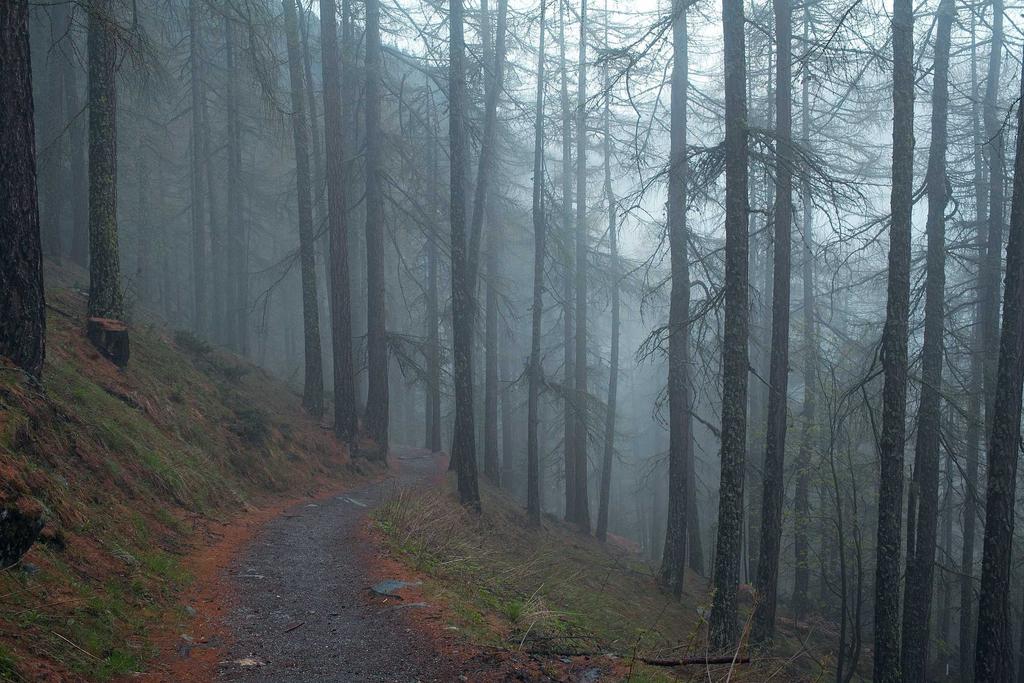
 Crianlarich. Photograph by Islay McLeod
Intrigued by the SR article on the West Highland Line (19 February), I took a chance and booked a day return trip from Hyndland to Mallaig. The weather forecast was pretty encouraging. It should have been ecstatic.
I can’t recall ever being so moved by the sight of the early spring sunlit lochs, moors, glens and, literally above all, the soaring snow-clad mountains standing, outstanding, against the newly-scrubbed clear blue sky. The lochs lay, totally serene, perfectly reflecting the surrounding hills, still in their late autumn colouring and their snowy caps. I was so beguiled, happy, proud (oh talk about sensation overload?), that I forgot to take out my camera to record the scene. And yet it’s probably better that the scenes lodge in my memory rather than in some forgotten digital recess on the computer.
The train service was punctual, the carriage warm and the staff as helpful as they could be, under the circumstances. Sadly, however, the carriages were shabby, the windows too dirty for decent photography, and the catering trolley clattered its way along the aisles offering only a selection of fairly dreary snacks and drinks from its deeply depressing menu brochure. A very English-sounding fellow traveller, unable to control her enthusiasm at the scenery, frequently and delightedly called out ‘Oh wow!’ as yet another seductive view of the West Highlands crept into her camera’s viewfinder.
Apart from, I think Morar, the sight of the proud old Highland railway stations restored to glory in their smart light cream painted shingles and green painted wood and cast-ironwork added yet more joy to a blissful day. It was enough for a lowland pensioner to think that he really ought to get out a bit more.
If you haven’t done the Full Mallaig Monty yet, do it soon.
Iain McGlashan
 The Dunragit monument (14 February) was apparently comprised of two concentric rings of wooden posts – amongst other equally important things – during the Neolithic period and is obviously why it is referred to in some quarters as a ‘henge’. This ain’t no period in Scottish history whereby you were dragging your knuckles along the ground and your women by the hair whilst uttering the word ‘Ugg’ albeit with a prototype Scottish lilt. You weren’t in fact doing anything remotely as primitive back then as the fact is that the Dunragit people at this point in history were seriously in touch with what was ‘current’ within the Neolithic massive, and as such created their own ‘crucial’ monument on the same basis.
These same people also created the stone balls highlighted by Ian Begg (26 February). Take a stone and try recreating the same thing one idle Sunday afternoon in your back garden and see how far you get. The truth is that you won’t come anywhere remotely near the same standards of craftsmanship because you won’t have the slightest idea as to how to set about such a task.
The same people, culturally speaking, created what exists at Dunragit, yet the guardians of your heritage are about to let a bulldozer level the whole plot and destroy this tangible prehistoric link to your national development. On such a basis something noticeably stinks quite frankly.
Bob Rosamond
I was very interested to see our principal, Professor Nigel Seaton, referenced in Jill Stephenson’s article (26 February). The article seems to imply that Nigel’s Scottish credentials rest largely on his time at Edinburgh University. I thought that I should make it clear, if it’s not known to Professor Stephenson, that Nigel was actually born in Falkirk and brought up in Linlithgow.
Kevin Coe
It is tempting to add the charge of hypocrisy to the accusations which have led to the premature resignation of Cardinal Archbishop Keith O’Brien. This temptation should be resisted. Last Friday, only two days before the explosion, Keith O’Brien raised the issue of clerical celibacy in an interview. This is an important issue and one which should not be forgotten as the substance of the personal acusations against him become public knowledge.
The cardinal pointed out that whilst a celibate priesthood has been church policy for centuries, it is a church discipline which was not ordained by Jesus himself and therefore not absolutely neccessary to the priesthood. The Lord himself has told us that: ‘It is not good that man should be alone’.
All Christians are called to live a life of chastity outside marriage and/or a life of fidelity within marriage. This is not easy – becoming a Christian does not change one’s sex drive or sexual orientation – and a great many of us at some point (or points) in our lives fail to live up to this ideal. It is one of those things we call sin and is a type of sin which causes us deep shame.
This is not to say that celibacy has no place. A year or two back a missionary priest, put it to me that celibacy is a charism (gift of the spirit). A charism essential to his own calling to a missionary life but which he saw as seperate to his calling to the priesthood. This too is significant, I had always thought of celibacy as a burden the clergy carried – as a young Keith O’Brien himself saw it: something that went with the vocation – just part of being a priest.
There is of course a corollary to enforcing celibacy in the ordained priesthood – that these men are precluded by their ordination from forming a close and committed relationship with any woman. The (scripturally-based) assumption that they would not in any circumstances form such a relationship with a man is precisely that which can leave priests with only male social company. The resulting risk of turning boys, if not men, into sex objects has long been recognised by some.
So what then are we seeing and assuming that there is truth in the allegations? I think we are seeing this: That to be celibate is to deny oneself a deep physical need for human contact – a need which otherwise might be fulfilled in the lifelong relationship of marriage. But marriage is also the union of a man and woman which provides not only lifelong security for the spouses but the definitive relationship within which, by the grace of God, new life will be created if and when the marriage is blessed with children.
This explains why the Catholic Church argues against the legalisation of same-sex marriage. It also suggests that the Catholic Church needs to distinguish between the call to the priesthood and the call to celibacy. I do not know whether the archbishop’s alleged inappropriate behaviour amounts to the cynical abuse of power or simply a number of lapses in his day by day struggle to live the same chaste life which Christian lay people, Catholic and Protestant, all too often fail to maintain.
As every Christian knows: To live a sinless life is impossible, it is not of itself hypocrisy.
P E O’Donnghaile
The Cafe is our readers’ forum. Send your contribution to islay@scottishreview.net