Kenneth Roy
Ten questions about
what happened in
Scotland yesterday
James Robertson
Loving our fellow Scots?

Eileen Reid
Can we avoid being
angry? Should we
avoid being angry?
Ronnie Smith
Rose Galt is angry with me

R D Kernohan
It’s too late
for regrets. Yet,
regrets I have a few
Quintin Jardine
The Redknapp case


David Torrance
Barred from a
presbyterian church: ‘We
can’t just let anyone in’
John Cameron
Down with PC

Fiona MacDonald
It was exciting for a
morning, and then
it was back to grey
Life of George
Falling to bits

 09.02.12
No. 512
 John Cameron
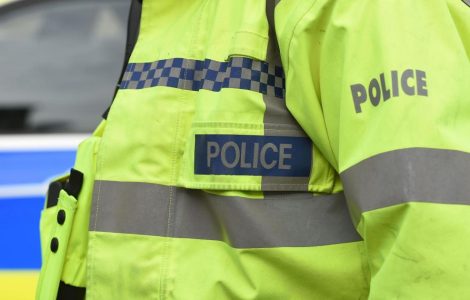
The home secretary Theresa May aims to strip away New Labour’s micro-managing and simply require the police to carry out their basic function of protecting the public. Well, as they say, that will be a neat trick because leaving our communities exposed to being terrorised by hoodlums seems the object of EU human rights legislation.
Political correctness in all its poisonous forms has spawned generations who sneer at authority and are beyond any discipline, at home, in school, or even from the courts. The rot began in the 1970s with the retreat of police from the streets into their cars and the removal of the constables who used to actually live in our estates and villages. They knew the troublemakers and kept them in check with full local support and the stigma of having your hooligan son brought home by the village bobby was very real.
Today adults fear to exercise the control over their own community once commonplace because they know they will not be backed up by other adults, the police or the courts. Too many adults land up in jail after stepping in to help, and the rights of homeowners to protect their property are manifestly less important to the law than criminals’ rights.
As a result of the bien pensant’s endless insistence that we should understand more and condemn less we have abandoned the codes that acted as a brake on bad behaviour. We are forced to listen to the empty rhetoric of politicians who talk incessantly about the rights of children and then wonder why some of them feel they can do as they please. Old-fashioned virtues of law, order, respect and decency are ignored and we have the grotesque spectacle of schools forced to take back louts who have assaulted teachers.
The home secretary is reacting to the case of Fiona Pilkington who killed herself and her disabled daughter after enduring a five-year campaign of harassment by local yobs. She had appealed to the police on 33 occasions but they ignored her and, as the coroner observed, we do not need new laws, merely a force willing to uphold the existing ones.
Mrs May’s action plans will not replace the deference, respect, responsibility and duty we have lost but a decent society requires and we will continue to reap what we sowed.
 The Cafe
Unlike many publications SR doesn’t have an online comment facility – we prefer a more considered approach. The Cafe is our readers’ forum. If you would like to contribute to it, please email islay@scottishreview.net
Today’s banner:
Observers
Dunure, Ayrshire
Photograph by
Islay McLeod

Barred from a
presbyterian church: ‘We
can’t just let anyone in’
David Torrance
Malaysia
I nearly didn’t make it at all. Assuming four hours was enough to get between Luton and Gatwick, a tube strike and skeleton train service meant it wasn’t. I arrived after check-in had closed and had to muster what little breathless charm I had to get on the flight at all. As ever, I was urged to sympathise with workers, in this case tube drivers, who have secure employment, a good salary (circa £45,000 per annum, sometimes more) and a pension – with, granted, cuts in store – that will outstrip anything I can dream of. I find this very difficult.
Kuala Lumpur was smart, functional and a little bland. Its sights, mainly tall buildings with predictable views, could be dispensed with in a day so I ended up wandering around shiny shopping centres. More enjoyable was zipping around KL on its justifiably world-renowned transport system. The monorail lifted my mood immediately, as did the ‘LTM’ metro system.
The city, however, was not designed with pedestrians in mind, and I had to navigate a multi-lane motorway in order to reach the National Museum, which brought me up to speed with the Malaysian independence movement. A featured quote from Tunku Abdul Rahman, ‘Britain will find us to be her best friend’, conjured up images of a Malayan Alex Salmond. Being a Scot, oddly, didn’t open any doors. KL’s St Andrew’s presbyterian church looked charming but I wasn’t allowed in for a look, a first in all my travels. ‘We can’t just let anyone in,’ I was told, ‘you know, for security reasons’.
Singapore
I wasted half an hour in KL trying to collect a pre-booked train ticket to Singapore. ‘We have no reservation and train is full’ repeated a demure Malaysian girl over and over again, despite my pleas to the contrary. Stubbornly I insisted she check with her main office. A reluctant phone call later and I was presented with a ticket. ‘Here is your reservation, Mr David.’
I also encountered the usual bemusement that I wanted to go anywhere by train. ‘Take the bus,’ an employee of the mighty Petronas Corporation told me, ‘it’s quicker and more comfortable’. He was right, of course, but missed the point of train travel. After four hours’ sleep, I clattered into Woodlands at 6.30 am and had just a day to roam around Singapore, which was about right. City-states have always intrigued me, although this one was originally part of the Malaysian Federation following the break with Britain in 1963. But the union was short-lived; racial tension between Chinese and Malays led to riots, and in 1965 Singapore (reluctantly) went its own way.
I had breakfast near the street on which the Anglophile ‘Harry’ Lee Kuan Yew still lived, pulling the strings of a government now headed by his son. Ostensibly socialist, he transformed Singapore into an economic powerhouse that still thrives despite the events of 2008. Shamefully, all I knew of Singapore before arriving was its infamous ban on chewing gum. I can report that it was lifted a few years ago, the evidence of which was embodied in a few blackened spots on the otherwise spotless pavements.
Inevitably, Singapore became an urban extension of Kuan Yew’s rather fastidious personality: functional but with a deficit of character. Fort Canning was virtually the only historical sight left standing, complete with the graves of Scots colonialists.
Burma/Myanmar
Burma, or Myanmar as it’s still called by most of the planet, was the heart of my journey, everything else leading up to, or down from, five days in the former British colony. A curious hour-and-a-half behind Malaysia and Singapore in time zone, it was also far behind in developmental terms: a jumble of Indian squalor, zealous but patchy enterprise and surprising cheerfulness in spite of it all.
The girls in my guest house, for example, were full of mirth, not least at my determination to a) walk to Yangon (Rangoon) railway station (a mere 15 minutes away) and b) book a ticket to Mandalay once I got there. ‘The government-run trains are slow and unreliable,’ one told me. ‘You take a bus.’ I tried to explain that I liked trains and didn’t mind delays, but was rewarded with a look that inferred Western madness. Despite no English signage (always fun) I secured my ticket, departing at 6am on Monday, for which I was charged the special tourist rate of 30 US dollars (i.e. 10 times what a local would have paid).
Burma highlighted Scotland’s complicated colonial legacy. Not only did a South African-Scot, Archibald Colquhoun, urge its exploitation (he wrote a book unashamedly subtitled ‘The Best Unopened Market in the World’), but the activities of a Scottish company, the Bombay Burmah Trading Corporation, provided a pretext for British annexation (led by another Scot) of upper Burma. For the next 70 years predominantly Glaswegian businessmen took full advantage of the country’s natural resources. As George Orwell put it in Burmese Days: ‘The British Empire is simply a device for giving trading monopolies to the English – or rather to gangs of Jews and Scotchmen’.
Yangon was full of crumbling colonial buildings, which I loved. Passing one festooned with barbed wire, I asked a taxi driver what it was. ‘The old prime minister’s office,’ he replied. ‘What is it now?’ ‘Police,’ he said simply, and laughed nervously. For Burma remains, of course, a military state, albeit one slowly relinquishing its grip (hundreds of political prisoners were released the week after I left). There were the usual manifestations: a ubiquitous military presence and vapid slogans on public buildings, but otherwise soldiers appeared to rub along fairly well with locals, while stallholders in Mandalay sold icons of Aung San and his soon-to-be-cabinet minister daughter Aung San Suu Kyi.
The road to Mandalay, or rather the railway track, was long and initially rather scenic. I watched the sun rise as we pulled out of Yangon, which soon gave way to a heat haze, low-flying birds, and a deep orange-coloured sky. My carriage (which had clearly been luxurious, only 50 years ago) was full and friendly, and before long a 19-year-old girl studying IT at a nearby university sat next to me. She was learning three languages in addition to her own and wanted to travel, mainly to see Paris. She moved around the train to avoid the conductor (she lacked a seat reservation) and flirted with me, harmlessly, from wherever she happened to end up.
Six hours into the 16-hour journey I got ill. Immediately, all the positives I associated with train travel became negatives. My stomach churned so much I could manage nothing beyond fitful, uncomfortable napping, together with carefully timed visits to an unspeakably filthy squat toilet in order to vomit. Doing anything else – if you catch my drift – was unthinkable. The sights of Mandalay were, therefore, tackled rather perfunctorily the following day.
I left Burma on the anniversary of its ‘liberation’ from the UK (‘Happy Independent Day’ declared a sign at the shiny new Yangon airport) and just hours before William Hague arrived, the first visit by a British foreign secretary in half a century. Granted, he would have shared little of my experience – frequent power cuts, needless bureaucracy and taxis which, in any other country, would have been destined for the scrap yard – but he must still have gleaned the sense of a nation on the cusp of rejoining the international community.
Cambodia
Cambodia, by contrast, was clean, efficient and, therefore, an immense relief, particularly in my weakened state. Within minutes of arriving I’d arranged a tuk tuk to my modest hotel, 1kg of laundry and – having gesticulated at a topless Chinese man in a pharmacy – secured colourful pills that, within hours, had settled my stomach and therefore also my mind.
Somehow everything just works in Asia, and the raw economics of the region are astonishing. A blizzard of activity wherever you look: tuk tuks and motos vying for passengers for a dollar or two; eateries occupy every spare inch and appear constantly busy. It’s crude, but also efficient and opportunistic – a free market in action. I ate food at one kerbside Chinese place and watched as a kid, probably a teenager, directed traffic in balletic fashion while taking food orders and also squeezing in time to flirt with his friends.
Three days were spent exploring the temples at Angkor, and very impressive they were too. The hawkers confronting every tourist were also startlingly well informed. ‘Where you from?’ was the initial cry. ‘Scotland,’ I would reply, quickening my pace. ‘Ah, Scotland, Wales, Ireland, England – all the same,’ replied one; while another got a bit closer to the mark with: ‘UK has four countries’. I contemplated asking for a critique of devo-max vis-à-vis independence within a constitutional monarchy but thought better of it.
Everyone in Cambodia had stories, largely traumatic ones. On the bus from Siem Reap to Phnom Penh an archaeologist told me that he hadn’t started school till he was 12 because of the Khmer Rouge. Anyone older than me (34) had similar tales, but what was striking was the complete absence of rancour. They’d all talk about murdered parents and grandparents, often movingly, but they had made a conscious, collective, decision to look forward rather than back; an astonishing psychological feat.
Laos
Laos is the forgotten country of what used to be French Indo-China, and one I knew practically nothing of before touching down in Vientiane, its rather sleepy capital. The change in pace compared with Vietnam or Cambodia was puzzling, but welcome after an exhausting few days of temples and Killing Fields. The city centre was full of very good French restaurants, culinary hangovers from the fourth republic.
My time in Laos was also frustrating, coinciding as it did with David Cameron’s referendum intervention and Alex Salmond’s equally dramatic response. As Salmond’s (only) biographer and an occasional commentator on the Conservatives, I was inundated with calls from the BBC, newspapers and colleagues wanting quotes, commentary and reaction. This I was hardly well placed – geographically or otherwise – to give. All I managed were two radio interviews for LBC and something called ‘The Voice of Russia’. Otherwise my absence from the constitutional coalface amounted to lost income and lost opportunities, which for a freelancer was as traumatic as it gets.
I preoccupied myself by visiting more pagodas, an unfinished triumphal arch (commemorating Laotian independence) and the unintentionally entertaining National Museum, full of rather p0-faced accounts of Communist triumphs against US imperialist aggressors and their local ‘puppets’, one of whom was described – disapprovingly – as having accepted ‘false independence’ from the French.
Hong Kong
Another city-state, this time Hong Kong, was my last port of call, ostensibly to help celebrate a former colleague’s birthday (he, along with ever-growing numbers of Western expats, now works in what one called ‘Honkers’), but also curious to discover if I liked the place any more than I hadn’t on my first visit back in 2005. Happily, I did, for its engaging blend of East and West, its cramped multi-layered streets and the ferries – old and new – that connected Hong Kong Island (which, interestingly, the UK hadn’t needed to give up in 1997) with the new territories.
Scotland, as ever, wasn’t far away, in the street names (Edinburgh and Aberdeen) and on the lips of ex-pats, who were divided over their view of Scotland’s future. From a rain-soaked alleyway BBC Radio Ulster asked me what made Alex Salmond tick, and the following morning – en route to the airport – I flinched at two rather clichéd articles about Scotland in the South China Morning Post.
I fingered my passport, now bulging with African and Asian visas, as the train cut through the city’s extensive suburbs. It struck me that I might well have a different one in a few years’ time. What would it look like? Would it remain that familiar EU maroon? Who would design it? How much would it cost? Would visas still be as easy to secure? I hoped so, for I’ve still got 114 countries to visit.

David Torrance is a writer, broadcaster and political historian. He is the author of biographies of George Younger and Alex Salmond
presbyterian church: ‘We
can’t just let anyone in’
John Cameron
Down with PC
Fiona MacDonald
It was exciting for a
morning, and then
it was back to grey
Life of George
Falling to bits
09.02.12
No. 512
John Cameron
The home secretary Theresa May aims to strip away New Labour’s micro-managing and simply require the police to carry out their basic function of protecting the public. Well, as they say, that will be a neat trick because leaving our communities exposed to being terrorised by hoodlums seems the object of EU human rights legislation.
Political correctness in all its poisonous forms has spawned generations who sneer at authority and are beyond any discipline, at home, in school, or even from the courts. The rot began in the 1970s with the retreat of police from the streets into their cars and the removal of the constables who used to actually live in our estates and villages. They knew the troublemakers and kept them in check with full local support and the stigma of having your hooligan son brought home by the village bobby was very real.
Today adults fear to exercise the control over their own community once commonplace because they know they will not be backed up by other adults, the police or the courts. Too many adults land up in jail after stepping in to help, and the rights of homeowners to protect their property are manifestly less important to the law than criminals’ rights.
As a result of the bien pensant’s endless insistence that we should understand more and condemn less we have abandoned the codes that acted as a brake on bad behaviour. We are forced to listen to the empty rhetoric of politicians who talk incessantly about the rights of children and then wonder why some of them feel they can do as they please. Old-fashioned virtues of law, order, respect and decency are ignored and we have the grotesque spectacle of schools forced to take back louts who have assaulted teachers.
The home secretary is reacting to the case of Fiona Pilkington who killed herself and her disabled daughter after enduring a five-year campaign of harassment by local yobs. She had appealed to the police on 33 occasions but they ignored her and, as the coroner observed, we do not need new laws, merely a force willing to uphold the existing ones.
Mrs May’s action plans will not replace the deference, respect, responsibility and duty we have lost but a decent society requires and we will continue to reap what we sowed.
The Cafe
Unlike many publications SR doesn’t have an online comment facility – we prefer a more considered approach. The Cafe is our readers’ forum. If you would like to contribute to it, please email islay@scottishreview.net
Today’s banner:
Observers
Dunure, Ayrshire
Photograph by
Islay McLeod
Barred from a
presbyterian church: ‘We
can’t just let anyone in’
David Torrance
Malaysia
I nearly didn’t make it at all. Assuming four hours was enough to get between Luton and Gatwick, a tube strike and skeleton train service meant it wasn’t. I arrived after check-in had closed and had to muster what little breathless charm I had to get on the flight at all. As ever, I was urged to sympathise with workers, in this case tube drivers, who have secure employment, a good salary (circa £45,000 per annum, sometimes more) and a pension – with, granted, cuts in store – that will outstrip anything I can dream of. I find this very difficult.
Kuala Lumpur was smart, functional and a little bland. Its sights, mainly tall buildings with predictable views, could be dispensed with in a day so I ended up wandering around shiny shopping centres. More enjoyable was zipping around KL on its justifiably world-renowned transport system. The monorail lifted my mood immediately, as did the ‘LTM’ metro system.
The city, however, was not designed with pedestrians in mind, and I had to navigate a multi-lane motorway in order to reach the National Museum, which brought me up to speed with the Malaysian independence movement. A featured quote from Tunku Abdul Rahman, ‘Britain will find us to be her best friend’, conjured up images of a Malayan Alex Salmond. Being a Scot, oddly, didn’t open any doors. KL’s St Andrew’s presbyterian church looked charming but I wasn’t allowed in for a look, a first in all my travels. ‘We can’t just let anyone in,’ I was told, ‘you know, for security reasons’.
Singapore
I wasted half an hour in KL trying to collect a pre-booked train ticket to Singapore. ‘We have no reservation and train is full’ repeated a demure Malaysian girl over and over again, despite my pleas to the contrary. Stubbornly I insisted she check with her main office. A reluctant phone call later and I was presented with a ticket. ‘Here is your reservation, Mr David.’
I also encountered the usual bemusement that I wanted to go anywhere by train. ‘Take the bus,’ an employee of the mighty Petronas Corporation told me, ‘it’s quicker and more comfortable’. He was right, of course, but missed the point of train travel. After four hours’ sleep, I clattered into Woodlands at 6.30 am and had just a day to roam around Singapore, which was about right. City-states have always intrigued me, although this one was originally part of the Malaysian Federation following the break with Britain in 1963. But the union was short-lived; racial tension between Chinese and Malays led to riots, and in 1965 Singapore (reluctantly) went its own way.
I had breakfast near the street on which the Anglophile ‘Harry’ Lee Kuan Yew still lived, pulling the strings of a government now headed by his son. Ostensibly socialist, he transformed Singapore into an economic powerhouse that still thrives despite the events of 2008. Shamefully, all I knew of Singapore before arriving was its infamous ban on chewing gum. I can report that it was lifted a few years ago, the evidence of which was embodied in a few blackened spots on the otherwise spotless pavements.
Inevitably, Singapore became an urban extension of Kuan Yew’s rather fastidious personality: functional but with a deficit of character. Fort Canning was virtually the only historical sight left standing, complete with the graves of Scots colonialists.
Burma/Myanmar
Burma, or Myanmar as it’s still called by most of the planet, was the heart of my journey, everything else leading up to, or down from, five days in the former British colony. A curious hour-and-a-half behind Malaysia and Singapore in time zone, it was also far behind in developmental terms: a jumble of Indian squalor, zealous but patchy enterprise and surprising cheerfulness in spite of it all.
The girls in my guest house, for example, were full of mirth, not least at my determination to a) walk to Yangon (Rangoon) railway station (a mere 15 minutes away) and b) book a ticket to Mandalay once I got there. ‘The government-run trains are slow and unreliable,’ one told me. ‘You take a bus.’ I tried to explain that I liked trains and didn’t mind delays, but was rewarded with a look that inferred Western madness. Despite no English signage (always fun) I secured my ticket, departing at 6am on Monday, for which I was charged the special tourist rate of 30 US dollars (i.e. 10 times what a local would have paid).
Burma highlighted Scotland’s complicated colonial legacy. Not only did a South African-Scot, Archibald Colquhoun, urge its exploitation (he wrote a book unashamedly subtitled ‘The Best Unopened Market in the World’), but the activities of a Scottish company, the Bombay Burmah Trading Corporation, provided a pretext for British annexation (led by another Scot) of upper Burma. For the next 70 years predominantly Glaswegian businessmen took full advantage of the country’s natural resources. As George Orwell put it in Burmese Days: ‘The British Empire is simply a device for giving trading monopolies to the English – or rather to gangs of Jews and Scotchmen’.
Yangon was full of crumbling colonial buildings, which I loved. Passing one festooned with barbed wire, I asked a taxi driver what it was. ‘The old prime minister’s office,’ he replied. ‘What is it now?’ ‘Police,’ he said simply, and laughed nervously. For Burma remains, of course, a military state, albeit one slowly relinquishing its grip (hundreds of political prisoners were released the week after I left). There were the usual manifestations: a ubiquitous military presence and vapid slogans on public buildings, but otherwise soldiers appeared to rub along fairly well with locals, while stallholders in Mandalay sold icons of Aung San and his soon-to-be-cabinet minister daughter Aung San Suu Kyi.
The road to Mandalay, or rather the railway track, was long and initially rather scenic. I watched the sun rise as we pulled out of Yangon, which soon gave way to a heat haze, low-flying birds, and a deep orange-coloured sky. My carriage (which had clearly been luxurious, only 50 years ago) was full and friendly, and before long a 19-year-old girl studying IT at a nearby university sat next to me. She was learning three languages in addition to her own and wanted to travel, mainly to see Paris. She moved around the train to avoid the conductor (she lacked a seat reservation) and flirted with me, harmlessly, from wherever she happened to end up.
Six hours into the 16-hour journey I got ill. Immediately, all the positives I associated with train travel became negatives. My stomach churned so much I could manage nothing beyond fitful, uncomfortable napping, together with carefully timed visits to an unspeakably filthy squat toilet in order to vomit. Doing anything else – if you catch my drift – was unthinkable. The sights of Mandalay were, therefore, tackled rather perfunctorily the following day.
I left Burma on the anniversary of its ‘liberation’ from the UK (‘Happy Independent Day’ declared a sign at the shiny new Yangon airport) and just hours before William Hague arrived, the first visit by a British foreign secretary in half a century. Granted, he would have shared little of my experience – frequent power cuts, needless bureaucracy and taxis which, in any other country, would have been destined for the scrap yard – but he must still have gleaned the sense of a nation on the cusp of rejoining the international community.
Cambodia
Cambodia, by contrast, was clean, efficient and, therefore, an immense relief, particularly in my weakened state. Within minutes of arriving I’d arranged a tuk tuk to my modest hotel, 1kg of laundry and – having gesticulated at a topless Chinese man in a pharmacy – secured colourful pills that, within hours, had settled my stomach and therefore also my mind.
Somehow everything just works in Asia, and the raw economics of the region are astonishing. A blizzard of activity wherever you look: tuk tuks and motos vying for passengers for a dollar or two; eateries occupy every spare inch and appear constantly busy. It’s crude, but also efficient and opportunistic – a free market in action. I ate food at one kerbside Chinese place and watched as a kid, probably a teenager, directed traffic in balletic fashion while taking food orders and also squeezing in time to flirt with his friends.
Three days were spent exploring the temples at Angkor, and very impressive they were too. The hawkers confronting every tourist were also startlingly well informed. ‘Where you from?’ was the initial cry. ‘Scotland,’ I would reply, quickening my pace. ‘Ah, Scotland, Wales, Ireland, England – all the same,’ replied one; while another got a bit closer to the mark with: ‘UK has four countries’. I contemplated asking for a critique of devo-max vis-à-vis independence within a constitutional monarchy but thought better of it.
Everyone in Cambodia had stories, largely traumatic ones. On the bus from Siem Reap to Phnom Penh an archaeologist told me that he hadn’t started school till he was 12 because of the Khmer Rouge. Anyone older than me (34) had similar tales, but what was striking was the complete absence of rancour. They’d all talk about murdered parents and grandparents, often movingly, but they had made a conscious, collective, decision to look forward rather than back; an astonishing psychological feat.
Laos
Laos is the forgotten country of what used to be French Indo-China, and one I knew practically nothing of before touching down in Vientiane, its rather sleepy capital. The change in pace compared with Vietnam or Cambodia was puzzling, but welcome after an exhausting few days of temples and Killing Fields. The city centre was full of very good French restaurants, culinary hangovers from the fourth republic.
My time in Laos was also frustrating, coinciding as it did with David Cameron’s referendum intervention and Alex Salmond’s equally dramatic response. As Salmond’s (only) biographer and an occasional commentator on the Conservatives, I was inundated with calls from the BBC, newspapers and colleagues wanting quotes, commentary and reaction. This I was hardly well placed – geographically or otherwise – to give. All I managed were two radio interviews for LBC and something called ‘The Voice of Russia’. Otherwise my absence from the constitutional coalface amounted to lost income and lost opportunities, which for a freelancer was as traumatic as it gets.
I preoccupied myself by visiting more pagodas, an unfinished triumphal arch (commemorating Laotian independence) and the unintentionally entertaining National Museum, full of rather p0-faced accounts of Communist triumphs against US imperialist aggressors and their local ‘puppets’, one of whom was described – disapprovingly – as having accepted ‘false independence’ from the French.
Hong Kong
Another city-state, this time Hong Kong, was my last port of call, ostensibly to help celebrate a former colleague’s birthday (he, along with ever-growing numbers of Western expats, now works in what one called ‘Honkers’), but also curious to discover if I liked the place any more than I hadn’t on my first visit back in 2005. Happily, I did, for its engaging blend of East and West, its cramped multi-layered streets and the ferries – old and new – that connected Hong Kong Island (which, interestingly, the UK hadn’t needed to give up in 1997) with the new territories.
Scotland, as ever, wasn’t far away, in the street names (Edinburgh and Aberdeen) and on the lips of ex-pats, who were divided over their view of Scotland’s future. From a rain-soaked alleyway BBC Radio Ulster asked me what made Alex Salmond tick, and the following morning – en route to the airport – I flinched at two rather clichéd articles about Scotland in the South China Morning Post.
I fingered my passport, now bulging with African and Asian visas, as the train cut through the city’s extensive suburbs. It struck me that I might well have a different one in a few years’ time. What would it look like? Would it remain that familiar EU maroon? Who would design it? How much would it cost? Would visas still be as easy to secure? I hoped so, for I’ve still got 114 countries to visit.
David Torrance is a writer, broadcaster and political historian. He is the author of biographies of George Younger and Alex Salmond
09.02.12
No. 512
John CameronPolitical correctness in all its poisonous forms has spawned generations who sneer at authority and are beyond any discipline, at home, in school, or even from the courts. The rot began in the 1970s with the retreat of police from the streets into their cars and the removal of the constables who used to actually live in our estates and villages. They knew the troublemakers and kept them in check with full local support and the stigma of having your hooligan son brought home by the village bobby was very real.
Today adults fear to exercise the control over their own community once commonplace because they know they will not be backed up by other adults, the police or the courts. Too many adults land up in jail after stepping in to help, and the rights of homeowners to protect their property are manifestly less important to the law than criminals’ rights.
As a result of the bien pensant’s endless insistence that we should understand more and condemn less we have abandoned the codes that acted as a brake on bad behaviour. We are forced to listen to the empty rhetoric of politicians who talk incessantly about the rights of children and then wonder why some of them feel they can do as they please. Old-fashioned virtues of law, order, respect and decency are ignored and we have the grotesque spectacle of schools forced to take back louts who have assaulted teachers.
The home secretary is reacting to the case of Fiona Pilkington who killed herself and her disabled daughter after enduring a five-year campaign of harassment by local yobs. She had appealed to the police on 33 occasions but they ignored her and, as the coroner observed, we do not need new laws, merely a force willing to uphold the existing ones.
Mrs May’s action plans will not replace the deference, respect, responsibility and duty we have lost but a decent society requires and we will continue to reap what we sowed.
The CafeDunure, Ayrshire
Photograph by
Islay McLeod
I nearly didn’t make it at all. Assuming four hours was enough to get between Luton and Gatwick, a tube strike and skeleton train service meant it wasn’t. I arrived after check-in had closed and had to muster what little breathless charm I had to get on the flight at all. As ever, I was urged to sympathise with workers, in this case tube drivers, who have secure employment, a good salary (circa £45,000 per annum, sometimes more) and a pension – with, granted, cuts in store – that will outstrip anything I can dream of. I find this very difficult.
Kuala Lumpur was smart, functional and a little bland. Its sights, mainly tall buildings with predictable views, could be dispensed with in a day so I ended up wandering around shiny shopping centres. More enjoyable was zipping around KL on its justifiably world-renowned transport system. The monorail lifted my mood immediately, as did the ‘LTM’ metro system.
The city, however, was not designed with pedestrians in mind, and I had to navigate a multi-lane motorway in order to reach the National Museum, which brought me up to speed with the Malaysian independence movement. A featured quote from Tunku Abdul Rahman, ‘Britain will find us to be her best friend’, conjured up images of a Malayan Alex Salmond. Being a Scot, oddly, didn’t open any doors. KL’s St Andrew’s presbyterian church looked charming but I wasn’t allowed in for a look, a first in all my travels. ‘We can’t just let anyone in,’ I was told, ‘you know, for security reasons’.
Singapore
I wasted half an hour in KL trying to collect a pre-booked train ticket to Singapore. ‘We have no reservation and train is full’ repeated a demure Malaysian girl over and over again, despite my pleas to the contrary. Stubbornly I insisted she check with her main office. A reluctant phone call later and I was presented with a ticket. ‘Here is your reservation, Mr David.’
I also encountered the usual bemusement that I wanted to go anywhere by train. ‘Take the bus,’ an employee of the mighty Petronas Corporation told me, ‘it’s quicker and more comfortable’. He was right, of course, but missed the point of train travel. After four hours’ sleep, I clattered into Woodlands at 6.30 am and had just a day to roam around Singapore, which was about right. City-states have always intrigued me, although this one was originally part of the Malaysian Federation following the break with Britain in 1963. But the union was short-lived; racial tension between Chinese and Malays led to riots, and in 1965 Singapore (reluctantly) went its own way.
I had breakfast near the street on which the Anglophile ‘Harry’ Lee Kuan Yew still lived, pulling the strings of a government now headed by his son. Ostensibly socialist, he transformed Singapore into an economic powerhouse that still thrives despite the events of 2008. Shamefully, all I knew of Singapore before arriving was its infamous ban on chewing gum. I can report that it was lifted a few years ago, the evidence of which was embodied in a few blackened spots on the otherwise spotless pavements.
Inevitably, Singapore became an urban extension of Kuan Yew’s rather fastidious personality: functional but with a deficit of character. Fort Canning was virtually the only historical sight left standing, complete with the graves of Scots colonialists.
Burma, or Myanmar as it’s still called by most of the planet, was the heart of my journey, everything else leading up to, or down from, five days in the former British colony. A curious hour-and-a-half behind Malaysia and Singapore in time zone, it was also far behind in developmental terms: a jumble of Indian squalor, zealous but patchy enterprise and surprising cheerfulness in spite of it all.
The girls in my guest house, for example, were full of mirth, not least at my determination to a) walk to Yangon (Rangoon) railway station (a mere 15 minutes away) and b) book a ticket to Mandalay once I got there. ‘The government-run trains are slow and unreliable,’ one told me. ‘You take a bus.’ I tried to explain that I liked trains and didn’t mind delays, but was rewarded with a look that inferred Western madness. Despite no English signage (always fun) I secured my ticket, departing at 6am on Monday, for which I was charged the special tourist rate of 30 US dollars (i.e. 10 times what a local would have paid).
Burma highlighted Scotland’s complicated colonial legacy. Not only did a South African-Scot, Archibald Colquhoun, urge its exploitation (he wrote a book unashamedly subtitled ‘The Best Unopened Market in the World’), but the activities of a Scottish company, the Bombay Burmah Trading Corporation, provided a pretext for British annexation (led by another Scot) of upper Burma. For the next 70 years predominantly Glaswegian businessmen took full advantage of the country’s natural resources. As George Orwell put it in Burmese Days: ‘The British Empire is simply a device for giving trading monopolies to the English – or rather to gangs of Jews and Scotchmen’.
Yangon was full of crumbling colonial buildings, which I loved. Passing one festooned with barbed wire, I asked a taxi driver what it was. ‘The old prime minister’s office,’ he replied. ‘What is it now?’ ‘Police,’ he said simply, and laughed nervously. For Burma remains, of course, a military state, albeit one slowly relinquishing its grip (hundreds of political prisoners were released the week after I left). There were the usual manifestations: a ubiquitous military presence and vapid slogans on public buildings, but otherwise soldiers appeared to rub along fairly well with locals, while stallholders in Mandalay sold icons of Aung San and his soon-to-be-cabinet minister daughter Aung San Suu Kyi.
The road to Mandalay, or rather the railway track, was long and initially rather scenic. I watched the sun rise as we pulled out of Yangon, which soon gave way to a heat haze, low-flying birds, and a deep orange-coloured sky. My carriage (which had clearly been luxurious, only 50 years ago) was full and friendly, and before long a 19-year-old girl studying IT at a nearby university sat next to me. She was learning three languages in addition to her own and wanted to travel, mainly to see Paris. She moved around the train to avoid the conductor (she lacked a seat reservation) and flirted with me, harmlessly, from wherever she happened to end up.
Six hours into the 16-hour journey I got ill. Immediately, all the positives I associated with train travel became negatives. My stomach churned so much I could manage nothing beyond fitful, uncomfortable napping, together with carefully timed visits to an unspeakably filthy squat toilet in order to vomit. Doing anything else – if you catch my drift – was unthinkable. The sights of Mandalay were, therefore, tackled rather perfunctorily the following day.
I left Burma on the anniversary of its ‘liberation’ from the UK (‘Happy Independent Day’ declared a sign at the shiny new Yangon airport) and just hours before William Hague arrived, the first visit by a British foreign secretary in half a century. Granted, he would have shared little of my experience – frequent power cuts, needless bureaucracy and taxis which, in any other country, would have been destined for the scrap yard – but he must still have gleaned the sense of a nation on the cusp of rejoining the international community.
Cambodia, by contrast, was clean, efficient and, therefore, an immense relief, particularly in my weakened state. Within minutes of arriving I’d arranged a tuk tuk to my modest hotel, 1kg of laundry and – having gesticulated at a topless Chinese man in a pharmacy – secured colourful pills that, within hours, had settled my stomach and therefore also my mind.
Somehow everything just works in Asia, and the raw economics of the region are astonishing. A blizzard of activity wherever you look: tuk tuks and motos vying for passengers for a dollar or two; eateries occupy every spare inch and appear constantly busy. It’s crude, but also efficient and opportunistic – a free market in action. I ate food at one kerbside Chinese place and watched as a kid, probably a teenager, directed traffic in balletic fashion while taking food orders and also squeezing in time to flirt with his friends.
Three days were spent exploring the temples at Angkor, and very impressive they were too. The hawkers confronting every tourist were also startlingly well informed. ‘Where you from?’ was the initial cry. ‘Scotland,’ I would reply, quickening my pace. ‘Ah, Scotland, Wales, Ireland, England – all the same,’ replied one; while another got a bit closer to the mark with: ‘UK has four countries’. I contemplated asking for a critique of devo-max vis-à-vis independence within a constitutional monarchy but thought better of it.
Everyone in Cambodia had stories, largely traumatic ones. On the bus from Siem Reap to Phnom Penh an archaeologist told me that he hadn’t started school till he was 12 because of the Khmer Rouge. Anyone older than me (34) had similar tales, but what was striking was the complete absence of rancour. They’d all talk about murdered parents and grandparents, often movingly, but they had made a conscious, collective, decision to look forward rather than back; an astonishing psychological feat.
Laos is the forgotten country of what used to be French Indo-China, and one I knew practically nothing of before touching down in Vientiane, its rather sleepy capital. The change in pace compared with Vietnam or Cambodia was puzzling, but welcome after an exhausting few days of temples and Killing Fields. The city centre was full of very good French restaurants, culinary hangovers from the fourth republic.
My time in Laos was also frustrating, coinciding as it did with David Cameron’s referendum intervention and Alex Salmond’s equally dramatic response. As Salmond’s (only) biographer and an occasional commentator on the Conservatives, I was inundated with calls from the BBC, newspapers and colleagues wanting quotes, commentary and reaction. This I was hardly well placed – geographically or otherwise – to give. All I managed were two radio interviews for LBC and something called ‘The Voice of Russia’. Otherwise my absence from the constitutional coalface amounted to lost income and lost opportunities, which for a freelancer was as traumatic as it gets.
I preoccupied myself by visiting more pagodas, an unfinished triumphal arch (commemorating Laotian independence) and the unintentionally entertaining National Museum, full of rather p0-faced accounts of Communist triumphs against US imperialist aggressors and their local ‘puppets’, one of whom was described – disapprovingly – as having accepted ‘false independence’ from the French.
Another city-state, this time Hong Kong, was my last port of call, ostensibly to help celebrate a former colleague’s birthday (he, along with ever-growing numbers of Western expats, now works in what one called ‘Honkers’), but also curious to discover if I liked the place any more than I hadn’t on my first visit back in 2005. Happily, I did, for its engaging blend of East and West, its cramped multi-layered streets and the ferries – old and new – that connected Hong Kong Island (which, interestingly, the UK hadn’t needed to give up in 1997) with the new territories.
Scotland, as ever, wasn’t far away, in the street names (Edinburgh and Aberdeen) and on the lips of ex-pats, who were divided over their view of Scotland’s future. From a rain-soaked alleyway BBC Radio Ulster asked me what made Alex Salmond tick, and the following morning – en route to the airport – I flinched at two rather clichéd articles about Scotland in the South China Morning Post.
I fingered my passport, now bulging with African and Asian visas, as the train cut through the city’s extensive suburbs. It struck me that I might well have a different one in a few years’ time. What would it look like? Would it remain that familiar EU maroon? Who would design it? How much would it cost? Would visas still be as easy to secure? I hoped so, for I’ve still got 114 countries to visit.