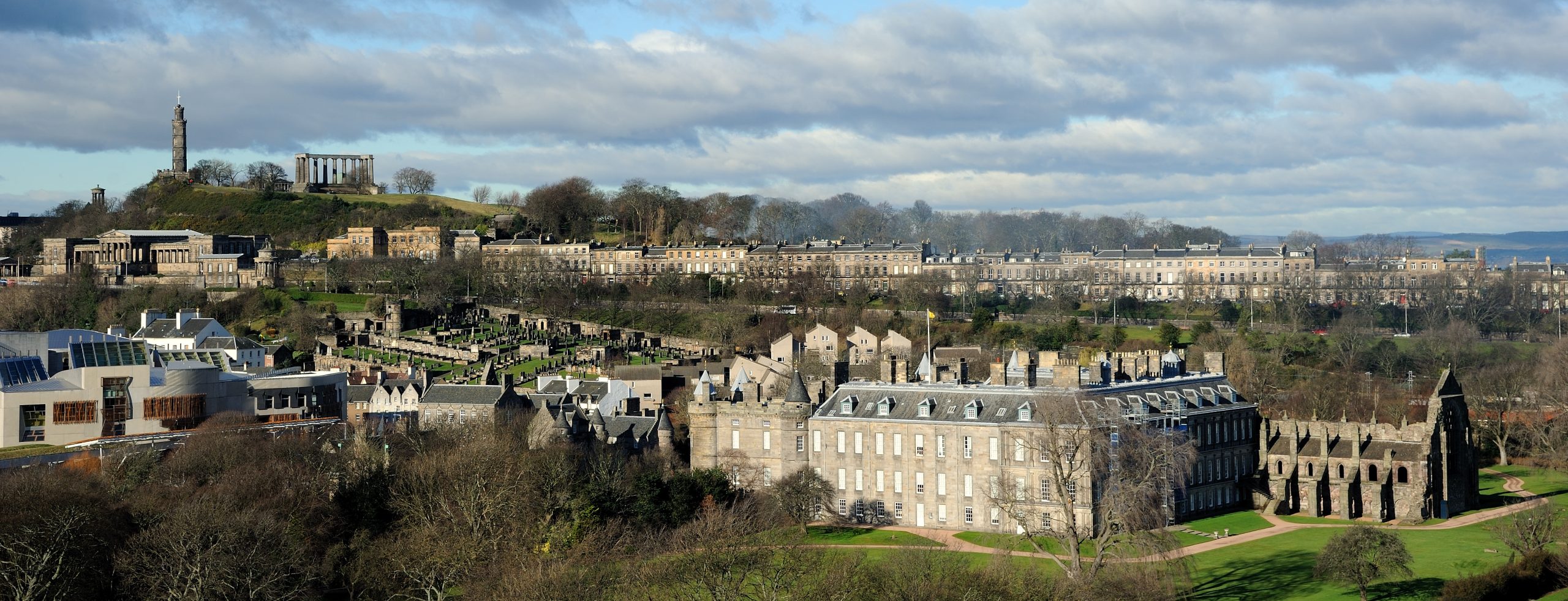


 The Royal Mile. Photograph by Islay McLeod
‘Free comedy! Free stand up!’ he said, trying to thrust a leaflet into my hand as I walked down the Royal Mile, minding my own business. ‘Sorry,’ I replied, ‘I have no sense of humour.’
Craig Weldon
 Kenneth Roy is correct to question whether the alleged drug-smuggling case in Peru would receive as much Scottish media coverage if the accused came from poorer backgrounds (15 August). It’s interesting to note that both the Herald and the Scotsman call the women ‘Ms Reid and Ms McCollum Connolly’, in contrast to their normal practice of referring to accused people by their surnames only. I wonder why.
Dominic Brown
Having stumbled back from holiday, I was catching up with SR as one does. I read Kenneth Roy’s article on male-only golf clubs with interest. Golf clubs come in three types:
1. The Honourable Company of Edinburgh Golfers type, ‘antediluvian’ as Kenneth Roy wisely comments. These, for some reason best known to the legislature, are not unlawful, but the public message about them is clear.
2. The sort where essentially there is a male club but women are admitted as lower strata members with limited rights (sometimes very limited), including no real vote, no right to manage the club, and the women pay less cash for the ‘privilege’ of subservient membership. These are unlawful.
3. Those clubs which are truly equal, gender being irrelevant.
Since no journalist writing on the topic, or politician pontificating on it, is apparently bothered, except by the antediluvian, does your magazine intend to express a view on this before the debate goes cold again? In the unlikely event that the R&A were to move to Class 2 would you see that as better or worse and if the latter, why not speak out now in favour of Class 3?
John Macmillan
I’m sorry to have to disagree with Mary Brown who wrote ‘The canny Scots kept fairly well out of that historic dispute (the English civil war)’. Call the event the war of the three kingdoms and then realise that the Scots were responsible for its start through the bishops’ war.
Subsequently the Scots were deeply involved through the Solemn League and Covenant, and arguably it was Scottish Covenanters under the Earl of Leven who were mainly responsible for the parliamentarian victory at Marston Moor. The Scots handed Charles over to the parliamentarians who eventually executed him. Objecting to the execution, the Scots went to war again, suffering the defeats of Dunbar and Worcester. Cromwell subsequently occupied Scotland and incorporated Scotland into his Commonwealth.
Like Mary Brown I’m an immigrant, but rather than being a Jacobite, I would be proud to be a Whig. I would argue that the Jacobite rebellions ultimately failed to get the support of the Scottish people because enough of them remembered the activities of the ‘Highland Host’ of 1678 and the subsequent killing times. The realisation that the history of the Stuart kings was one of persecution and absolutism meant that, having got rid of them, no one was keen to see them return.
The activities of the English parliamentarians in England and their
subsequent fate were rather irrelevant to what was happening in Scotland, where the keeping of Yule was already banned and Charles II marked his accession by breaking vows which he had already made.
Edward Andrews
The Cafe is our readers’ forum. Send your contribution to islay@scottishreview.net