‘Archipelago, A Reader’, edited by Nicolas Allen and Fiona Stafford (published by the Lilliput Press, Dublin)
This is both a lengthy and weighty volume. But its 578 pages are full of gems of good writing and observation. Edited by Andrew McNellie, poet and literary editor of Oxford University Press, Archipelago was a magazine of literature and art, 12 issues of which appeared between 2007 and 2019. It was launched in Oxford’s Bodleian Library by Seamus Heaney who became a contributor alongside other well-known poets such as Douglas Dunn, Les Murray and Kathleen Jamie.
This Reader, drawn from its pages, contains work from 51 contributors. Each piece is headed by the number of the issue in which it originally appeared, while the volume’s contents are arranged in five sections headed ‘Ireland’, ‘Scotland’, ‘Other Worlds’, ‘England’, and ‘Wales’.
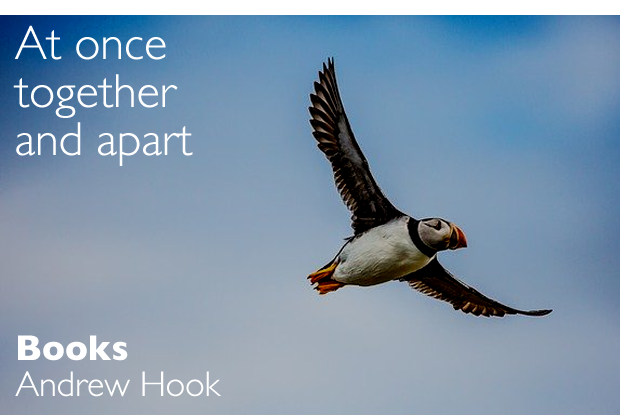
Writing to his many writer friends about his plan to launch a new magazine, McNellie was clear that what he had in mind was something entirely new and different. In what way? The clue is in the title: Archipelago. Islands in a group are at once together and apart. They share seas and tides, shores and beaches. But each is an independent entity. To describe Britain and Ireland as an archipelago challenges the notion of their unity, insisting rather on their diversity while still recognising what they have in common.
The Reader’s editors put it this way: ‘Archipelago was consistently interesting, provocative and gifted with a complement of artists and writers who summoned together an entirely new vision of land and sea⦒. Asked to compile this book, they decided ‘to arrange the collection in strands of association that trace imaginative journeys around the isles. The journeys and places pivot around an Other Worlds that gesture towards Archipelago’s consistent attempt to look beyond the known horizon’. They conclude that collecting the material, ‘we were confirmed in our belief that Archipelago marks a creative and intellectual turn towards the coast, the sea, and the endless declension of water as the matter, embodied and imaginary, of our shifting relations, among these islands and beyond’.
The editors’ insistence that there is much that is new here strikes me as wholly accurate. The entire book represents a shift towards a new way of approaching our world. There is little here about human achievement or activity in cultural or any other terms. But there is a huge amount about the world we happen to inhabit. Contributor after contributor writes about the earth â land and sea, islands and landscapes and seascapes from the Shetlands in the north to Galloway in the south. All those elements that have a permanence that individual life lacks. But there is an emphasis too on the richness and diversity of the enduring natural world that surrounds us with beautiful evocations of flora and fauna, of owls and pheasants, lambs and ewes.
It is difficult to do justice to such a large and original book as this in a short review. To suggest the richness of its contents, let me focus briefly on the Scotland section, which happens to be the largest in the book with 22 contributions. It opens with a powerful and ominous woodcut by Norman Ackroyd of Ailsa Craig in the Firth of Clyde. Mary Wellesley’s Ailsa follows with an account of the rock and its amazing range of bird inhabitants â kittiwakes, razorbills, guillemots, little auks, puffins and many more â and of John Keats’s fascination with the rock which he saw during his walking tour of Scotland in 1818.
There follows the first of three contributions by the poet Alan Riach who draws a kind of map of Scottish writers linked from Edinburgh north to Orkney and Shetland, then south from the Hebrides to the Borders. His subsequent entries focus first on the poet Norman MacCaig’s Lochinver district in the western Highlands, and then on Hugh MacDiarmid’s life on Whalsay in Shetland in the the1930s.
Next, in a piece called Mujo, David Douglas and Gordon Macmillan provide an evocative account of the history and ecology of the Galloway district of southern Scotland. Then Kathleen Jamie writes of her slow recovery from a year-old feeling of being bored with the world, while James Macdonald Lockhart writes Raptor, a vivid description of a visit to the island of Jura with the aim of catching sight of a buzzard. Macdonald’s second entry concerns the ‘machair’ â a type of habitat peculiar to Galloway and other areas on the Scottish west coast, once rich in flowering plants and birds such as oystercatchers, lapwing, snipe and redshank, but now in danger of decline.
Mark Cocker writes about the life of the writer and shark-fisher Gavin Maxwell on Soay, the tiny island in the Inner Hebrides which he bought and lived on, while Roger Hutchinson in The Other Side of Sorrow writes about the Hebridean island of Raasay, where the poet Sorley MacLean was born. Then Tim Dee’s Darkless Night returns to Shetland in midsummer when daylight scarcely disappears. Once again, it is the catalogue of birds that amazes: arctic terns, blackbirds, razorbills, gannets, kittiwakes, guillemots, fulmars, shags and puffins.
Peter Davidson meditates once again on Shetland white nights at midsummer, and finally Sally Huband writes of the Black Stane in the Shetlands â a lofty and craggy shore-line rock which legend alleges was used as a place where women accused of being witches were abandoned. Between these prose pieces there are poems by Angela Leighton, Seamus Heaney, John Purser, Michael Longley and Douglas Dunn.
It is hard to imagine that anyone would want to read this book except by choosing a few entries at a time. But that effort at least could be richly rewarding.