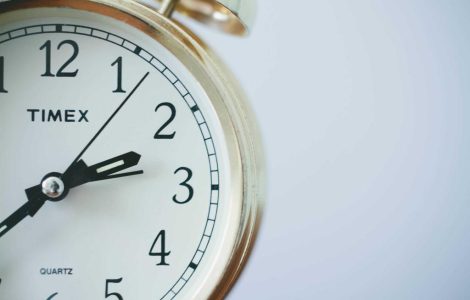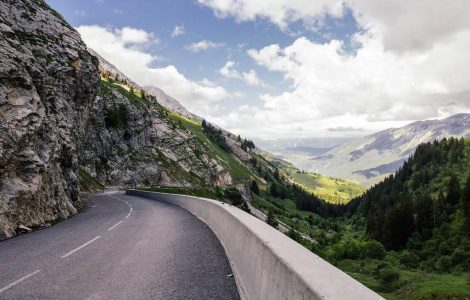


This month, we commemorate the work of a young Scottish journalist and broadcaster, Richard Wild, originally from Melrose, who was murdered by a lone gunman in Baghdad on 5 July 2003. He was 24. From a portfolio of Richard’s photographs from around the world, Islay McLeod has selected 12 – one for each edition of SR in February. No record of the locations has been
left, but the photographs speak for themselves.
Person of the Week
A man without enemies
Barbara Millar on Sir Alec Cairncross

‘Surely the most intellectually distinguished Glaswegian of the 20th century,’ was the tribute paid by historian Michael Fry. Economist Sir Alan Budd called him ‘outstanding’, with personal qualities of ‘intellectual integrity, profound commonsense, energy and affability’.
But Sir Alec Cairncross very nearly took a different career path. He had won a scholarship to Glasgow University to study to become an accountant, a secure and respectable profession, which won the approval of his father. In Lesmahagow, however, the village where Cairncross was born 100 years ago this month, miners were being sacked, a consequence of the deepening depression in late 1920s Britain.
Professional and academic economists were still very much a rarity at this time, but Cairncross believed that economics, with its panoramic view of the business world, might provide some solutions to the problems he saw. So, in 1932, he went to Trinity College, Cambridge, as a post-graduate student, the first graduate from Glasgow to make such a move.
One of the Cambridge dons was John Maynard Keynes, often considered to be the father of modern macroeconomics, who spearheaded a revolution in economic thinking in the 1930s. Cairncross, who met Keynes almost as soon as he arrived in Cambridge, was invited to tea with a group of dons, where he listened ‘overawed’ to a discussion of pig rearing in the Soviet Union. ‘It was not a subject to which I could contribute,’ he later admitted, ‘but one on which Keynes was full of information. The sequel, so far as I was concerned, was an invitation to join the first meeting of Keynes’s club. It was the way in which Keynes’s interest in, and kindness towards, young economists found expression.’
Alexander Kirkland Cairncross was born on February 11, 1911, the seventh of eight children born in quick succession. His father was an ironmonger who, according to Cairncross’s daughter, the economist, writer and academic Frances Cairncross, was a ‘forbidding character’. It was a family that took work and education very seriously. Indeed, Alec and five of his siblings had careers in education, three of them becoming professors, two schoolteachers and one a domestic science teacher.
Alec Cairncross went to Hamilton Academy, then onto Glasgow University and Cambridge, where, after gaining a first in the Economic Tripos, he returned to Glasgow as a lecturer in economics. One of his tasks was teaching young accountants in the evenings and, aware that they were often too exhausted after a day at work properly to take in the lecture, he would write down the gist, to remind them of what they had heard.
This became the basis for his best-selling textbook, ‘An Introduction to Economics’, which was published in 1944 and was a standard university text throughout the 1950s and 60s, running to six editions.
He met his future wife, Yorkshire lass Mary Glynn, at an international student conference. She later recalled walking round a rose garden, excitedly thinking that she was talking to a real professor, while he remembered her thick, lustrous hair. They married in 1943 and had five children – Frances, Philip, Sandy, David and Elizabeth.
In 1940 Cairncross was invited to work in the economic section of the Cabinet Office, where he prepared a programme for imports. He then moved to the Board of Trade, followed by the Ministry of Aircraft Production, where he spent the rest of the war.
He admitted that he knew nothing about aircraft or aircraft production but he soon discovered that there were 300 Wellington bombers marooned on a Blackpool beach because they had no propellers. American propellers were available, but had the wrong size of blade. Cairncross resolved the problem – and provided significantly more aircraft for the war effort – by fitting British blades to the American hubs.
Immediately after the war he was sent to Berlin as a Treasury expert in the negotiations between economists from various countries on German reparations. Mindful of Keynes’s condemnation of the penal reparations imposed on Germany after World War I, Cairncross was determined to leave Germany sufficient resources to sustain a reasonable standard of living, describing these negotiations in ‘The Price of War’, published in 1986.
He also had a great sense of history, wanting events recorded in their historical context, and was never dogmatic. ‘He made very good friends,’ Frances Cairncross continues. ‘He was not just very clever, he was completely without side. He did not make enemies.’
He worked briefly for The Economist but then moved to the Board of Trade as economic adviser and spent three years there before going to Paris as director of the economics division of the Organisation for European Economic Cooperation (now the Organisation for Economic Cooperation and Development). He returned to Glasgow in 1951 as professor of applied economics, founding Britain’s first department of applied economics, and also had a spell in Washington where he launched the Economic Development Institute to train senior officials from developing countries on how to manage economic problems. He was also instrumental in founding the Scottish Economic Society and was, from 1954-1961, editor of its Scottish Journal of Political Economy.
But his most challenging job was still to come. He had been in the Treasury, as economic adviser to Her Majesty’s Government since 1961 – then a Conservative administration. In 1964 Harold Wilson’s Labour government was elected, determined to dismantle the economic advisory function of the Treasury.
‘There was great hostility by the incoming government to the Treasury,’ says Frances Cairncross. ‘They believed that civil servants like my father were all Tories at heart, that they were all grandees who had been to Eton and would stand in the way of the new government’s plans. My father had come from a humble background and had gone into economics because of the plight of the miners in the 1920s. He had a horrible few months where he had to fight to save, not only his own job, but the economic function of the Treasury. He succeeded.’
But he also jeopardised his health, insisting on going to work with pneumonia, in order to argue his case. Ultimately, he became the first person to hold the post of head of the government economic service.
He was knighted in 1967 and in 1969 became master of St Peter’s College, Oxford. But, according to Frances Cairncross, it was his election as chancellor of Glasgow University which brought his greatest joy. ‘I doubt whether I ever had a prouder moment,’ he wrote.
Frances Cairncross has said that, as a child, her abiding memory of her father was of his back, as he sat and worked on his papers. But when she worked with him on his autobiography, ‘Living with the Century’, ‘it made me realise how intelligent and diligent he was, and what an incredible memory he had’.
He also had a great sense of history, wanting events recorded in their historical context, and was never dogmatic. ‘He made very good friends,’ Frances Cairncross continues. ‘He was not just very clever, he was completely without side. He did not make enemies.’
A grave disappointment in his life was the fact that his equally clever brother John, a British intelligence officer in World War II, turned out to be a Soviet spy. ‘My father was extremely puzzled by the tough going-over he got in 1961 from Treasury officials,’ says Frances Cairncross. ‘He had no idea his brother was a spy until 1979, and was very wounded by this discovery.’
Sir Alec Cairncross died in October 1998, a few months after the death of his beloved wife. In his autobiography, published in the same year as his death, he simply said he had lived ‘in the right century for an economist’.
Related Articles

Local Councils Are Running Out of Money: What Happens Next?

Scottish Labour Candidates Sense Opportunity Ahead of May Election
Digital Assets Bill Passes Final Stage at Holyrood

Scottish Politics: Power, Policy, and the Path Forward
Holyrood Election 2026: SNP Lead Polling as May Vote Approaches

Holyrood 2026: The Election That Could Reshape Scotland