Like most people, for the past week and a half, the only news I have been following has been the Russian invasion of Ukraine, the inspiring spirit of Ukrainian resistance and the international solidarity it has inspired. Alongside this has been the pathetic response of the UK Government, boasting at every opportunity of ‘leading the world’ on sanctions and refugees, while dragging their feet on Russian oligarchs and refusing entry to the UK for Ukrainian refugees who have fled their homeland.
Last week, the historian Yuval Noah Harari pointed out in relation to Ukraine: ‘Nations are ultimately built on stories. With each passing day, more stories emerge that Ukrainians will tell not only in the dark days ahead, but in the decades and generations to come’.
It is a universal truth that nations are made by stories. And if we think about our much less challenging environment of Scotland – past, present and future – what are our stories that have echoed down the years, who are our storytellers, and what will be our stories of the future?
Past stories of Scotland
Scotland has a rich history and tapestry of stories that have contributed to defining us as a nation. There is the story of the Enlightenment in Scotland, which aided intellectual inquiry, the advance of ideas and rationalism, and in so doing assisted in the creation of the modern world. There is the account of the Scottish Empire and the role the country played in imperialism, colonialism and conquest, including slavery â parts of which Scotland is only beginning to fully come to terms with. And there is the Scotland of enterprise and invention, where many of the critical discoveries of the industrial revolution were made, along with education and belief in the power of knowledge and of spreading opportunity.
Besides this, is the story of egalitarian Scotland that resonates into the present and has deep roots in the Presbyterian tradition, as well as the socialist movement. These are all positive stories but there have also been negative accounts, such as the divided nation which argues that Scotland is too disunited to be able to govern itself and determine its own future.
Scotland’s stories, like the ideas which define us, have dramatically changed through the centuries, as they have in nearly every nation in the world. Once there was a powerful resonance of the idea of Scots (and Scots men) as a fighting people â from Scottish soldiers at war through the Empire, World Wars and myth of Braveheart. But that is now much less evocative and captivating a story, and indeed is often noted as a problematic story in a world still defined by systemic violence, whether domestically or internationally.
Scottish dreams
The political scientist James Kellas wrote in 1968: ‘There is a Scottish Dream or Scottish myth, and it is part of Scottish national consciousness (or unconsciousness?)’. This, he elucidates, is the story of egalitarianism which he connected to the appeal of Robert Burns:
His simple and lyrical defence of the inherent dignity of man, unbent by privilege; his defiance of the ‘unco guid’ or affectedly righteous; above all his attitude towards romantic love, which must prevail despite Calvinist morality â all have expressed the Scottish Dream directly to the Scottish peopleâ¦
This might seem, more than a half a century later, a romantic take but Kellas is talking about myths. To this, he adds the principles of ‘egalitarianism and democracy’, which can be identified in how the education system and Presbyterian Church present themselves. He notes that ‘rigid social conservatism’ and the power of elites contradict ‘the democratic and egalitarian myths of Scottish life’.
Presently, many would agree with an updated version of the above and that ‘Scotland’s Dream’ now follows similar principles. This would include a sense of egalitarianism in everyday life, as seen in the phrases ‘Jock Tamson’s Bairns’ and Burns’s For a’ that and a’ that.
The former is so steeped into folklore to almost defy definition, but was described by David Murison as representing a commitment to ‘the human race; common humanity; also with less universal force, a group of people united by a common sentiment, interest or purpose’. There is a radical version of this spirit of equality, stressing greater material equality, but a minimal more conservative interpretation just means individual common decency and an expectation of treating everyone the same.
There is the belief in education and ‘the democratic intellect’: the potential of access to educational opportunity, less social class inequality and a greater dissemination of knowledge and ideas. And alongside this is the democratic impulse and idea that power and legitimacy emanates from the people seen in popular sovereignty.
These three myths â egalitarianism, education and popular sovereignty â have had great currency in Scotland and contributed to how we see ourselves, and perceive ourselves as different. Stephen Maxwell, writing in 1976, pointed out the importance of myths in Scottish nationalism:
To criticise the cherished nationalist myths of Scottish democracy is not to deny them all significance. They reflect real, though partial, elements in Scottish society which in the past probably has been more democratic than English society and which even today has a more democratic ethos. A political programme for an independent Scotland must, however, be built on a more substantial base than that which dreams of Scottish democracy provides.
Two observations flow from the above discussion on myths. First, if this is who we want to say we are collectively, we need to undertake some thorough self-reflection, and then agree if we want to act differently. Scotland is not a society that acts and defines itself by these ideals. There is no evidence that Scotland is more egalitarian, better and more open at education, or more democratic than elsewhere. But given the centrality and backstory of these values, we could choose to act upon them.
This would require having honest conversations involving government, public bodies, professions and businesses about the degree to which Scotland falls short of these myths and how we could rectify them.
It would not be an easy task, as elements of Scottish society have been quite comfortable perpetuating some of these myths â such as the belief that we are more egalitarian. Instead, we need to recognise that, if this is the case, we are not acting upon it but instead presiding over a deeply unequal society of endemic privilege and poverty. It would require not just honesty, action and building a popular alliance of change, but also digging up foundations of the ‘Scottish Dream’.
Here we face a profound choice. We could choose to continue in our present state of believing ‘wha’s like us’, while not acting upon it and feeling good about ourselves. Or we could choose to act. Taking the latter course would have difficulties and even some pain; it would entail, like Ireland did after the crash, confronting the fact that it was not (for all its talk) ‘the republic’ it said it was, but rather a host of conceits offering cover for cronyism, corruption and dishonest authority. As Fintan O’Toole observed: ‘The task is not to rediscover or reinvent a lost republic. It is to build something we have never had’.
Second, if we choose this course we have to animate and inhabit this mode of action. Stories are central to how we understand and interpret the world; fundamental to being human and how we communicate, connect and remember. And the collective stories we create when we come together in story define societies and nations down the ages. There are inherent dangers in stories: the peril of ‘the official future’ colonising story; demagogues from Trump to Putin invoking potent dark stories; and the danger of believing in a single, totalising story.
Where are the stories of the future?
Who are our storytellers of now, and of the future, who will create and carry forth these tales? From recent times, the late William McIlvanney’s accounts of working-class men and women living through epic times had a moral compass and authority weaved through them.
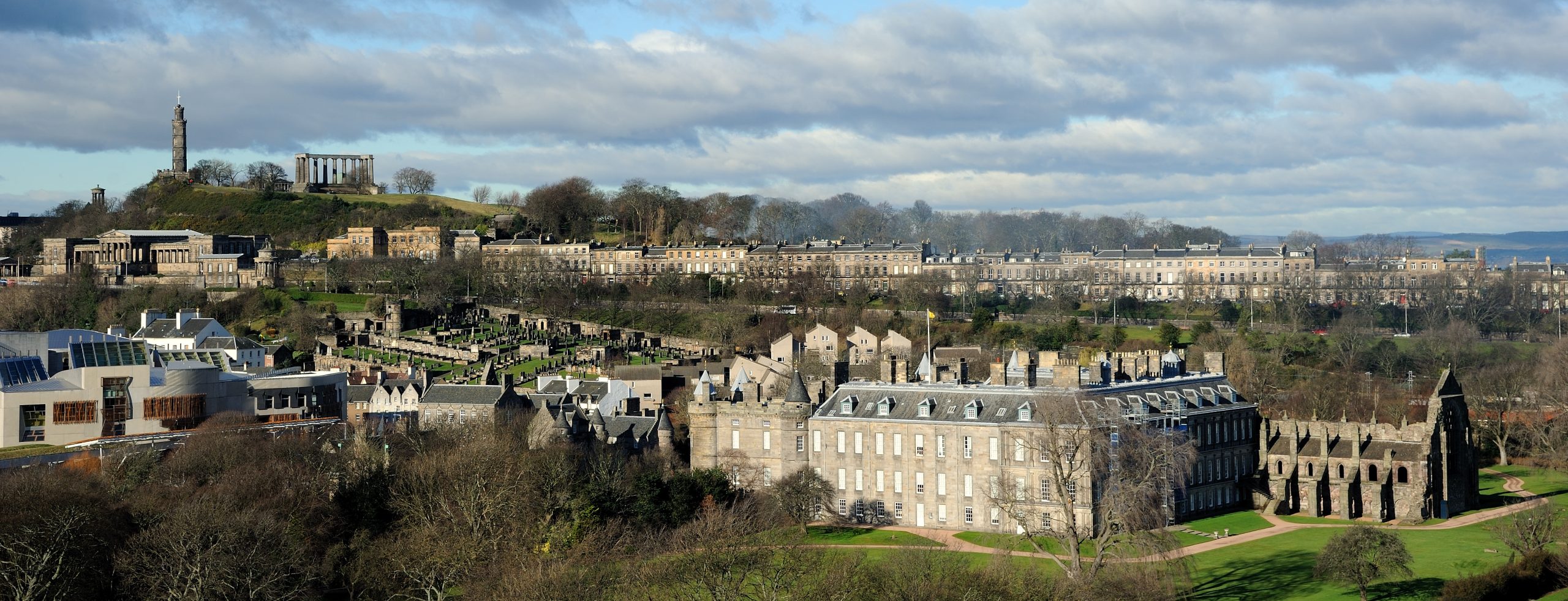
In the present, Val McDermid is not only playing with the crime genre, but telling a chronological story of the past five decades in Scotland (while standing for decency and respect in relation to Raith Rovers). Connected to her is Ian Rankin, who has remade the crime map of Edinburgh and changed how people see, think of, and experience the city. And there is James Robertson, whose And the Land Lay Still explored where the Scotland of self-government came from and how the flame was kept alive, as well as his novels on James Knight and slavery, and his satire of how BBC news portrays the UK.
These are all brilliant, imaginative writers but represent a certain generational perspective for whom the 1970s, and to an extent the 1980s, were the defining decades: the struggles and cultural clashes, and rise and fall of Thatcherism. This does raise the question of how the future stories of Scotland will be told, who will tell them and what they will represent?
One prospect is that Scotland’s future tales dig deeper into the myths and archetypes by which we have historically defined ourselves â equality, education, democracy â and acted at best selectively upon. Another is that considering the huge challenges we face both in recent times â Brexit, Covid and Russian invasion of Ukraine â and in the near-future with climate change, global instability, technological authoritarianism and the march of AI, maybe a whole new gambit of stories and worlds needs to be addressed.
A Scotland that felt confident about itself and was at ease embracing and acknowledging the role of artists, creatives and culture would be a nation with suitable bandwidth and institutional support to explore this terrain across numerous genres and to evoke, harness and promote the human imagination. We need to believe that this Scotland can exist and could bring into being the new stories of our future.